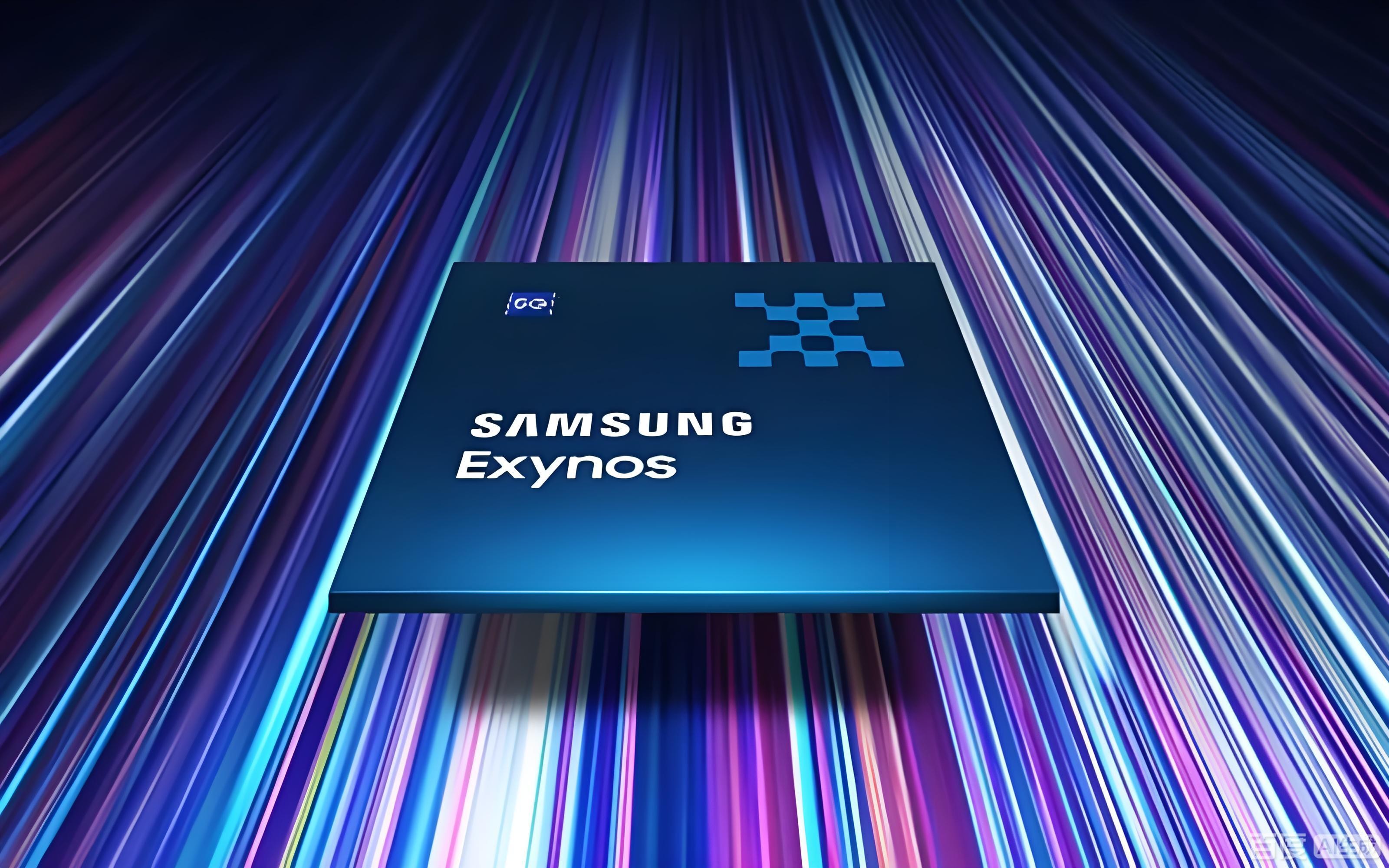
Reported on December 21st, Samsung dropped a bombshell on the global mobile semiconductor industry: the official launch of the industry’s first 2nm process smartphone application processor—the Exynos 2600 system-on-chip (SoC).
Designed by the System LSI business unit under Samsung Electronics’ Device Solutions division, this chip is manufactured using Samsung’s proprietary 2nm Gate-All-Around (GAA) process at its own fabs. It features a new 10-core CPU design based on the Arm v9.3 architecture, with one high-performance core running at up to 3.8GHz, supplemented by three performance cores and six efficiency cores. Samsung claims its performance has been boosted by up to 39%.
In terms of GPU, the Exynos 2600 introduces the Xclipse 960 GPU, said to deliver double the computing performance of its predecessor and up to a 50% improvement in ray tracing capabilities. This means future Galaxy S smartphones will see a massive upgrade in mobile gaming performance.
For artificial intelligence (AI), the upgraded Neural Processing Unit (NPU) will achieve a 113% speed increase, making any type of generative AI, translation, smarter camera processing, and other locally run functions faster than ever before.
Samsung also plans to integrate an ISP AI algorithm into its imaging system to optimize image recognition, noise reduction, and color reproduction. Additionally, the Exynos 2600 supports cameras with up to 320 million pixels, meeting the demands of high-end mobile photography.
On December 19th, Samsung Electronics released detailed specifications of the Exynos 2600 via its official website, marking the product status as “In Mass Production.” This disclosure is interpreted as Samsung having secured sufficient yield to supply tens of millions of smartphones.
A smartphone is a cutting-edge device that shrinks a high-performance computer to the size of a palm. As its size decreases, components such as the central processing unit (CPU), graphics processing unit (GPU), neural processing unit (NPU), modem, and memory semiconductors—dubbed the “brain”—must be integrated into a single chip as an application processor (AP) in the form of a system-on-chip (SoC) to fit inside the device. Since high performance and high efficiency must be maintained simultaneously, developing a high-performance AP requires cutting-edge technology, earning it the reputation as the culmination of semiconductor technology.
South Korean media BusinessKorea notes that Samsung Electronics faced significant challenges during the AP development process. Galaxy smartphones equipped with the Exynos 2100 and 2200 series continued to experience performance degradation due to overheating. Amid this, Qualcomm—Samsung’s major foundry customer—shifted all production of chips below 4nm to TSMC in the second half of 2022, triggering internal and external crises. Even Samsung Electronics’ Mobile Experience (MX) division abandoned its own Exynos AP in the Galaxy S25, opting instead for Qualcomm’s Snapdragon 8 Elite chip.
The media outlet states that Samsung Electronics aims to put an end to such controversies by announcing the mass production and detailed specifications of the Exynos 2600. In particular, the Exynos 2600 is expected to resolve the persistent overheating issues. For the first time in a mobile SoC, the chip introduces Heat Path Barrier (HPB) technology, reducing thermal resistance by up to 16% and ensuring stable internal chip temperatures even under high-pressure conditions.
While Samsung has not officially confirmed which smartphones will feature the Exynos 2600 processor, the market widely expects it to power at least some versions of the Galaxy S26 series next year, with specific models depending on the region. Samsung plans to officially launch the Galaxy S26 series at the Galaxy Unpacked 2026 event in the United States at the end of February next year.
Although TSMC remains the mainstream supplier for 2nm chip orders in the tech industry, its current production capacity is severely constrained. Coupled with the growing recognition of Samsung’s 2nm technology, its foundry business is set to expand rapidly, fueling fierce competition in the chip industry.
On December 15th this year, news emerged that AMD is negotiating with Samsung Foundry for cooperation on 2nm process technology and may jointly develop next-generation CPUs—most likely the EPYC Venice CPU, or possibly the Olympic Ridge consumer-grade CPU, scheduled for release in late 2026. The two companies plan to finalize the contract around January next year, when AMD will evaluate whether Samsung’s process can meet the required performance levels. However, industry insiders believe Samsung has a high chance of securing the mass production contract.
Samsung has made multiple attempts in the past to position itself as a foundry service provider for high-end customers. Yet its market share in the high-end segment has remained negligible, mainly due to insufficient process maturity, yield issues, and market doubts about the scalability of its production lines.
This situation has reversed this year, however. Furthermore, the booming development of AI has led to a surge in chip demand. TSMC, the preferred foundry, is unable to handle the growing number of chip orders, forcing major companies to adopt a diversified supply strategy—a necessary move both economically and strategically.
When the Galaxy S26, equipped with the world’s first 2nm GAA process Exynos 2600, officially hits the market, Samsung Electronics’ foundry division will simultaneously prove its precision process and mass production yield capabilities. Subsequent additional orders from tech giants such as Tesla, Apple, and Qualcomm are likely to follow. Industry insiders analyze: “If the Exynos 2600 performs well in the market, the recovery of the foundry business will accelerate, with the potential to turn profitable by 2027.”
In addition, a report by market research firm Canalys shows that driven by rapid advancements in chip technology and growing consumer demand for AI features, the global AI smartphone shipment share will rise from 16% in 2024 to 54% in 2028. The firm predicts a compound annual growth rate (CAGR) of 63% from 2023 to 2028, with major players like Samsung and Apple leading this growth.
|

 Fear of God ESSENTIALS Hoodie Review: Mi87 人气#fashion
 The Derby of San Francisco Style 300 Cha114 人气#fashion
 Why the Derby of San Francisco Classic S131 人气#fashion
 Romaoss Launches "Rebirth Plan," in Talk71 人气#tech



 WeChat
 douyin