French President Macron pointed out in an interview with French media that China's trade surplus with the European Union is unsustainable.
French President Macron has warned that if China fails to address the growing trade imbalance with the EU, the EU may ultimately be forced to take tough measures against China, including imposing tariffs.
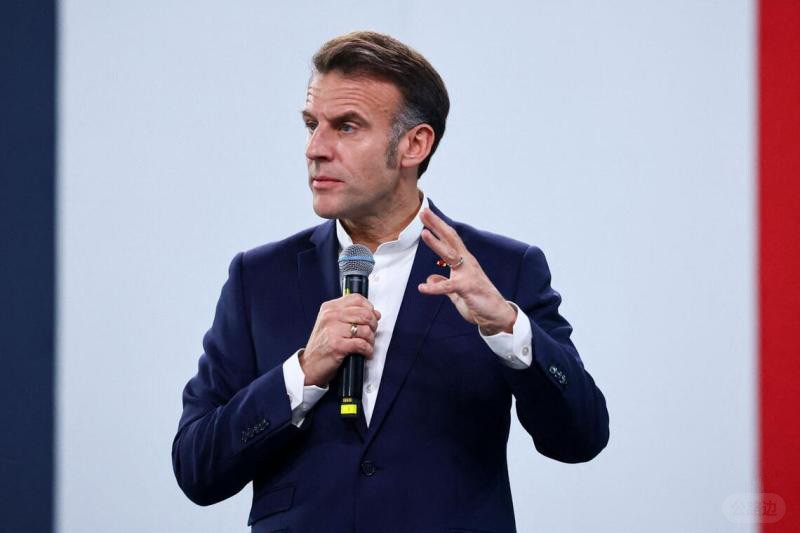
Macron expressed this position in an interview with the French economic daily Les Echos. Macron said that during his visit to China, he attempted to explain to Chinese leaders that China's trade surplus with the European Union is unsustainable, especially since China almost no longer imports any goods from Europe.
The Echo newspaper has published Macron's interview on Sunday (December 7th). Ma Kelong said: "If they (China) do not take action, Europe will be forced to take strong measures to decouple from China in the next few months, just like the United States, such as imposing tariffs on Chinese goods." Ma Kelong said that he had discussed the matter with von der Leyen, president of the European Commission.
Macron just made a three-day state visit to China from December 3rd to 5th, seeking to readjust relations with China. During his visit, he called on China to increase investment.
Trade imbalance has long been a thorny issue between major Western trading partners and China. According to data from the French Ministry of Finance, France's trade deficit in goods with China reached 47 billion euros (approximately 72.3 billion Singapore dollars) last year.
At the EU level, since 2019, the EU's trade deficit in goods with China has surged by nearly 60%. According to data released by China earlier this year, the trade surplus of goods with the European Union in the first half of this year has soared to about 143 billion US dollars. It can be seen that both China and France, as well as the European Union, have significant trade deficits with each other.
Last year, France supported the EU's imposition of tariffs on Chinese electric vehicles, leading to tension in Sino French relations. Beijing has taken retaliatory measures by imposing minimum price requirements on French cognac, causing concerns among pork and dairy producers that they may become the next target of attack.
According to official data released by the Chinese government on Monday (8th), China's annual trade surplus exceeded $1 trillion (approximately SGD 1.3 trillion) last month, reaching $1.08 trillion. This is because China's exports to the United States have significantly decreased, which has been offset by a surge in exports to other major markets.
The General Administration of Customs of China said that exports in November increased by 5.9% year-on-year, reversing the slight downward trend in October. This growth rate is higher than the market's forecast. Analysts believe that the change in trade routes and deflation have led to a decrease in China's real effective exchange rate and an increase in price competitiveness, so exports may remain resilient in the future.
In addition, Macron also expressed dissatisfaction with the US launching a trade war against China in an interview with The Echo, stating that the US's approach towards China was inappropriate and resulted in the diversion of Chinese goods to the EU market, making Europe's situation even more difficult. Now, we are caught between two countries, and this is a matter of life and death for European industry
Macron advocates a conciliatory attitude towards China, such as lifting restrictions on semiconductor equipment exports in Europe and relaxing restrictions on rare earth exports in China. In addition to these, he also called on Chinese companies to invest in the European continent and create value and opportunities for Europe.
|

 Fear of God ESSENTIALS Hoodie Review: Mi83 人气#fashion
 The Derby of San Francisco Style 300 Cha108 人气#fashion
 Why the Derby of San Francisco Classic S127 人气#fashion
 Romaoss Launches "Rebirth Plan," in Talk65 人气#tech



 WeChat
 douyin