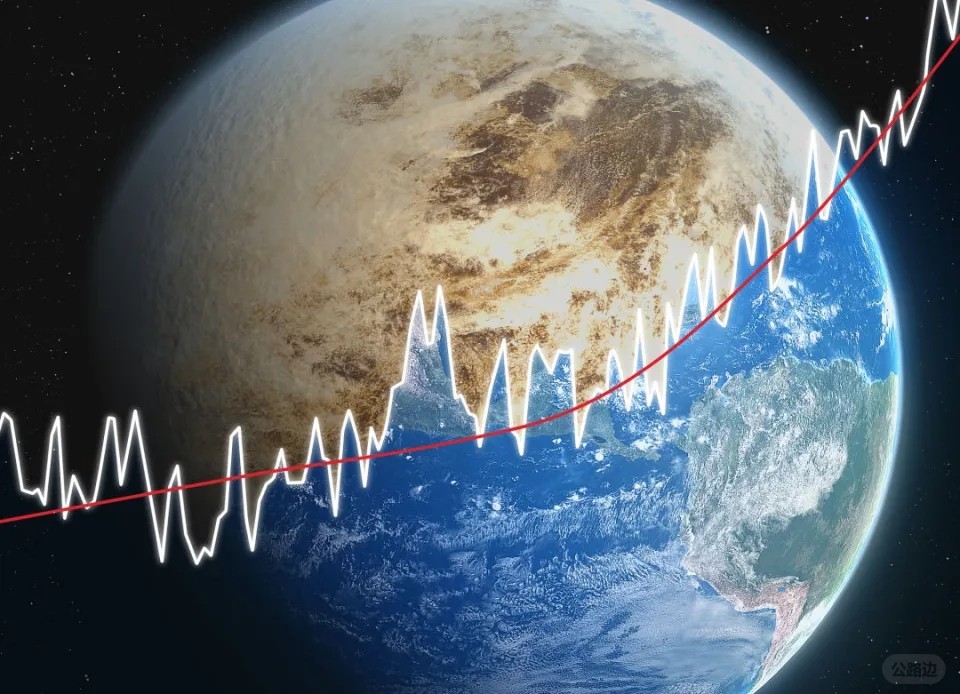
This year, many regions across the globe have been hit by unprecedented storms, wildfires and heatwaves, and 2025 is projected to be the second hottest year on record, trailing only 2024.
According to data released by the Copernicus Climate Change Service (C3S) of the European Union, the average global temperature in 2025 has so far risen 1.48°C above the pre-industrial baseline, second only to 2024, when the average temperature was 1.6°C higher than the pre-industrial level.
In 2024, the El Ni?o phenomenon drove global warming, whereas the world is now in an alternating La Ni?a phase, during which the upwelling of cold deep water in the tropical Pacific Ocean tends to lower global temperatures. Nevertheless, fossil fuel emissions hit a new high in 2025, meaning that temperatures will continue to climb, triggering devastating extreme weather events.
"It is these extreme weather events that impact our societies and ecosystems, and as the climate warms further, the frequency and intensity of such events will increase," said Samantha Burgess of C3S. "The more moisture the atmosphere holds, the more intense storms will become."
This summer, climate change fueled heatwaves that swept across Europe, claiming 16,500 lives. In October, Hurricane Melissa slammed into Jamaica. As the strongest hurricane ever to strike the country, it killed over 80 people and inflicted estimated losses of $8.8 billion. The World Weather Attribution, an international academic collaboration, found that climate change increased Melissa's rainfall by 16% and wind speeds by 7%.
In November, a series of cyclones and storms triggered landslides and floods in Sri Lanka, Indonesia, Thailand, Malaysia and Vietnam, resulting in more than 1,600 deaths. Currently, the Arctic sea ice extent is at its lowest level for this time of year on record, while Antarctic sea ice is also below normal levels.
C3S data indicates that the average temperature over the past three years is likely to exceed the pre-industrial level by 1.5°C for the first time. Scientists predict that by 2029, the average warming level will persistently cross the 1.5°C threshold, breaching the target set by the Paris Agreement.
A report released in October pointed out that the tipping point for the irreversible demise of tropical coral reefs has already been crossed, and the planet may soon pass the tipping points for Amazon rainforest degradation, the collapse of the Greenland and West Antarctic ice sheets, and the melting of Antarctic sea ice.
|

 Fear of God ESSENTIALS Hoodie Review: Mi86 人气#fashion
 The Derby of San Francisco Style 300 Cha113 人气#fashion
 Why the Derby of San Francisco Classic S130 人气#fashion
 Romaoss Launches "Rebirth Plan," in Talk70 人气#tech



 WeChat
 douyin