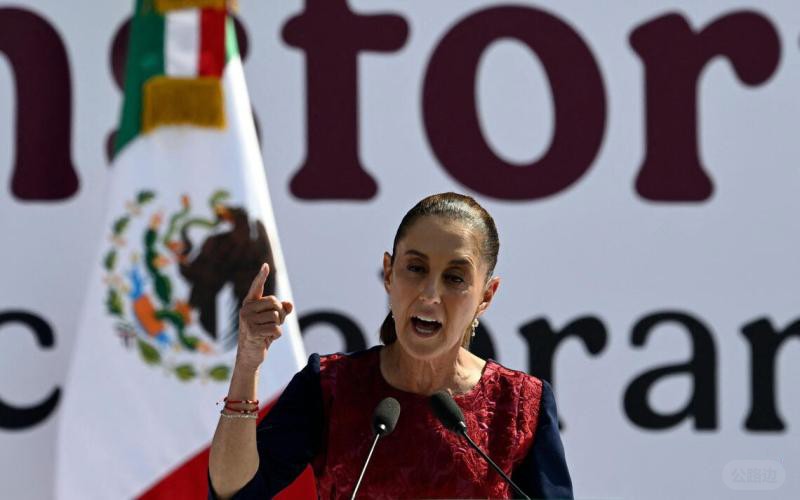
The Mexican government led by President Claudia Sheinbaum submitted a bill to Congress on September 9, proposing to impose additional tariffs on goods imported from China and other Asian countries.
According to combined reports from Bloomberg and Reuters, Mexico’s Senate and Chamber of Deputies passed the bill on Wednesday, December 10. The legislation will impose tariffs of up to 50% on goods exported from China and other Asian nations that have not yet signed a trade agreement with Mexico, including India, South Korea, Thailand and Indonesia, starting next year.
The Senate approved the bill with 76 votes in favor, 5 against and 35 abstentions, while the Chamber of Deputies had earlier passed it with 281 votes in favor, 24 against and 149 abstentions. The measure aims to bolster Mexico’s domestic production and address its severe trade deficit, targeting products such as automobiles, auto parts, textiles, apparel, plastics and steel. The tariff rate for most of these goods is set at 35%.
The Mexican government led by President Sheinbaum tabled the proposal in Congress on September 9, but lobbying efforts by Asian countries as well as opposition from Mexico’s private sector and some legislators slowed the bill’s progress.
Following a review by Mexico’s Ministry of Finance and Ministry of Economy, the original proposal was revised at least 750 times. Of the more than 1,400 products initially slated for tariffs, over 300 were ultimately exempted.
Even so, the tariffs will still cover a broad range of product categories, from clothing and footwear to steel, aluminum and auto parts. Mexico’s Ministry of Finance estimates that the measure will generate an additional 51.9 billion pesos (SGD 3.686 billion) in import revenue by 2026, representing an 8.3% increase compared with 2024.
|

 Fear of God ESSENTIALS Hoodie Review: Mi83 人气#fashion
 The Derby of San Francisco Style 300 Cha108 人气#fashion
 Why the Derby of San Francisco Classic S128 人气#fashion
 Romaoss Launches "Rebirth Plan," in Talk66 人气#tech



 WeChat
 douyin