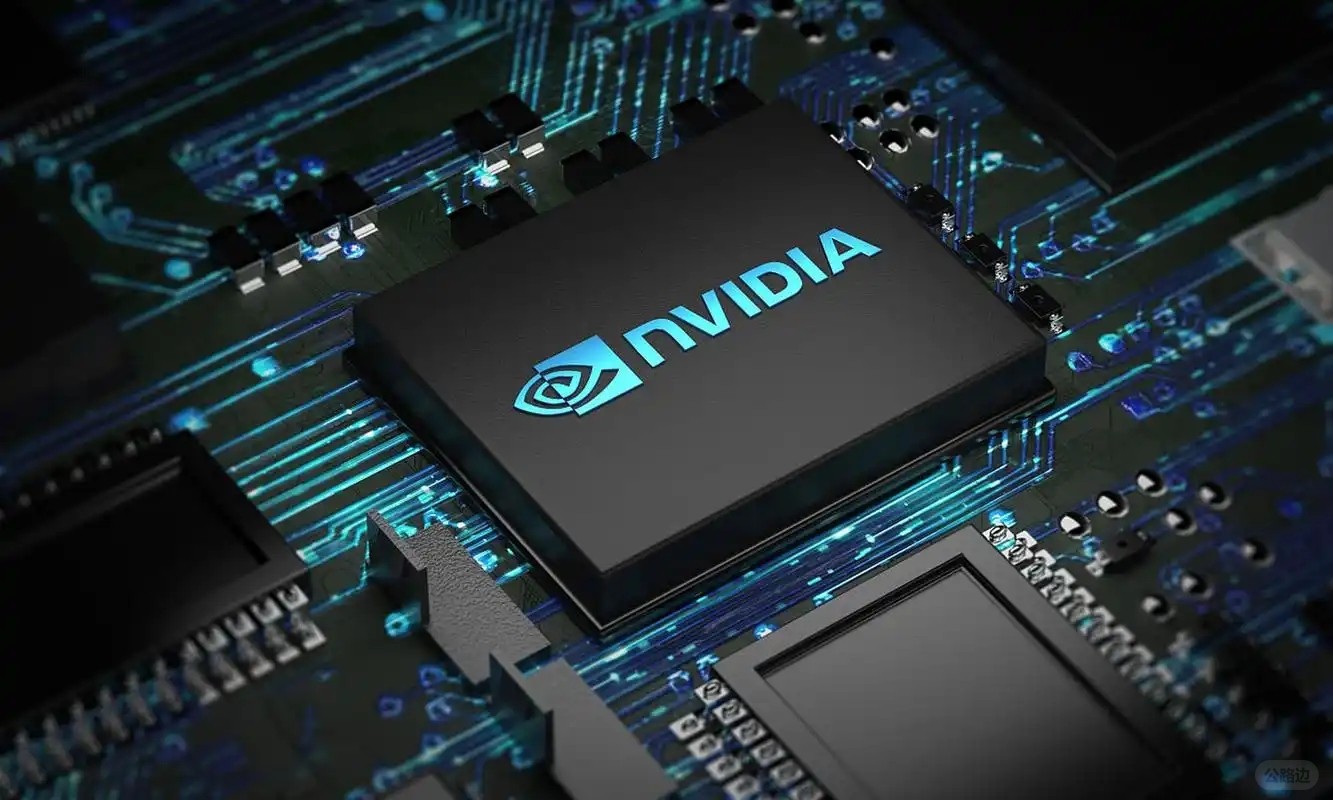
Recently, news that former U.S. President Trump approved NVIDIA’s sale of H200 chips to China has continued to spark heated discussion. At this critical juncture, Reuters reported on December 10 that NVIDIA has developed a location verification technology capable of identifying the country in which its chips are operating.
According to sources familiar with the matter, this feature is an unreleased software option that NVIDIA has privately demonstrated to select customers over recent months. It leverages the so-called “Confidential Computing Capabilities” of its graphics processing units (GPUs).
NVIDIA indirectly confirmed the report through a statement: “We are implementing a new software service that enables data center operators to monitor the health and inventory of their entire AI GPU clusters. This customer-installed software agent uses GPU telemetry to monitor cluster health, integrity, and inventory.”
An NVIDIA representative explained that the software was initially designed to help customers track overall computational performance of their chips, but it can also estimate the approximate geographic location of a chip by measuring latency in communications between the chip and NVIDIA servers. The accuracy is said to be comparable to other internet-based geolocation services. The feature will first be available on NVIDIA’s next-generation Blackwell architecture chips, though the company is also exploring solutions for previous generations.
Reuters suggests that NVIDIA’s newly developed geolocation capability specifically targets countries under U.S. export controls, such as China. For years, the U.S. government has prohibited companies like NVIDIA and AMD from exporting high-performance chips to China, citing so-called “national security” concerns. U.S. media have repeatedly alleged that large quantities of NVIDIA chips are being smuggled into embargoed countries. Thus, Reuters interprets this geolocation feature as a measure to prevent the “smuggling” of NVIDIA chips.
From the Biden administration to the Trump administration, the U.S. has implemented and continually tightened a series of chip export restrictions aimed at containing China’s technological advancement, with NVIDIA’s AI chips being a primary focus. Earlier this year, the Trump administration banned exports of NVIDIA’s specially customized H20 chips—only reinstating the export license after NVIDIA agreed to remit 15% of its China sales revenue to the U.S. government. Now, despite going to great lengths to regain access to the Chinese market, NVIDIA has been accused of embedding a “backdoor,” causing an uproar in the market.
On November 20, Jensen Huang appeared on Fox Business and stated that U.S. export restrictions had brought NVIDIA’s chip sales to China to a standstill, predicting zero sales for the next two quarters.
“I predict sales in China will be zero. Zero next quarter, and zero the quarter after that,” Huang said. “We’re assuming zero sales. If we can somehow overcome these obstacles and reach agreements with both governments, then the Chinese market will undoubtedly be enormous.” He noted that China’s current AI chip market is valued at approximately 50billionandcouldgrowto200 billion by the end of 2030.
Nevertheless, NVIDIA remains eager to tap into China’s vast market. Just days ago, former President Trump announced approval for NVIDIA to export its H200 chips to China—but on the condition that such exports safeguard U.S. “national security” and that the U.S. government receive a 25% share of the revenue.
Trump’s latest remarks arguably signal a shift in his China policy. However, neither NVIDIA nor the U.S. government has addressed a crucial question: Will China still be willing to buy NVIDIA chips?
In July, Chinese authorities summoned NVIDIA to explain security risks related to alleged backdoors in its H20 AI chips sold to China and requested supporting documentation. In September, Chinese regulators announced an investigation into NVIDIA for alleged violations of antitrust laws.
With the “backdoor” issue unresolved and widespread domestic skepticism about the security of NVIDIA’s products, the revelation of this new “location verification technology” has once again raised serious security concerns. How many customers will actually be willing to purchase NVIDIA’s H200 chips remains uncertain.
On December 9, a foreign journalist asked: “Former U.S. President Trump said he would approve the sale of NVIDIA’s H200 AI chips to China. Will China allow the purchase of these chips? When did Trump inform China of this decision? Have the Chinese and U.S. leaders spoken by phone?”
In response, Chinese Foreign Ministry spokesperson Guo Jiakun said: “We have noted the relevant reports. China has always advocated mutually beneficial cooperation between China and the United States.”
|

 Fear of God ESSENTIALS Hoodie Review: Mi83 人气#fashion
 The Derby of San Francisco Style 300 Cha108 人气#fashion
 Why the Derby of San Francisco Classic S128 人气#fashion
 Romaoss Launches "Rebirth Plan," in Talk66 人气#tech



 WeChat
 douyin