5G networks are becoming increasingly popular, and 6G technology is about to arrive. The International Air Transport Association warns that the new generation of mobile communication signals may have an impact on aviation safety, and countries should plan and respond in advance.
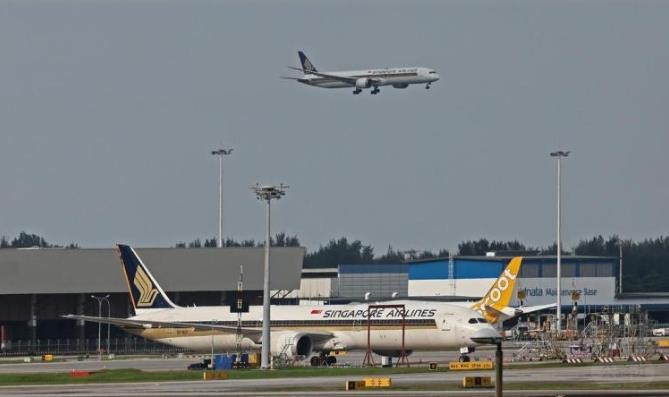
The Civil Aviation Authority of Singapore pointed out that there have been no reports of any abnormalities in flights taking off and landing locally, and the authorities have not detected any interference accidents. However, they will continue to cooperate with relevant partners and closely monitor the latest developments.
The International Air Transport Association pointed out at Global Media Day held in Geneva, Switzerland on December 9th that 5G signals may interfere with sensitive instruments on aircraft, such as radio altimeters, posing a hidden concern for flight safety in low visibility conditions.
A radio altimeter is a radar device that measures the actual altitude of an aircraft above the ground. It calculates the precise absolute altitude by emitting radio waves to the ground and receiving reflected signals, which is crucial for aircraft landing and low altitude flight.
The association pointed out that such interference issues may lead to flight delays or diversion, and even limit the runways that aircraft can use, forcing pilots and air traffic controllers to restore more manual and inefficient operating procedures. To this end, some countries have deployed measures or renovated airport facilities to reduce related risks.
Feng Linghui, Director of the Flight Standards Department of the Civil Aviation Administration of Singapore, replied to the query of the Lianhe Zaobao that the authorities have been working closely with the Information and Communication Media Development Authority, local telecommunications companies and international aviation regulators to assess the potential impact of 5G technology on Singapore's aviation safety.
He pointed out that flights taking off and landing in Singapore have not yet reported any abnormal situations related to 5G signals. In addition, Singapore's 5G network uses the 3.45 to 3.65 gigahertz (GHz) frequency band, which is far from the frequency band used by radio altimeters.
He said, 'Singapore's 5G base station transmission power level is also relatively low, which significantly reduces the related risks.'. In addition, the Civil Aviation Authority has conducted on-site tests in Singapore and has not found any significant interference with aircraft operations. ”
The frequency band approaching old equipment becomes a key risk factor
Professor Bipalb Sikdar, head of the Department of Electrical and Computer Engineering, School of Design and Engineering, National University of Singapore, explained to the Lianhe Zaobao that the frequency bands used by some 5G signals are quite close to those of key aviation instruments, especially radio altimeters.
He said that the frequency range of the radio altimeter is about 4.2 to 4.4 gigahertz, while some 5G facilities use frequencies of about 3.7 to 3.98 gigahertz.
Although the two do not overlap, if the receiver design on the aircraft is outdated, or the filtering capability is insufficient, coupled with strong signal transmission nearby, mutual influence may still occur
Skodar pointed out that such situations generally do not affect the basic flight capability of the aircraft, but may disrupt systems that rely on altimeter operation, such as causing automatic landing functions to fail to activate properly and providing incorrect prompts to pilots in low visibility.
He said that countries such as the United States and Japan have imposed restrictions on 5G deployment around airports, while Canada has implemented operational restrictions for specific aircraft models. Regulatory agencies in the United States and the European Union also require aircraft manufacturers to demonstrate the tolerance of altimeters in the vicinity of 5G signal environments. ”
Taking the United States as an example, the International Air Transport Association estimates that without mitigation measures, 5G interference could have an economic impact of up to $5.5 billion (approximately SGD 7.1 billion) or more on 10 major airports within the United States between 2028 and 2035.
These costs mainly come from operational disruptions caused by flight delays and diversion, revenue losses due to limited flight capacity, and modification and maintenance costs required to upgrade radio altimeters and related equipment.
Expert: The development of new generation communication requires early assessment of security impacts
Although 5G has not yet had an impact on local aviation safety, Skodar pointed out that as the world gradually moves towards 6G, countries should learn from the experience of 5G technology, strengthen cross departmental coordination in the early stage of spectrum planning, develop higher standards, and more anti-interference receiver specifications.
He also pointed out that Singapore's urban environment is dense, and base stations are relatively close to airports. Regulatory agencies and communication operators should assess the potential impact on key systems such as aviation as early as possible when promoting the new generation of communication networks.
Feng Linghui also said that with the continuous evolution of related technologies, the authorities will continue to closely monitor the development of 5G and future 6G, and cooperate with partners such as the Asset Media Bureau to ensure the safe coexistence of communication networks and aviation systems.
|

 Fear of God ESSENTIALS Hoodie Review: Mi86 人气#fashion
 The Derby of San Francisco Style 300 Cha112 人气#fashion
 Why the Derby of San Francisco Classic S130 人气#fashion
 Romaoss Launches "Rebirth Plan," in Talk70 人气#tech



 WeChat
 douyin