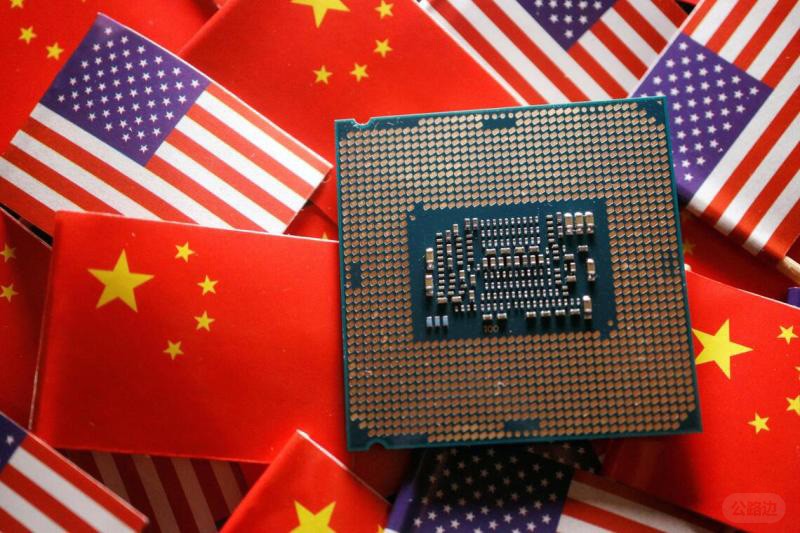
The Trump administration of the United States has announced that it will impose additional tariffs on imported semiconductor products from China, in response to China's "unreasonable" efforts to seek a dominant position in the semiconductor industry. However, the U.S. will not take immediate action; instead, it will implement this tariff measure in mid - 2027, with the specific tariff rates to be determined at a later date.
The Office of the United States Trade Representative (USTR) published a notice in the Federal Register on Tuesday (December 23), summarizing the findings of the investigation into Chinese semiconductors imported into the U.S. conducted under Section 301 of the Trade Act of 1974. The notice stated, "China's monopolistic practices targeting the semiconductor industry are unreasonable and have imposed a burden or restriction on U.S. commerce, thus (the United States) may take actions in this regard."
It also noted that the initial tariff rate on Chinese semiconductors will remain at zero and will be raised on June 23, 2027, 18 months later. The specific tariff rates will be announced at least 30 days in advance.
The potential new tariffs will cover diodes, transistors, silicon materials, electronic integrated circuits and other raw materials. Currently, the new tariffs will not apply to finished products containing Chinese semiconductors, such as computers and smartphones.
The Chinese Embassy in Washington did not immediately respond to the matter.
The investigation was launched in December last year, towards the end of the term of then - U.S. President Joe Biden, and concluded after the recent tariff truce reached between current President Donald Trump and Chinese President Xi Jinping. In accordance with U.S. law, the investigation results must be made public within 12 months of the launch of the investigation.
The U.S. delay in imposing the tariffs indicates that Trump intends to ease tensions with China, while also keeping a fallback option in case future negotiations break down. To persuade China to postpone the regulatory measures on the export of rare earth metals, Trump has already delayed the implementation of a rule that restricts the export of U.S. technology to blacklisted Chinese companies.
As reported by Reuters, the United States has also launched a review, the outcome of which may allow U.S. technology company NVIDIA to sell its second - most advanced artificial intelligence chips to China for the first time.
At present, the semiconductor industry is also awaiting the results of another investigation into imported semiconductors, which may lead to new tariffs on a large number of technological products, including those from China. Nevertheless, U.S. officials have privately revealed that they are unlikely to impose such tariffs in the near future.
|

 Fear of God ESSENTIALS Hoodie Review: Mi83 人气#fashion
 The Derby of San Francisco Style 300 Cha108 人气#fashion
 Why the Derby of San Francisco Classic S127 人气#fashion
 Romaoss Launches "Rebirth Plan," in Talk65 人气#tech



 WeChat
 douyin