Tesla’s FSD seems to be accelerating its global expansion.
This year, Tesla FSD entered China, version V14 was rolled out to users in North America and other regions on a large scale, and a regulated version launched extensive test ride experiences in European countries like Germany and Italy—conquering the European market may be just around the corner.
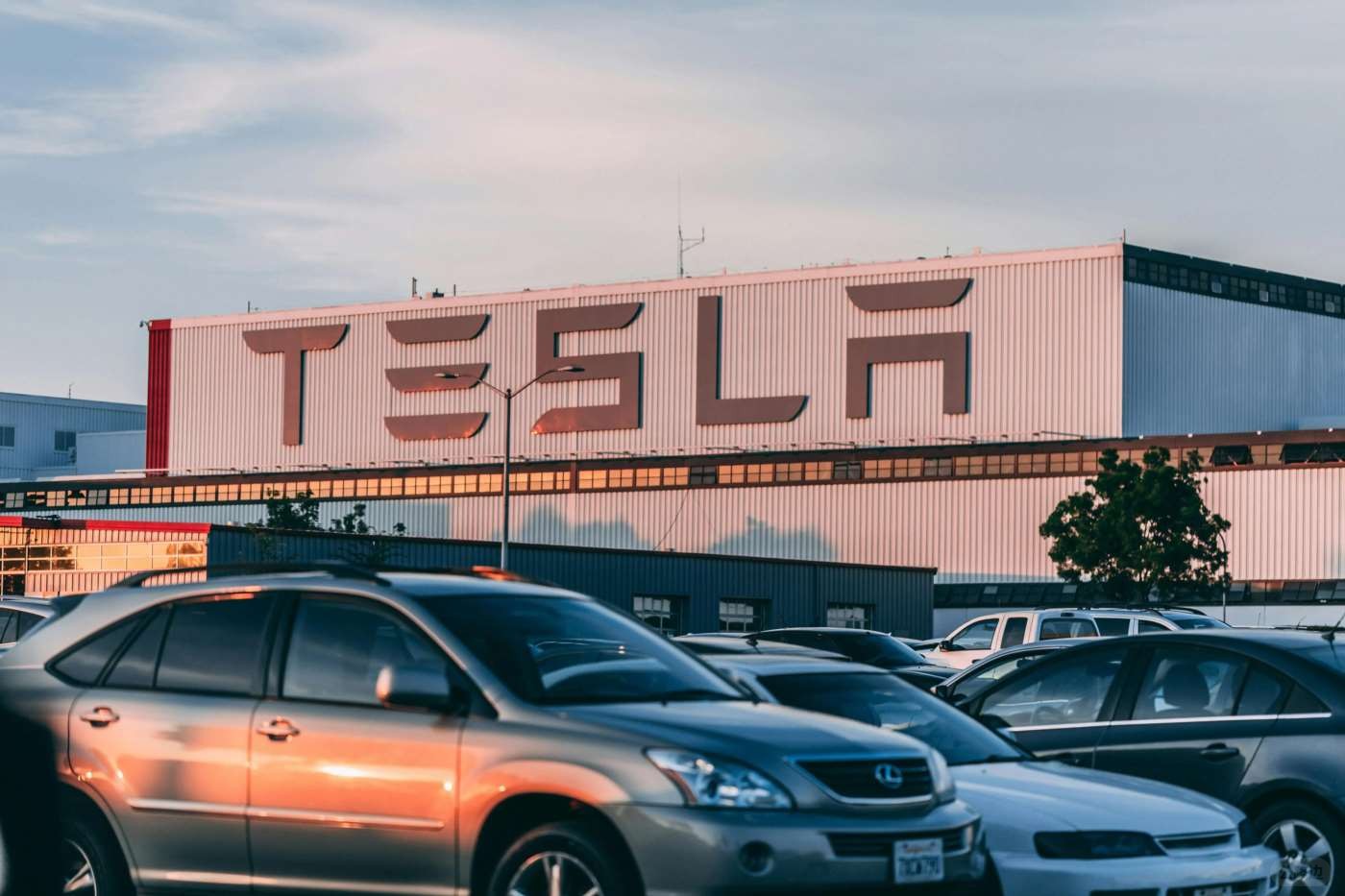
But before “conquering” Europe, FSD appears to have found its next expansion target.
In the early hours of December 23rd, Tesla CEO Elon Musk, active on platform X, revealed a bombshell—FSD is “very likely” to launch in the UAE market next month, January 2026.
This means Tesla owners in the UAE may receive FSD updates in a month’s time.
If progress goes smoothly, Tesla Robotaxis (or Cybercabs) equipped with FSD may also appear on UAE roads soon after.
On the other side, the “Chinese power” in advanced autonomous driving is also rushing to the Middle East.
The first to land were two Chinese Robotaxi companies, WeRide and Apollo Go, which obtained the first batch of fully driverless Robotaxi commercial licenses issued by the Abu Dhabi Department of Transport last November.
In the Middle East landscape, while Chinese Robotaxis are highly active, the layout of advanced intelligent assisted driving remains a “blank spot.”
Perhaps Chinese automakers and autonomous driving suppliers have realized that it is not enough to seize the initiative in driverless driving—they also need to deliver results that can compete with leading brands like Tesla in advanced intelligent driving.
It can be said that with special policy support and capital attraction, Chinese and American autonomous driving forces are converging on the Middle East, scrambling to get the “first-mover advantage.”
Therefore, the UAE has the potential to become the first major battlefield for the China-US autonomous driving showdown.
So, is Tesla FSD’s entry into the UAE a signal of the China-US autonomous driving showdown? In this decisive battle, who will take the lead, and who will emerge victorious in the end?
Let’s start by looking at the UAE.
This Week’s Benefit: Reply with [Yue Tu] in the official account background to participate in the cash red envelope lottery.
Why the UAE?
With L2-level assisted driving penetration exceeding 65% in the Chinese market, home to leading autonomous driving suppliers like Momenta and Horizon Robotics, why is the UAE more likely to become the “first major battlefield” of the China-US autonomous driving war?
In terms of policies, unlike Robotaxis that require special licenses and localized operations, L2/L2+ level assisted driving has no special licensing requirements in the UAE—it only needs to meet two-level general compliance (data localization, third-party testing) at the federal and emirate levels to launch.
If Musk’s claims are accurate, it means Tesla’s FSD has already obtained local approval in the UAE, or even completed all necessary preparations for its launch.
Beyond policy convenience, the UAE’s road environment is another favorable condition for the development of advanced autonomous driving.
Srinivas Peeta, Director of the School of Interactive Computing and Connected Transportation Lab at Georgia Tech, explained:
On one hand, urban roads in Abu Dhabi and Dubai are generally equipped with high-definition road markings, intelligent traffic lights, and V2X communication base stations.
On the other hand, new cities in the Middle East were planned with sufficient redundancy for driverless vehicles, and mixed pedestrian-vehicle traffic is rare—all of which are conducive to training autonomous driving algorithms.
Additionally, Professor Peeta pointed out that while extreme summer heat and occasional sandstorms are climatic factors that may trouble autonomous driving, their actual impact is far less than rain, snow, and freezing conditions in Europe.
Relatively relaxed access thresholds, well-developed driverless road infrastructure, and operational support undoubtedly provide numerous conveniences for advanced autonomous driving players to enter the market.
This is probably why Tesla and a number of Chinese autonomous driving suppliers hope to make the UAE their first or next stop.
So, besides the environment, what is the progress of Tesla’s competitors? Are they ready to enter the UAE?
Hardware Available, Software Missing
If Musk’s revelation is accurate, Tesla FSD will likely be the fastest advanced autonomous driving solution to enter the UAE market.
In addition to independently developing autonomous driving solutions and manufacturing whole vehicles, Tesla has already conducted extreme high-temperature and sand durability tests in Dubai and Abu Dhabi years ago, accumulating massive localized data—there are no technical obstacles.
Furthermore, Tesla FSD enjoys worldwide reputation and enormous influence.
Before its official launch in the European market, related test videos and experience content garnered significant attention from netizens on X.
Even a large number of car owners and netizens urged Musk online to roll out FSD quickly. FSD’s entry into the UAE is probably a response to this positive feedback.
For Chinese automakers, while some cars support advanced NOA (Navigate on Autopilot) in China, these features are almost unavailable overseas—a stark contrast to Chinese Robotaxis active abroad.
New energy vehicle startups with more aggressive intelligentization strategies, such as XPeng, only retain basic XPILOT assisted driving in their G6 and G9 models sold in the UAE.
Due to local regulations and supervision, access qualifications, and road training, most domestic models sold overseas have advanced autonomous driving in a “to be unlocked” state.
The good news is that, like Tesla, most domestic models sold overseas still retain relevant hardware: XPeng G6 and G9 sold in the UAE are both equipped with dual Orin-X chips and high-definition cameras.
Technically and policy-wise, there are not many obstacles for advanced autonomous driving to “settle” in the UAE. However, whether autonomous driving solutions perform strongly enough and can be rolled out quickly depends more on automakers’ local user bases.
Sales Volume Also Matters
Whether an autonomous driving solution can be rapidly rolled out locally and timely collect useful road data depends more on automakers’ sales volume and ownership than hardware and software.
Tesla’s advantage in the UAE lies not only in technical reserves and experience but also in solid sales. According to Tesla, as of May 2025, over 40,000 Teslas are on UAE roads.
Tesla first entered the UAE market for whole vehicle sales in 2017. In contrast, Chinese automakers like XPeng and BYD only entered the UAE in recent years—BYD, which entered in 2021, is perhaps the most established among them.
These domestic brands rarely disclose specific sales figures for the UAE market alone. From January to November this year, XPeng’s cumulative overseas sales reached 39,773 units across 52 countries and regions worldwide. When broken down to a single market, the number may not be large.
This means domestic new energy vehicles have not entered the UAE market on a large scale and still lag far behind Tesla.
Without a sufficient vehicle base, it is impossible to collect high-quality road data. Before figuring out how to launch autonomous driving solutions in the UAE, boosting local sales is the top priority for Chinese automakers.
Chinese automakers and autonomous driving solutions have lost some first-mover advantage in the UAE, but this is not enough to conclude the “China-US war.”
China’s Autonomous Driving “Accelerator”
As mentioned earlier, Tesla FSD’s entry into the UAE will be a key signal for the China-US autonomous driving showdown.
If Musk’s claims are accurate, Chinese automakers and autonomous driving suppliers will likely accelerate their efforts to capture the UAE market.
Unlike Tesla, leading autonomous driving suppliers such as Momenta, Horizon Robotics, and Zoyii generally do not have whole vehicle manufacturing capabilities. The overseas expansion of advanced autonomous driving hardware and software relies on partnerships with exported vehicle models.
One example is the European version of Firefly unveiled at the Munich Motor Show last September, which, in addition to offering right-hand drive layouts, comes standard with Horizon Robotics Journey 5 chips and supports L2+ level assisted driving.
In addition, SAIC and Chery, which also focus on overseas layout and even have high overseas sales, may equip some of their overseas models with Horizon’s urban NOA solutions.
For domestic advanced autonomous driving solutions, in addition to complying with local regulations and laws, ensuring data localization and road training, another challenge comes from the “globalization” of hardware and software solutions.
For instance, the overseas launch of domestic autonomous driving software needs to rely on overseas computing platforms, and the “hardware-software integration” model implemented in China may not work overseas.
To address this issue, both Momenta and Zoyii have developed autonomous driving solutions based on Qualcomm chips.
Among new energy vehicle startups, XPeng Motors founder He Xiaopeng revealed that the second-generation VLA (Vision Language Action) equipped with a “physical world model” will be launched in the second quarter of next year.
At that time, XNGP will be able to operate globally, including on Robotaxis to be mass-produced next year.
In terms of progress, while Tesla FSD has an advantage in expansion speed, domestic autonomous driving solutions are not far behind.
Like new energy vehicles, overseas expansion is the main way for Chinese autonomous driving to further enhance its influence and competitiveness.
For both Chinese and American companies, the UAE is not only a relatively easy market to enter but also one of the most important components of their global layout.
Once domestic advanced autonomous driving solutions are successfully implemented in the UAE market, it will mark a phased victory for the overseas expansion of Chinese solutions.
On the other hand, the overseas experience accumulated in the UAE may also be replicated in other overseas markets.
Undoubtedly, the UAE is a must-win battleground for Chinese and American autonomous driving solutions, and one of the most fiercely contested markets.
Here, we will find out which has more advantages—the “multi-sensor fusion” solution or the “pure vision” solution.
The question of “which is stronger: Chinese or American autonomous driving solutions” cannot be answered definitively yet, as Tesla and Chinese advanced autonomous driving solutions (excluding Robotaxis) have not officially taken the stage in the UAE.
So, who do you think will win once Chinese autonomous driving and Tesla land in the UAE market?
(End)
|

 Fear of God ESSENTIALS Hoodie Review: Mi86 人气#fashion
 The Derby of San Francisco Style 300 Cha112 人气#fashion
 Why the Derby of San Francisco Classic S130 人气#fashion
 Romaoss Launches "Rebirth Plan," in Talk70 人气#tech



 WeChat
 douyin