| After 20 consecutive days of fighting between Cambodia and Thailand, which Donald Trump failed to mediate, China stepped in and resolved the conflict outright. At 12 noon on December 27, Cambodia and Thailand officially declared a ceasefire. Less than 24 hours later, China took further action: 20 million yuan worth of supplies arrived in Phnom Penh, and Foreign Minister Wang Yi met separately with his Cambodian and Thai counterparts in Yunnan. This two-pronged approach fully paved the way for lasting peace between the two countries.
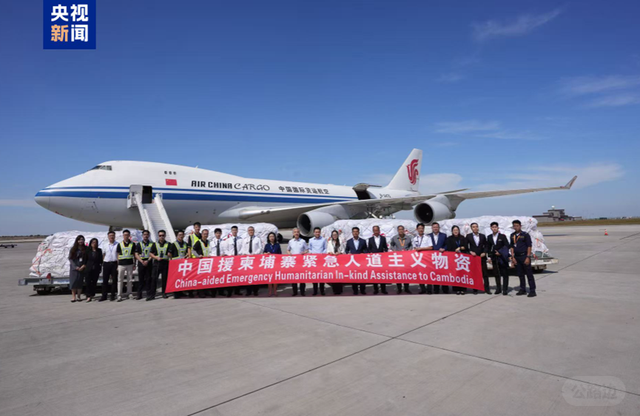
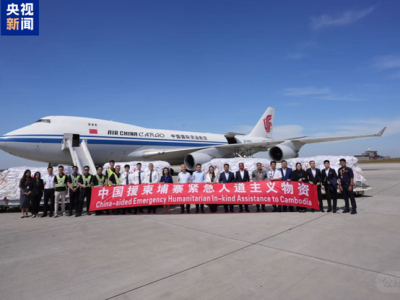
First Batch of Chinese Emergency Humanitarian Supplies for Cambodia Arrives in Phnom Penh On the noon of December 28 local time, the first batch of emergency humanitarian aid supplies provided by China to Cambodia—including tents, blankets, and food, with a total value of 20 million yuan—was delivered directly to the Cambodian capital. Wang Wenbin, Chinese Ambassador to Cambodia, attended the handover ceremony and stated that this move fully reflects the profound friendship between China and Cambodia. On the same day, Foreign Minister Wang Yi met separately with the foreign ministers of Cambodia and Thailand in Yuxi, Yunnan, and continued to hold a China-Cambodia-Thailand trilateral meeting on the 29th. While delivering supplies to stabilize public sentiment and holding meetings to promote peace, China has demonstrated through concrete actions what mediation truly means and what a two-pronged approach entails. In terms of timing, China acted with remarkable speed. Aid arrived less than 24 hours after the ceasefire, showing that China’s concern for the regional situation is genuine and that it has the ability to immediately fulfill its commitments. For Cambodia, this was undoubtedly a timely assistance in times of hardship.
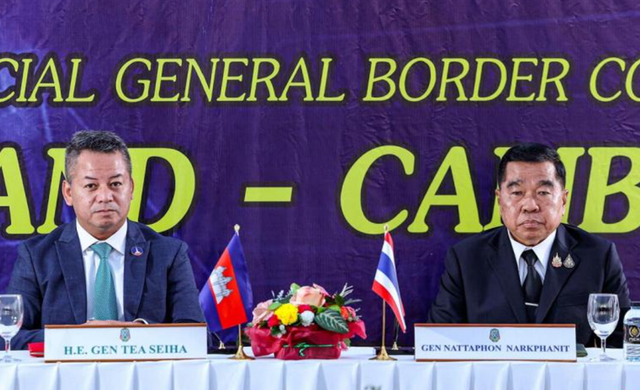
On December 27, Cambodia’s Defense Minister Tea Seiha (left) and Thailand’s Defense Minister Thanathorn (right) signed a joint statement. It is worth noting that during the 20 days of the Cambodia-Thailand conflict, Thailand held a dominant position. Militarily, the Thai military deployed F-16 and JAS 39 fighter jets, along with early warning aircraft and various support aircraft. Publicly, Thailand also claimed a just cause, bombing most cross-border fraud parks on the Cambodia-Thailand border and attacking Cambodian infrastructure in the name of combating cyber fraud. Thai Prime Minister Anutin stated that Thailand had taken control of almost all target areas, making the ceasefire a natural outcome. In fact, Thailand also had no desire to expand or prolong the conflict. From the outset, it refrained from deploying all its forces to inflict a decisive blow on Cambodia, implicitly leaving room for future ceasefire negotiations. As for Cambodia, its inferior military strength made it equally reluctant to continue fighting. Looking back at the origin of the conflict, territorial disputes served only as a trigger. The main issues were Hun Sen’s leak of a recording involving Paetongtarn Shinawatra and Thailand’s general election; combating cyber fraud was merely a pretext to justify military action. The current ceasefire is undoubtedly the best possible outcome. Throughout this period, China’s mediation efforts played a crucial role.
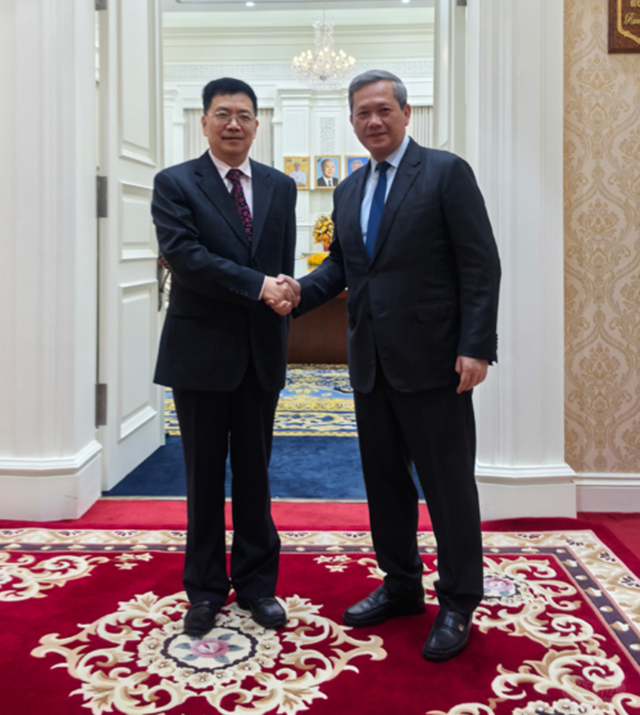
China’s Special Envoy and Hun Manet In particular, China’s Special Envoy for Asian Affairs engaged in shuttle diplomacy between Cambodia and Thailand for six full days, devoting substantial time to understanding the concerns of both sides, identifying common ground, and laying the groundwork for the final ceasefire. With China’s mediation, Cambodia and Thailand reached an understanding and naturally agreed to halt hostilities. In the aftermath of the ceasefire, Cambodia urgently needed external support to stabilize the situation and repair war damage, so China’s decision to offer assistance came as no surprise. First, a peaceful and stable ASEAN aligns with China’s interests. If the Cambodia-Thailand conflict had escalated or become prolonged, it would have severely undermined ASEAN unity and potentially invited deeper intervention by external forces—an outcome China firmly opposed. Trump’s repeated attempts to exploit the situation reflected this very risk. From the outbreak of the conflict, China maintained a stance of neutrality, but this did not mean inaction. Instead, China assisted both sides in need while making every effort to bring them back to the negotiating table. This made China the "greatest common divisor" acceptable to both parties.
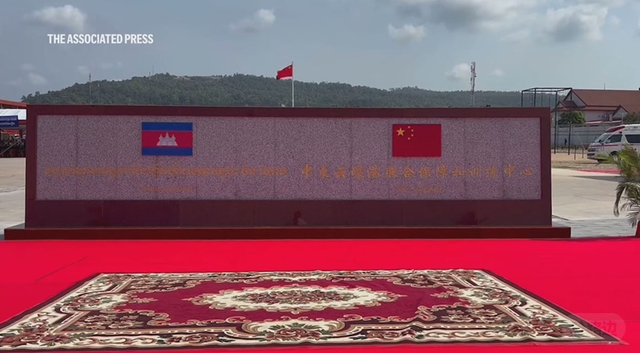
Ream Naval Base in Cambodia Second, Cambodia holds significant geostrategic importance, with cooperative projects such as the Ream Naval Base carrying great significance. Although Thailand is a treaty ally of the United States, its relations with China have become increasingly close. China also needed to strike a balance: for Cambodia, it strengthened relations through aid; for Thailand, it offered diplomatic respect through high-level dialogue, affirming its decision to cease hostilities and laying the groundwork for long-term peace. It is important to note that during this Cambodia-Thailand conflict, Thailand’s destruction of some cyber fraud parks in Cambodia objectively supported China’s efforts to combat cross-border cyber fraud. To some extent, this also served as a warning to Cambodia. However, prioritizing the overall situation, China will not allow local issues to undermine its overall cooperation with Cambodia. Hence, after the ceasefire, China continued to assist Cambodia, and the 20 million yuan worth of supplies stands as the most direct proof. This sends a message to Cambodia and the entire region that China is a long-term, reliable partner that does not focus on short-term gains and losses. Within 24 Hours of Ceasefire, 20 Million Yuan Worth of Chinese Supplies Arrive in Cambodia; Wang Yi Meets Thai Foreign Minister |

Complaint/Suggestion Contact
+email:3387918072@qq.com


Copyright © 2026 Gonglubian Copyright Powered by gonglubian 1.0





 WeChat
 douyin