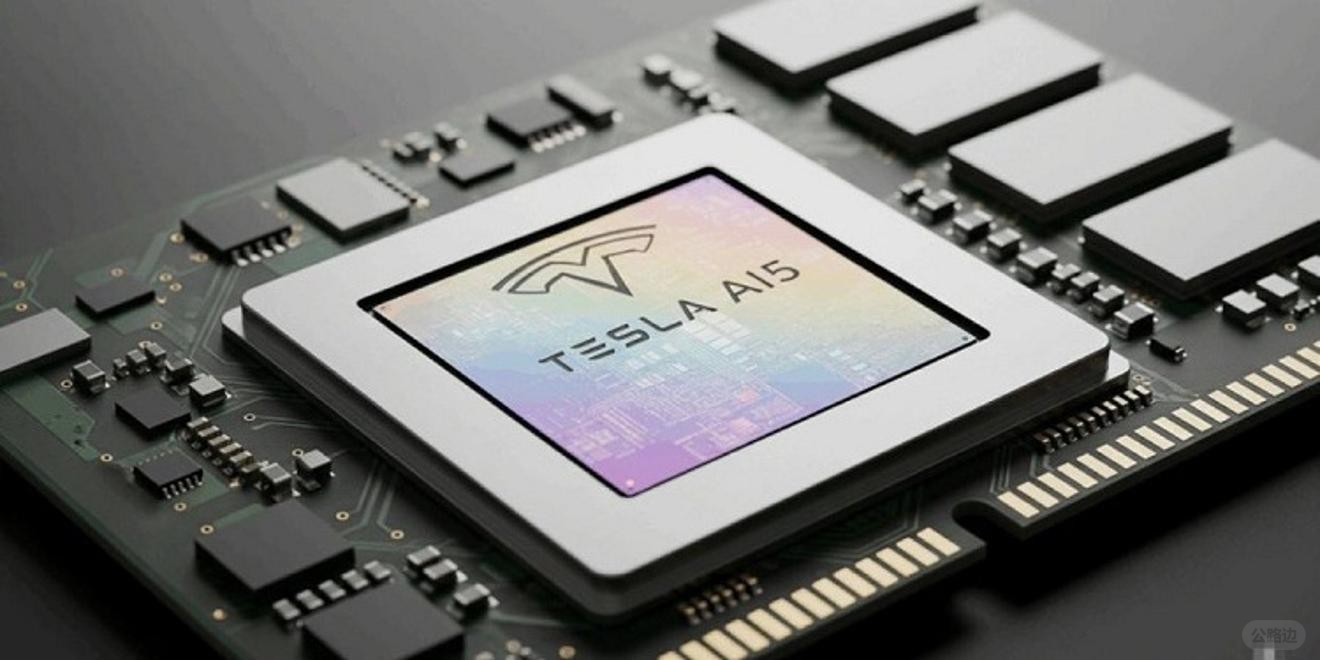
On December 11th, Tesla supplier Samsung is preparing to mass produce AI5 chips, which will further promote the company's development in the field of autonomous driving.
According to the latest report from Korean media Sedaily, Samsung is accelerating its preparations to produce AI5 chips in the United States and has recently recruited a group of experienced engineers for its Customer Engineering team. The team will assist in solving complex wafer foundry challenges, stabilize production yield, and ensure the smooth progress of the manufacturing process for this new project.
This large-scale recruitment indicates that Tesla's AI5 project is rapidly advancing within Samsung. Previously, Samsung and TSMC jointly won Tesla's chip order and became one of the two designated suppliers for AI5 chips.
According to reports, TSMC will use its 3-nanometer process technology to produce AI5 chips, while Samsung plans to conduct trial production with a 2-nanometer process as a key validation of its advanced process capabilities.
Tesla CEO Elon Musk recently explained that there are differences in the chips produced by the two foundries because "they transform designs into physical form in different ways. However, Tesla's goal is to make the two versions of chips completely identical in functionality, which is undoubtedly a major challenge. This situation is reminiscent of the "chip gate" incident of the Apple A9 chip back in the day, when different manufacturers manufactured it, resulting in differences in chip performance.
According to IT Home, AI5 chip is the next generation of special hardware developed by Tesla for its auto drive system. It will also be used in Optimus humanoid robot project, as well as various AI driving functions in vehicles and other products. Currently, Tesla vehicles are equipped with AI4 chips (formerly known as HW4 or Hardware 4).
AI5 is customized for Tesla and will work in conjunction with its neural network, focusing on real-time inference to make safe and logical decisions during operation.
Musk called AI5 an "amazing design" that achieved a "huge leap" compared to the current AI4 chip: computing speed increased by about 40 times, raw computing power increased by 8 times, memory capacity increased by 9 times, and energy efficiency per watt also reached 3 times that of AI4.
Musk confirms that AI5 chips will be installed in "small batches" next year; But to achieve mass production, it will take until 2027. In addition, AI5 is not the end point. Musk has revealed that the next generation of AI6 chips is expected to be put into production in mid-2028.
|