"U.S. has cloned Iranian suicide drones" "Cracking the Shahed drone through reverse engineering, the U.S. hits back at Iran in kind"...
These remarks are Western media comments on the U.S. military's first deployment of suicide drones in the Middle East. According to a report by Global Times on December 8 citing foreign media, as the U.S. strives to catch up in the field of small, low-cost drones, the U.S. military has copied a drone similar to the "Iranian suicide drone" and equipped it to its forces in the Middle East.
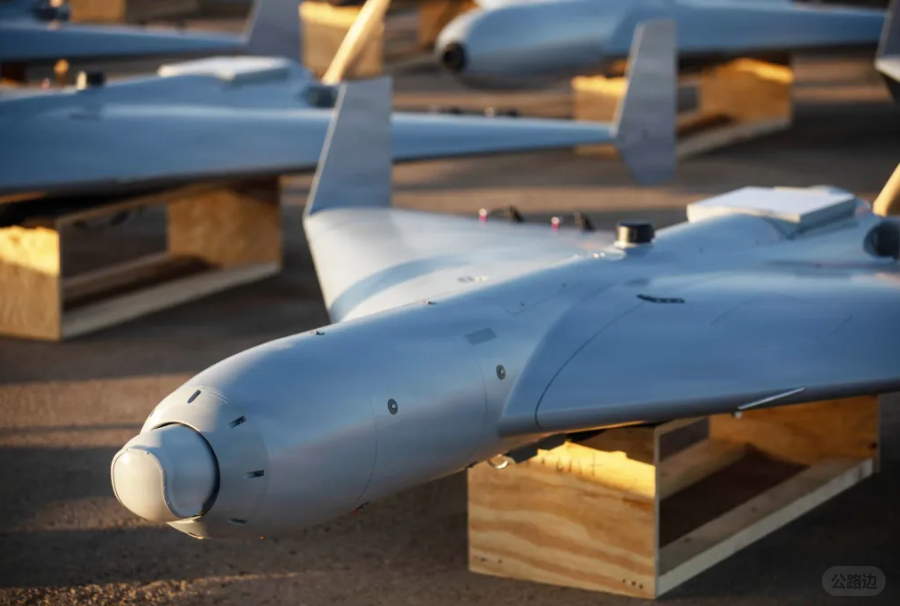
The U.S. military has begun deploying the LUCAS suicide drone in the Middle East.
America’s Version of the "Flying Motorcycle" Appears in the Middle East
Perhaps the U.S. military-industrial complex and the U.S. military never imagined that one day they would have to "clone" Iranian weapons—namely, the Shahed-136 long-range suicide drone—and equip them on a large scale. This Iranian weapon is not a high-tech system with sophisticated technical barriers; components such as its two-stroke piston engine, GPS satellite navigation device, inertial navigation system, and control system can even be procured from ordinary commercial markets. Yet its low cost and long range have enabled it to shine on the battlefields of the Russia-Ukraine conflict and the Middle East. The dominant side uses such weapons to continuously erode the war potential and capabilities of the weaker side, while the weaker side deploys them to harass the opponent relentlessly, imposing immense air defense pressure and drastically driving up the cost of war for the dominant party.
The Shahed-136 is a delta-wing drone powered by a piston engine at its tail. It features a carbon fiber fuselage with internal metal supports, capable of carrying a warhead weighing between 50 kg and 90 kg, with a maximum speed of approximately 180 km/h and a maximum combat range of up to 2,000 km. Utilizing a combination of inertial navigation and satellite navigation, the drone can strike fixed targets at pre-programmed coordinates. Because it uses an engine commonly found on motorcycles, it emits a similar sound during flight, earning it the nickname Iran’s "flying motorcycle".
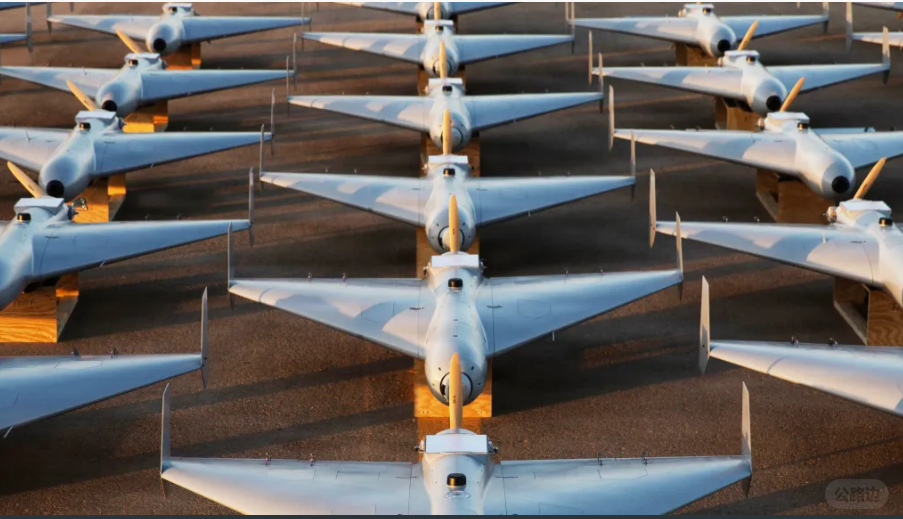
The LUCAS suicide drone is equipped with an electro-optical system in its nose, outperforming Iran’s Shahed-136 in terms of performance.
In terms of its battlefield performance, take the Shahed-136 as an example. Amid the Iran-Israel conflict and the attacks launched by the Houthi armed forces against Israel, Iran and the Houthis have continuously deployed this drone to strike Israeli targets, keeping Israel in a constant state of alert. Israel is often forced to use expensive air defense missiles for interception, resulting in an extremely low cost-effectiveness ratio—the unit price of a Shahed-136 drone is about $20,000, while even the cheapest interceptor missile of Israel’s Iron Dome system costs $100,000 per interception. If air-to-air missiles are used for interception, the cost soars to $400,000–$600,000 per shot.
In the Russia-Ukraine conflict, Russia has used its domestically produced Geranium series of suicide drones, modeled after the Shahed-136, to launch sustained strikes on Ukrainian infrastructure and military targets. Their low production costs, large-scale manufacturing capacity, combined with coordinated deployment alongside decoy drones and other types of missiles, have allowed near-daily attacks on Ukraine’s critical military objectives and infrastructure in recent months, much to Ukraine’s distress.
Witnessing the "flying motorcycles" rampaging unchecked on the battlefield, the U.S. military watched with growing urgency. Left with no other option, it began seeking long-range suicide drones similar to the Shahed-136. At an exhibition titled "Multi-Domain Autonomous Systems" hosted by the Pentagon last July, Spektre Works, a company based in Arizona, showcased an American version of the "flying motorcycle"—the LUCAS suicide drone. Its striking resemblance to the Shahed-136 sparked widespread discussion. The long-range suicide drones recently deployed by the U.S. military in the Middle East are none other than the LUCAS.
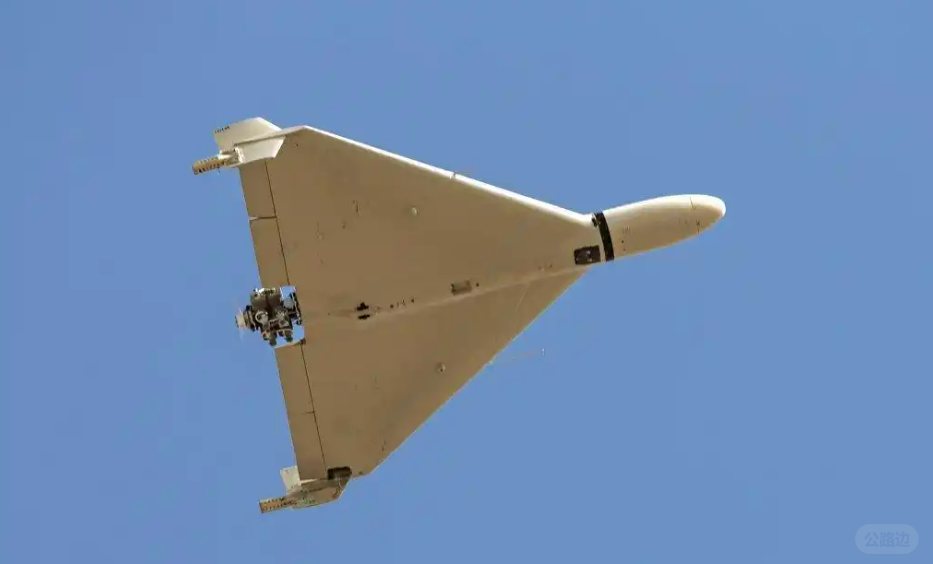
Witnessing the "flying motorcycles" wreaking havoc on the battlefield, the U.S. military has also moved to acquire long-range suicide drones similar to the Shahed-136.
According to information released by Spektre Works, the LUCAS suicide drone has a wingspan of 8 feet (approximately 2.4 meters) and a length of about 10 feet (approximately 3 meters), with an endurance of around 6 hours. It comes in both low-end and high-end variants. The low-end model is equipped with a camera in the nose for reconnaissance or suicide attacks, boasting a range of about 800 km. The high-end variant features a rotatable electro-optical turret in the nose and a satellite communication antenna at the tail, capable of carrying a 50 kg warhead with integrated reconnaissance and strike capabilities, and a range exceeding 1,500 km. Both variants can be launched via rocket-assisted takeoff or vehicle-mounted systems, enabling large-scale deployment in a short period.
The U.S. military emphasizes that the "platform cost" of the LUCAS drone is only $35,000, but in reality, this figure refers solely to the price of the basic target drone. Key components such as the warhead, electro-optical turret, and satellite terminal are offered as optional extras. To achieve full combat capability, the cost of a LUCAS drone rises to $50,000–$100,000. While significantly higher than Iran’s Shahed-136, it remains far cheaper than other U.S. land-attack weapons with comparable ranges.
U.S. Central Command announced on December 3 the establishment of its first suicide drone squadron in the Middle East—the Task Force Scorpion Strike (TFSS). The U.S. Department of Defense stated that the deployed drones feature long ranges and autonomous combat capabilities, and can be launched via multiple methods including catapults, rocket boosters, and ground mobile systems. Last September, U.S. Central Command activated a Rapid Deployment Joint Task Force led by its Chief Technology Officer, aimed at accelerating the delivery of low-cost, high-performance drones to frontline combat units. On December 3, U.S. Secretary of Defense Lloyd Austin stated on social media that low-cost, disposable battlefield drones have proven effective, and the U.S. cannot afford to fall behind in this domain: "We cannot afford to use $2 million missiles to shoot down cheap drones."
Analysts argue that this move marks the first time the U.S. military has inducted suicide drones designed based on Iran’s Shahed-136 and enhanced through reverse engineering into its active combat inventory. It not only aligns with Secretary Austin’s strategy to "unleash the U.S. military’s drone advantage" but is also seen as a direct countermeasure to the persistent harassment campaigns waged by Iran and its proxy forces using low-cost drones. The U.S. military’s rapid deployment of suicide drones is regarded not only as a tactical capability upgrade but also as a notable shift in its operational philosophy and weapons procurement doctrine, with the potential to exert far-reaching impacts on regional security dynamics.
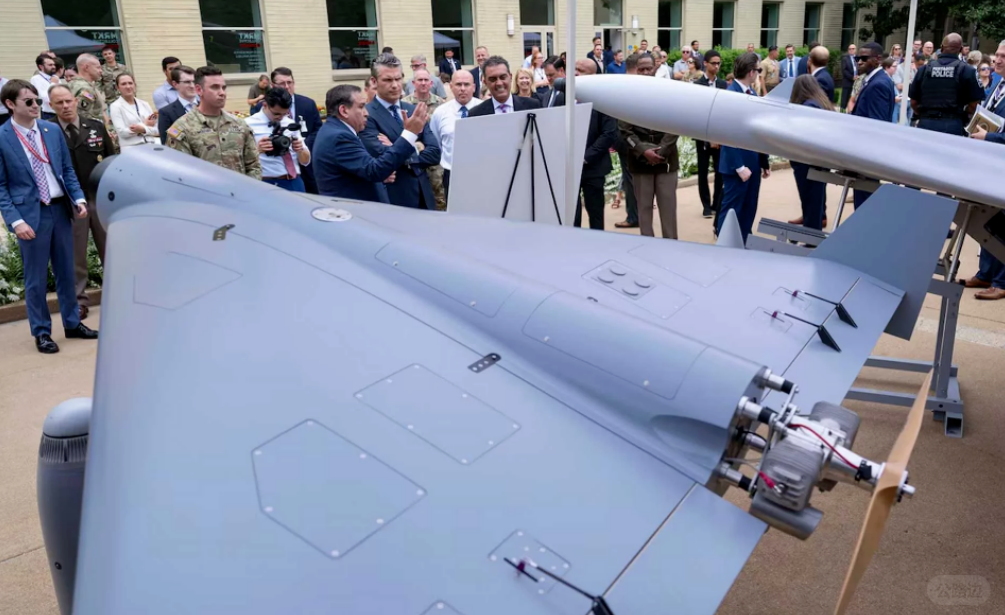
Due to its striking resemblance to Iran’s Shahed-136 drone, the LUCAS has earned the moniker of America’s version of the "flying motorcycle".
The U.S. Military’s Growing Emphasis on Attrition Deterrence
The U.S. military has diverted substantial resources toward developing low-cost strike capabilities, particularly expendable autonomous systems such as low-cost suicide drones, low-cost cruise missiles, and low-cost standoff-guided bombs. Its primary objective is to reshape the logic of deterrence and warfare through "quantitative saturation" and "cost dominance". In U.S. military doctrine, low-cost cruise missiles and drone swarms are typically integrated as part of Expendable Autonomous Systems (AAS).
Notably, this shift represents more than just a tactical supplement; it is a strategic initiative aimed at achieving dominance over adversaries in terms of cost exchange ratios. Since the end of the Cold War, the global military strategic landscape has undergone a profound and disruptive transformation. The U.S. military contends that in the face of rivals’ sustained investments in Anti-Access/Area Denial (A2/AD) capabilities, America’s traditional military advantages—centered on a small number of high-value, high-performance platforms such as aircraft carriers and stealth fighters—are confronting unprecedented survivability challenges. Rooted in the Cold War-era warfare paradigm, the U.S. military concentrates much of its combat power in a limited number of expensive assets, which directly exposes it to significant "concentration risk" in high-intensity conflict environments. If adversaries successfully target these high-value platforms using long-range precision fires, the U.S. would suffer crippling strategic losses.
This shift in strategic thinking directly drove the U.S. Department of Defense to launch the Replicator Initiative in August 2023—a program that can also be regarded as a strategic guideline. The initiative aims to deploy thousands of low-cost autonomous systems across multiple domains within 18 to 24 months. The demonstrated effectiveness of systems like Iran’s Shahed drones served as a direct catalyst for accelerating the U.S. Replicator Initiative, which seeks to counter such asymmetric threats through scale and speed. The LUCAS drone stands as a successful case of "learning from the opponent to gain an edge", embodying the U.S. military’s efforts to leverage adversaries’ proven successes and integrate them with its own technological strengths to achieve strategic superiority.
The emphasis on low-cost strike capabilities ranks among the most profound lessons the U.S. has drawn from real-world wars and conflicts in recent years. A key military objective of this strategy is to force adversaries into a "strategic financial trap". Its essence lies in deploying low-cost unmanned systems (typically priced from thousands to tens of thousands of dollars) as expendable assets for attacks or reconnaissance, compelling opponents to respond with costly air defense interceptors (valued at hundreds of thousands or even millions of dollars per unit). Even if air defense systems achieve a 100% interception rate, the defending side will be rapidly drained economically and logistically. This lopsided cost exchange ratio shifts the burden of strategic attrition from the U.S. military to its adversaries, rendering their traditional high-cost air defense architectures economically unsustainable.
In practice, the low-cost attack strategy is fundamentally reshaping the practices, tactics, and ethical boundaries of modern warfare. The Russia-Ukraine conflict provides a real-world case study of low-cost drones in high-intensity warfare. Combat experience has demonstrated that drones have become core assets for long-range strikes, reconnaissance, and fire guidance. Dense drone surveillance networks—especially the rapid conversion of consumer-grade first-person view (FPV) drones into precision strike weapons—have enabled ground artillery and guided munitions to achieve a "zero-wait" operational tempo of detect-and-engage-instantly. This rapid tactical adaptation and the democratization of technology have drastically enhanced the efficiency and lethality of fire strikes.
The proliferation of drone technology has significantly lowered the barriers to entry for military capabilities, empowering non-state actors to effectively threaten critical infrastructure. For instance, the Houthi armed forces have launched asymmetric attacks against military bases and key targets in central Israel using low-cost drones and ballistic missiles.
While low-cost strike capabilities confer significant strategic advantages, they also pose formidable defense challenges. Currently, kinetic interception weapons (such as traditional air defense missiles) fail to address the cost exchange ratio dilemma. As a result, the U.S. military’s defense priorities have been forced to shift toward high-capacity, low-cost countermeasures, such as directed energy weapons including high-energy lasers and high-power microwave systems. These weapons offer negligible per-shot costs and high engagement rates, positioning them as the ultimate solution for countering large-scale swarm attacks and breaking the cost exchange ratio trap. The U.S. Department of Defense has also launched the Replicator-2 Initiative, specifically tasked with addressing small drone threats to critical facilities and troop concentrations, mandating the mass procurement of high-capacity, short-range kinetic interceptors.
As the world’s preeminent military power, the U.S. military’s deliberate entry into the "low-cost attack strategy game" will have implications that extend far beyond mere tactical adjustments for offensive operations. This strategic transformation, driven by a major power’s deep involvement and participation, is forcing a disruptive and fundamental overhaul of the global defense technology ecosystem. It will inevitably reshape the global deterrence landscape and the nature of warfare in profound and irreversible ways, potentially triggering a new round of arms races and technological revolutions—developments that warrant close attention and in-depth research.
|

 Fear of God ESSENTIALS Hoodie Review: Mi83 人气#fashion
 The Derby of San Francisco Style 300 Cha108 人气#fashion
 Why the Derby of San Francisco Classic S128 人气#fashion
 Romaoss Launches "Rebirth Plan," in Talk66 人气#tech



 WeChat
 douyin