My Love for Cars
I love cars, and I love driving them even more. I’ve had many dreams about driving, one of which goes like this: I said proudly to my partner, “You know what? My Audi can practically fly”—back then, my ride was a 2018 Audi Q5. Upgrading from a Passat to an Audi was already a massive leap in driving experience for me. I loved its agility and speed, as well as its responsiveness and smooth handling.
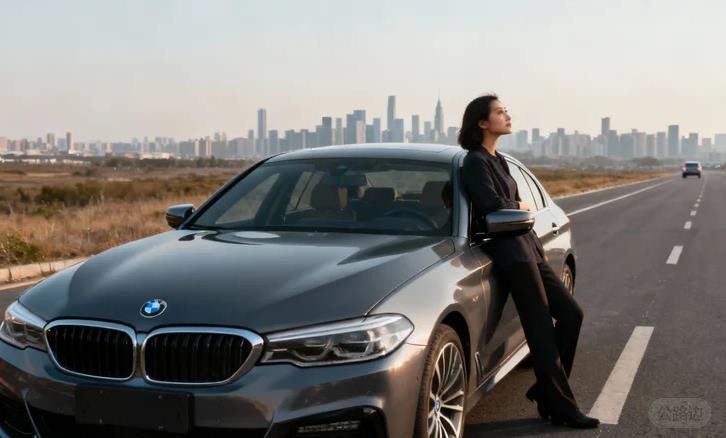
Why do people love cars? In the imagery of dreams, a car represents a large machine—symbolizing speed and power, and more fundamentally, control. It is an epitome of humanity’s will taming the external world. Car enthusiasts are often captivated by this sense of complete mastery—it’s like taming a powerful beast, a thrill that resonates with shooting and hunting.
Cars, guns, hunting—these are all favorite games and toys of men. To avoid gender bias, we call this the animus archetype. Since women also possess an animus within them, there are female car lovers like me, and reliable female drivers too. This shows that deep down, everyone admires strength and toughness; this archetype seeks to conquer the world and finds fulfillment through gaining a sense of control.
Control is one of humanity’s most primal desires. Anxiety has been with us since the dawn of evolution, an innate survival instinct etched into our genes. Control is precisely the primary way to fend off anxiety: by mastering the world, people can affirm their sense of power and overcome deep-seated unease.
This is why humans are obsessed with cars (and large machinery)—it stems from both genetic and subconscious urges, as well as the sense of identity and self-expression in reality. Thus, a car is more than just a tool; it is the embodiment of modern humans’ inner archetypes. Through it, we confront anxiety and affirm our very existence.
Test-Driving the New Ride
I’ve written many articles about cars and driving (For more: The Thrill of Speeding, My Car, Why I Love Driving). This one is dedicated to expressing my passion and admiration for my new ride—the 2026 BMW X5 Plug-in Hybrid.
I did a lot of prep work before making this upgrade. First, I had a tree cut down. Lacking branches for cover, a dying large tree in front of my house had become a public restroom for crows from several blocks around. Every day, the birds continuously bombarded my car with droppings—so badly that the entire roof was “painted” over, causing clogged drains and water to seep into the trunk. To prevent my new car from suffering the same fate, I had to resolve this problem first.
Next was the rat infestation. My house is near a stream, teeming with wildlife, and rats often build nests along the creek bank. During the dry season, things were manageable—they only came to the yard and trash bins to forage at regular intervals, coexisting peacefully with us. But as soon as the cold, rainy season hit, the relentless dampness drove them into any dry, warm place—and the space under a car’s hood was perfect. My Q5 had fallen victim to rat infestations twice, leaving permanent, irreparable damage and a painful lesson. I would never tolerate my beloved car being mistreated like that again. To solve the problem once and for all, I had to go all out and clear out the garage, which had long been turned into a storage room for clutter. The piles of toys, outdoor tools, and unused furniture—freeing up enough space to park a car felt like moving half my house.
Two months later, the prep work was finally done. With the excitement of welcoming a new family member, I embarked on my test-drive journey. Test-driving is time-consuming and tiring, yet utterly fascinating. It’s not like women shopping for clothes—even though a test drive does involve an aesthetic element. But a car is, after all, a machine. Looks can only be a bonus, never the core priority—I only realized this after test-driving a Volvo.
I test-drove no fewer than ten cars, including Mercedes-Benz, BMW, Lexus, and Volvo. Test-driving a car is like getting to know a person—it requires two things. First, ability: only with enough experience can you discern subtle differences from small details. When I bought my Audi seven years ago, I was a complete novice and couldn’t tell the slight pros and cons between a BMW and an Audi at all. Second, experience: broad exposure allows you to compare and evaluate, gradually clarifying and solidifying your preferences through repeated deliberation.
Now, I can break down the driving experience into specific dimensions and clearly identify my preferences and the reasons behind them. That’s why, the moment I laid eyes on my current car, I knew—this was the one. In this process, my sense of self (at least the part related to cars) has gradually taken shape.
This Is NOT a BMW Advertisement
I don’t want to show off with technical jargon; instead, I’ll break down the key components of the driving experience purely from an ordinary user’s perspective.
Having driven an Audi for years, I’m quite familiar with the handling feel of German cars. Compared to German models, I’d describe the driving experience of Japanese cars as having a “plastic feel”—this encompasses the vehicle’s weight, steering wheel feedback, and suspension performance. Sitting in a Japanese car feels like sitting in a racing simulator at an arcade. The real signals from the outside environment fail to quickly translate to the driver’s senses. The steering wheel lacks resistance, feeling the same no matter how far you turn it; the suspension filters out too much road information, robbing you of road feel; the body is light with mediocre posture control, making the car feel unstable at high speeds and undermining the driver’s confidence.
Comparing German cars—Mercedes-Benz, BMW, and Audi—within the same lineage is far more interesting. Since they share the same roots, their differences lie not in basic quality, but in their specialized focus, making the comparisons much more nuanced.
The advantages of German cars are well-known—they’re like the “Dog Beating Staff School” in Jin Yong’s martial arts novels: solid, stable, eschewing flashy gimmicks and excessive packaging, relying instead on genuine mechanical prowess to prevail. This is why German cars are generally sturdy, stable, and offer excellent handling. Yet beneath this shared foundation, the German Big Three have each developed distinct specialties and priorities.
As the saying goes, “BMW for driving, Mercedes for riding”. The reason is simple: Mercedes-Benz prioritizes comfort and quietness, so its entire vehicle tuning is geared toward this goal. The suspension is tuned to filter out more road noise, delivering a smoother, more stable ride; the steering wheel has lighter damping for effortless handling; power delivery prioritizes smoothness—sacrificing some acceleration burst to flatten the power curve and avoid jerks during short bursts of speed. All these features lend Mercedes-Benz an extremely comfortable, luxurious driving feel, but it isn’t particularly thrilling to drive—because it was never designed as a driver’s car. I’d compare this feeling to driving a floaty boat, gliding along the road. It’s stable enough with ample power, but it just lacks that extra punch.
I drove my Audi for seven years, so I know its driving feel like the back of my hand. The Q5 was nimble and agile, with responsive acceleration that rarely disappointed; its body roll during consecutive turns and chassis rigidity were more than enough to keep the driver confident. However, my Q5 had a relatively stiff suspension—it only slightly dampened road noise before relaying it faithfully to the cabin, which may just be a difference between model years and trims. But at the very least, when it comes to absorbing minor vibrations, the Q5 was noticeably less refined than the BMW.
My first taste of BMW’s brilliance came when my car broke down and I rented an X3 for a week. It was a revelation—a case of “having seen the vast ocean, one can no longer be satisfied with a mere pond”. I finally understood “players”—fickle-heartedness is simply human nature (For more: The Adventures of the Three Princesses—Lessons from Car Repair in the Bay Area (Part 2)). What impressed me most about that experience was the car’s integrated feel. The entire vehicle felt tight and solid; whether accelerating, braking, cruising at high speed, cornering, or driving over bumps, there were no jarring vibrations or obvious body movements. Even with my limited automotive knowledge, I knew this was a sign of exceptional chassis engineering.
This time, I test-drove the X5 twice. The first was the gasoline version, which had all of BMW’s signature strengths. But in Sport mode, I noticed an issue: slight jerking during short-term gear changes. This is a problem that plagues almost all fuel-powered cars, with different brands making different trade-offs: underpowered Japanese cars don’t exhibit this issue as noticeably; Mercedes-Benz deliberately smooths out power delivery to prioritize comfort; BMW, however, sacrifices a bit of comfort to maintain direct power feedback. This is a choice dictated by its identity as a driver’s car.
I Love My Car
This understanding was quickly shattered when I test-drove the hybrid version. The moment I saw this car, I knew—it was meant to be mine. Its color was subdued yet stunning: at first glance, it was a deep, dark black, but when viewed from the side, it shimmered with an inky blue sheen—absolutely perfect for my taste. But this aesthetic appeal didn’t overshadow the essentials. After all, for true car lovers, handling is the core priority; looks are just the cherry on top.
With electric motor assistance, the car is no longer constrained by the stepped acceleration of traditional transmissions. Linear acceleration ensures consistently smooth power delivery. The hybrid system boasts a combined output of over 480 horsepower, completely eliminating the occasional jerking of the gasoline version in Sport mode. It starts quietly and handles effortlessly like an electric car at low speeds, with smooth, seamless acceleration; once you switch to high-speed Sport mode, the engine roars to life with a deep, throaty growl. On a short on-ramp, the speed surges forward powerfully and continuously—dopamine and adrenaline surge in tandem, and in that moment, all I felt was pure, unadulterated exhilaration.
BMW’s steering wheel feel is exactly my style: clear damping with increasing resistance as you turn, ideal for one-handed control—you only need to use both hands when the going gets tough. The acceleration push-back is noticeable even from a standstill; you don’t have to wait until you hit a high-speed on-ramp to feel the thrill of speed. Road noise is filtered moderately, transmitted to the cabin accurately and effectively—not distorted, nor excessive. The entire BMW is engineered around one philosophy: communicate with the driver truly and swiftly. The essence of handling is the real-time correspondence between action and feedback.
After upgrading to a BMW, the driving experience of my Audi naturally feels a bit dated. Of course, this isn’t a fair comparison—after all, the Audi is a seven-year-old car. So I won’t dwell on advancements in technology and features; instead, I’ll focus on the most intuitive differences in details.
In the past, when I stopped at a left-turn light, the gusts from passing cars at high speeds would make my Audi vibrate slightly. Now, the BMW stays completely still. When I drove my Audi on the highway, I could feel wind resistance, noise, and slight body shaking at 75 mph, so I got into the habit of keeping my speed locked at that level. Now, at the same speed, the BMW feels as stable as if I’m driving at 60 mph. It isn’t until I hit 85 mph that I remind myself to ease off the gas—because I barely feel the speed at all.
I’m still getting used to the X5’s larger body, striving for that seamless man-machine integration, but the driving experience of this new car has me utterly hooked. The short miles of my daily commute feel far too brief. So I’ve started planning a long road trip—with my BMW, even the most formidable chasms will turn into smooth highways.
I love my car. It carries not just speed, but also my desires, my sense of control, and my freedom. It is my steed—not something I have tamed, but something that has merged with me. It takes me galloping forward and leads me to new destinations—it lets me experience freedom.
True freedom is not unrestrained recklessness; it is finding your own rhythm between speed and control.
|

 Fear of God ESSENTIALS Hoodie Review: Mi91 人气#fashion
 The Derby of San Francisco Style 300 Cha119 人气#fashion
 Why the Derby of San Francisco Classic S135 人气#fashion
 Romaoss Launches "Rebirth Plan," in Talk74 人气#tech



 WeChat
 douyin