Japanese Prime Minister Sanae Takichi's remarks on Taiwan have drawn protests from China, which has urged its citizens to avoid traveling to Japan. This advisory has now been in place for a full month, causing a noticeable chill in Japan’s winter tourism and retail sectors. With high-level dialogue between the two countries clearly stalled, Japanese media anticipate that the impact on industries like tourism will persist into 2026. Nevertheless, Japanese businesses are drawing on past experiences and adopting a strategy of “de-Chinafication” to reduce risks amid what could become a prolonged situation.
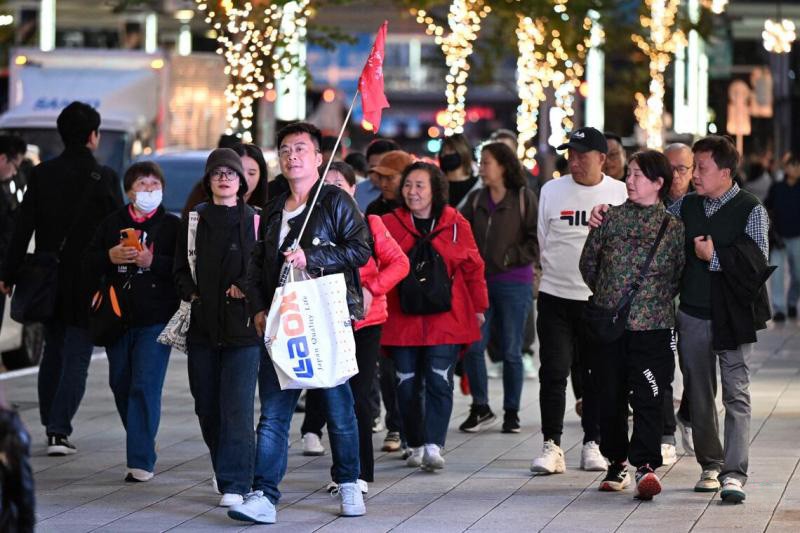
According to Japanese media reports, local hotels heavily reliant on Chinese group tours have been hit hardest. For instance, hotels near Chubu Centrair International Airport in Aichi Prefecture are struggling after losing Chinese tourists. Preliminary estimates indicate around 2,000 room reservations were canceled last month alone.
A hotel in Matsusaka City, Mie Prefecture, which previously hosted approximately 3,000 Chinese tourists during peak seasons, is now seeing its December bookings from China drop by half. The hotel manager expressed deep concern over whether this trend will continue into next spring, stating, “If bookings from China fall to zero, our business will be in serious trouble.”
Japanese cities with sister-city ties to China have also suffered setbacks. For example, Handa City in Aichi Prefecture established a sister-city relationship with Xuzhou in Jiangsu Province back in 1993, and the two cities maintained mutual visits for 11 consecutive years. However, last month on the 18th, the Chinese side postponed a scheduled year-end visit, citing “unexpected official duties.”
The visit was originally intended to include inspections of local agricultural and tourism facilities, aiming to expand future cooperation mechanisms.
With Sino-Japanese governmental exchanges delayed, cancellations of Chinese tour groups have become widespread, and bilateral flights have also been reduced due to political tensions. Okinawa Prefecture recently reported that Air China will suspend 100 flights between Beijing and Naha Airport in Okinawa. China Eastern Airlines, which previously operated 14 weekly flights from Beijing to Osaka, will cut six of them. Additionally, Juneyao Air has reduced 24% of its 114 weekly flights to Japan.
According to the Mainichi Shimbun, Chinese tourists represent the highest-spending group among foreign visitors to Japan, accounting for roughly 24% of total spending by international tourists in the country. Nomura Research Institute estimates that if China maintains its travel restrictions for a full year, Japan could suffer economic losses amounting to 1.8 trillion yen (approximately 14.9 billion Singapore dollars).
However, as reported by Sankei Shimbun, while some Japanese tourism businesses are feeling the impact of the current Sino-Japanese tensions, many have learned to adapt flexibly. They are actively diversifying their customer base by targeting domestic travelers and tourists from Southeast Asia to mitigate risks. A survey by Teikoku Databank found that the number of businesses reporting being affected versus unaffected is roughly equal.
Fuji TV highlighted Osaka’s bustling Shinsaibashi shopping district as an example where the impact has been “limited.” Despite the decline in Chinese tourists, the area remained crowded during the peak December travel season. In a segment featuring 20 shops along a Kyoto shopping street, only two reported being negatively affected.
Professor Satoshi Fujii, an expert in tourism studies at Kyoto University, commented: “In the past, there were simply too many Chinese tourists—overcrowding was a real issue. Now, we’re seeing other tourists who previously couldn’t access these shops finally getting a chance to visit. Ninety percent of the stores reported no negative impact, suggesting that past demand had exceeded each store’s capacity to serve customers. Japan has long grappled with overtourism, so the current reduction in visitor numbers is actually a relief for Kyoto.”
Public opinion expects the political chill in Sino-Japanese relations to persist long-term. If the Chinese government continues its hardline stance, the negative repercussions may extend beyond tourism to affect Japan’s exports to China.
|

 Fear of God ESSENTIALS Hoodie Review: Mi86 人气#fashion
 The Derby of San Francisco Style 300 Cha112 人气#fashion
 Why the Derby of San Francisco Classic S130 人气#fashion
 Romaoss Launches "Rebirth Plan," in Talk70 人气#tech



 WeChat
 douyin