At the end of last year, the final Audi TT rolled off the production line at the Gy?r plant in Hungary, bringing a 25 - year - long journey of this classic two - door sports car to a close.
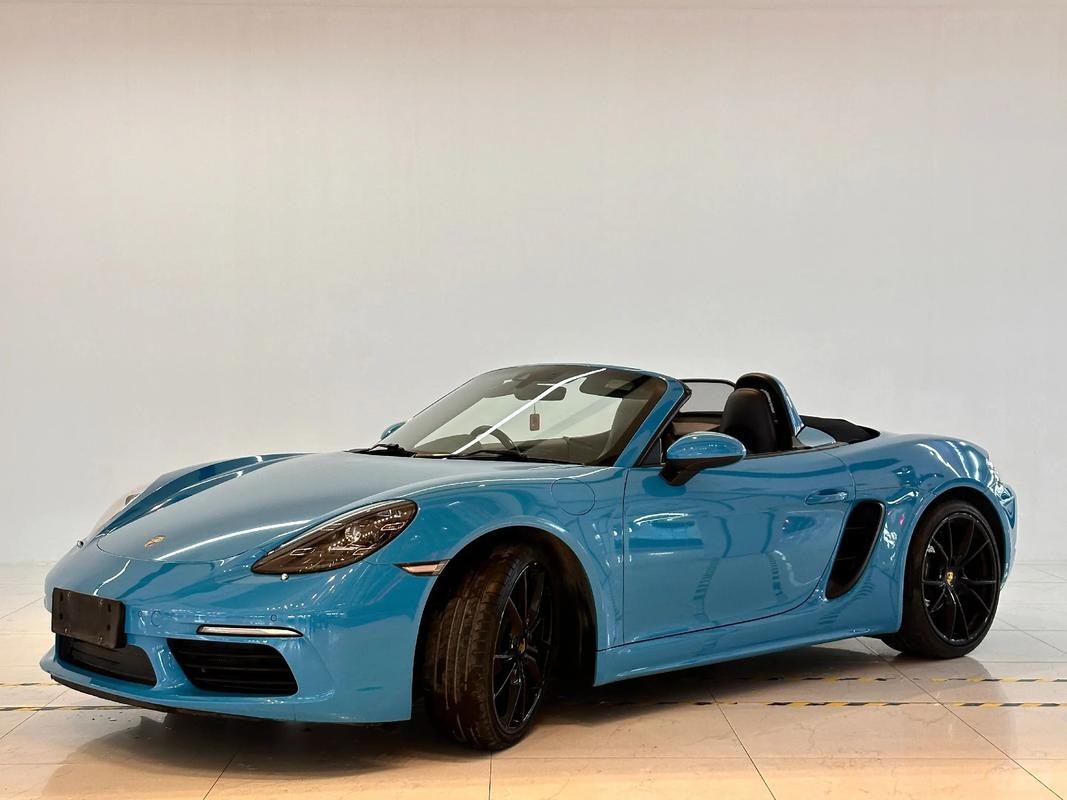
Audi to Launch Porsche 718 - Cohort Pure Electric Sports Car with Simulated Gear Shifting
For many car enthusiasts, the departure of the TT signified a temporary end to an era at Audi defined by distinct personality and a focus on pure design. Fortunately, frequent recent leaks about the Concept C concept car and its related mass - production plans indicate that Audi has no intention of being absent from the sports car market for an extended period.
Gernot D?llner, CEO of Audi, made it clear in a previous interview that the production version of the Concept C would not bear the TT name. This new model aims to carve out a unique position between the agility of the TT and the high performance of the R8, serving as a technological symbol for Audi in the pure electric era.
Concept C
In terms of physical dimensions, the new car has completely moved beyond the compact sports car category that the TT once belonged to. The Concept C measures approximately 4520/1970/1285 mm (length/width/height) with a wheelbase of 2568 mm. In contrast, the TT was only around 4.1 meters long. This significant increase in size gives it a visual proportion more similar to larger sports cars like the R8 or Porsche 911, while also creating space for more complex battery packs and electric motors on the chassis.
Audi's high regard for this model is also reflected in its choice of production facility.
Current information suggests that the mass - production version will be manufactured at the B?llinger H?fe plant in Neckarsulm, a high - end precision workshop previously dedicated to the hand - assembly of the R8 and e - tron GT. This decision ensures that the new car will be a notch above the previous MQB - based TT in both craftsmanship and pricing.
To counterbalance the extra weight from the pure electric powertrain, Audi has extensively used aluminum and carbon - fiber composite materials in the body structure, targeting a curb weight of around 1690 kg. For reference, this is nearly the same as the R8 V10 Spyder equipped with a V10 engine.
Audi is well aware that lightweight construction is crucial for a sports car.
Audi and Its Electric 718 Counterpart
Instead of the mainstream PPE platform used for high - volume models such as the A6 e - tron or Q6 e - tron (which prioritizes space and versatility), the new car is built on the SSP Sport, the highest - specification architecture within the Volkswagen Group. Developed under Porsche's leadership, the SSP Sport is a high - performance platform.
In a sense, this new model can be seen as Audi's electric equivalent to the Porsche 718.
To preserve the dynamic characteristics of a sports car, Audi has adopted an unconventional battery layout. Most electric vehicles today place their batteries flat on the floor for optimal space utilization, but this inevitably raises the driver's hip point (H - point), making the car feel more like driving a thick skateboard rather than a sports car.
Audi has abandoned this approach and opted for a vertically stacked battery arrangement. The entire battery pack is positioned behind the cabin and in front of the rear axle, replicating the center - of - gravity of mid - engined sports cars from the combustion - engine era.
This layout brings about physical changes to the driving experience. Without a battery pack underfoot, the seats can be mounted close to the ground, providing the driver with the distinctive low - slung feel of a sports car. Additionally, concentrating the vehicle's heaviest component at its center results in an ideal weight distribution, reducing the moment of inertia during cornering.
In terms of performance, the 800V high - voltage architecture supports DC fast charging at up to 270kW. The powertrain options will include a rear - wheel - drive single - motor variant with approximately 300 hp and a dual - motor all - wheel - drive version with a combined output of 600 hp, filling the performance gap that once existed between the R8 and TT RS.
What deserves special attention is Audi's investment in "digital simulation". The company is currently developing a sophisticated virtual gear - shifting system that controls motor torque output through software algorithms. The moment the driver flicks the shift paddles, the system simulates the jolt felt after a momentary power cut in a mechanical transmission. Audi has also added a simulated engine note of a 2.5T five - cylinder engine to this system, aiming to counter the lack of sensory feedback commonly associated with electric vehicles.
D?llner believes that this "skeuomorphic" design is no mere gimmick; it can even help drivers achieve faster lap times on the track. He explains that in extreme driving scenarios, the human brain often relies on engine sound frequency and gear - shifting vibrations to judge the rhythm of corner entry. The overly smooth and linear acceleration of pure electric vehicles can blur the driver's perception of the vehicle's status.
Audi is not alone in this thinking. As acceleration performance has become affordable and easily accessible in the electric age, many established manufacturers have realized that sports car enthusiasts are truly captivated by non - essential sensory feedback. With internal combustion engines and mechanical transmissions no longer present, software has become the means to recreate these sensory experiences.
While this approach has sparked debate within the industry, it serves as an effective way for Audi to maintain the brand's uniqueness and differentiate the new model from other affordable electric vehicles within the Volkswagen Group, now that the core electric powertrain systems have become highly standardized. In an era where three - electric systems are largely homogeneous, this understanding of driving rhythm may well be the last competitive edge held by traditional automotive giants.
A New - Age Audi with Unwavering Commitments
Beyond performance, the design of the Concept C is undoubtedly eye - catching. The arrival of Massimo Frascella, Audi's new design director, seems to have redefined the brand's design direction.
The former Land Rover designer, who advocates minimalism, shares an inherent affinity with Audi's design philosophy during its most glorious period. His "Radical Next" design language emphasizes eliminating redundant lines and building a commanding presence through precise proportions and volume. This approach closely resembles the design ethos behind the first - generation TT and R8. Instead of relying on complex sheet metal creases to convey a sense of speed, it uses large, smooth surfaces to manipulate light and shadow.
Details revealed so far suggest that the production car will retain the highly pure geometric aesthetics of the Concept C. The iconic hexagonal grille will evolve to be more three - dimensional and vertical, while the front - low, rear - high stance will emphasize an aggressive look.
To meet the downforce requirements at high speeds, Audi has developed an active aerodynamic package, including active rear fenders and front bumper air intakes. These functional components are integrated into the minimalist bodywork and only change their configuration when the driving mode is switched or a certain speed threshold is reached.
The interior design logic has also undergone a reversal. In a time when in - car touchscreens have even become a selling point for the front passenger side, Audi has exercised remarkable restraint in this sports car. The production version is expected to feature an extremely streamlined interface. The centerpiece of the dashboard will be a retractable 10.4 - inch screen, which can be stowed completely when necessary to return visual focus to the driver and the road ahead.
At the same time, physical buttons make a significant comeback in this car. Frascella insists on retaining physical toggles with distinct mechanical feedback on the steering wheel and center console to control core functions such as driving modes and climate settings.
Looking ahead to the 2027 market, the new Audi will face a far more complex competitive landscape than the TT did at its launch. Back then, its main rivals were just a few traditional German models like the Mercedes - Benz SLK. Today, the pure electric sports car segment is crowded with formidable competitors.
Audi recognizes that as performance figures have become easily achievable and affordable in the electric era, competition among brands has shifted from horsepower numbers to character building. By combining the simulated gear - shifting system with the layout advantages of the SSP Sport platform, Audi aims to maintain the dignity of an established manufacturer in the high - performance pure electric market.
When the production car hits the market in 2027, its name and whether it can replicate the roar of a five - cylinder engine will matter less. In an era of homogeneous three - electric systems, Audi is offering a differentiated solution to combat uniformity—one rooted in a deep understanding of driving rhythm and a commitment to classic design proportions.
While the exit of the TT is certainly a cause for nostalgia, the Concept C demonstrates that Audi has no intention of abandoning its design and engineering heritage amid the wave of electrification.
|

 Fear of God ESSENTIALS Hoodie Review: Mi83 人气#fashion
 The Derby of San Francisco Style 300 Cha108 人气#fashion
 Why the Derby of San Francisco Classic S128 人气#fashion
 Romaoss Launches "Rebirth Plan," in Talk66 人气#tech



 WeChat
 douyin