The3 trillion valuation forecast is a vote on the next decade—not just for U.S. equities, but for the global tech landscape.
A 3TrillionValuation:TeslaGraspstheNarrativePoweroftheU.S.StockMarketThroughAI
When Wedbush analysts pushed Tesla’s bullish price target toward the $3 trillion market cap threshold by the end of 2025, a complex mix of greed and caution hung in the air across Wall Street. The logic behind this move is no longer about stacks of steel and batteries—it’s about silicon-based intelligence dismantling traditional manufacturing valuation frameworks.
Viewed solely as an automaker, Tesla’s current P/E ratio isn’t just expensive—it’s bordering on absurd. But placed within the narrative framework of an “AI and robotics supercycle,” that seemingly unreachable $3 trillion figure suddenly appears to be the ticket to the future.
This is precisely Elon Musk’s greatest game: he has successfully transformed a hard-tech company producing millions of vehicles annually into a physical-world artificial intelligence giant—through FSD v13 iterations and the anticipated mass production of Optimus robots.
Why Does Wall Street Dare to Call for "$3 Trillion"?
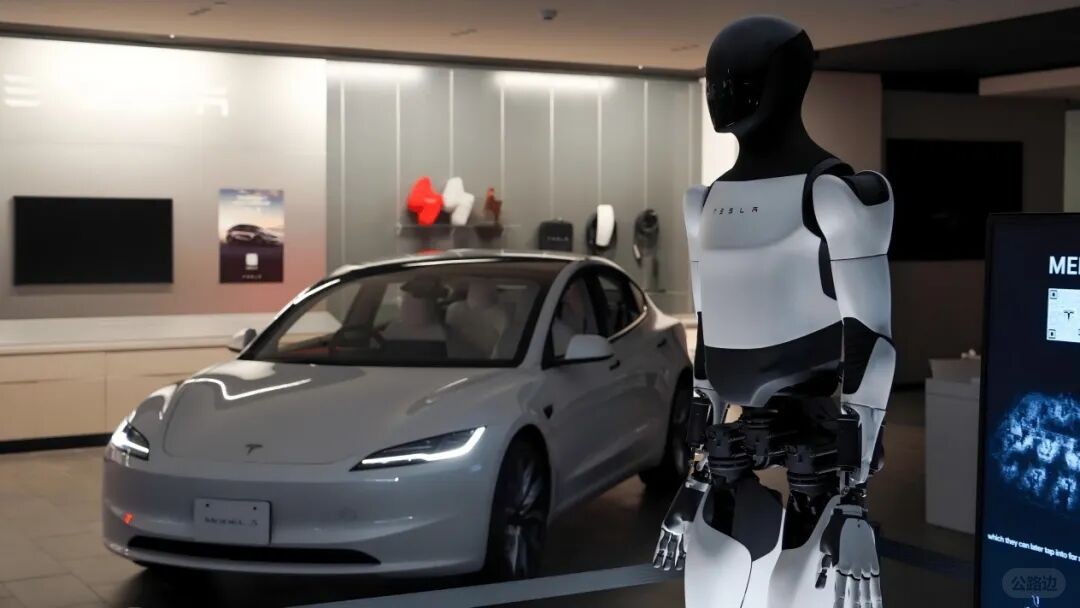
To understand this grand $3 trillion narrative, one must first deconstruct Wall Street’s favored sum-of-the-parts valuation model. In aggressive models from Morgan Stanley and Ark Invest, Tesla’s traditional automotive sales now account for less than 30% of its total valuation—the lowest share in history.
This cash-generating “cash cow,” which sustains Tesla’s daily operations, has been reduced in investors’ eyes to nothing more than an entry pass—its sole purpose being to fund Tesla’s massive AI training clusters. Why such a dramatic shift in perspective?
The answer lies in the magic of “marginal cost.” Traditional auto manufacturing suffers from linear cost scaling: every additional vehicle sold brings nearly proportional increases in materials, logistics, and labor. Even for Tesla—the undisputed cost-control champion—automotive gross margins have struggled within a narrow 15%–18% band.
AI-driven businesses operate under entirely different economics. Whether it’s FSD (Full Self-Driving) software subscriptions or future Robotaxi dispatch networks, their marginal replication cost is virtually zero. Once FSD crosses the L4 technological inflection point, Tesla ceases to be a car seller—it becomes a SaaS platform selling “mobility” and “time.”
Although FSD penetration in North America and select markets hasn’t yet hit critical mass, its software nature implies a potential gross margin of up to 80%. If 30% of a future global fleet of tens of millions of Teslas subscribe to FSD, that alone could inject tens of billions of dollars in pure profit into Tesla’s bottom line—without needing to build a single new stamping press.
Next is the platform economics of Robotaxis. In Ark Invest’s model, Cybercab isn’t just a car without a steering wheel—it’s the blade cutting into this market. Analysts boldly predict that Robotaxi operating costs will fall below $0.20 per mile, far undercutting Uber or Lyft.
This cost advantage grants Tesla pricing power akin to Apple’s App Store—not only earning fares but potentially taking platform commissions as well.
Moreover, amid the explosive AI compute demand of 2025, data centers’ need for energy storage is growing exponentially. Tesla’s Megapack business showed astonishing growth in Q3 2025 earnings, revealing to the market that this isn’t just an automotive accessory—it’s a core piece of tomorrow’s power infrastructure.
Yet this valuation logic carries inherent danger: it rests entirely on the assumption of “perfect execution.” It assumes end-to-end models won’t hit insurmountable data walls; it assumes regulators will greenlight vehicles without steering wheels. This is a bet on the future—an overextension. But for a U.S. equity market starved for growth, such overextension is precisely the most alluring poison.
The “Brutal Aesthetics” of FSD v13’s Compute Power
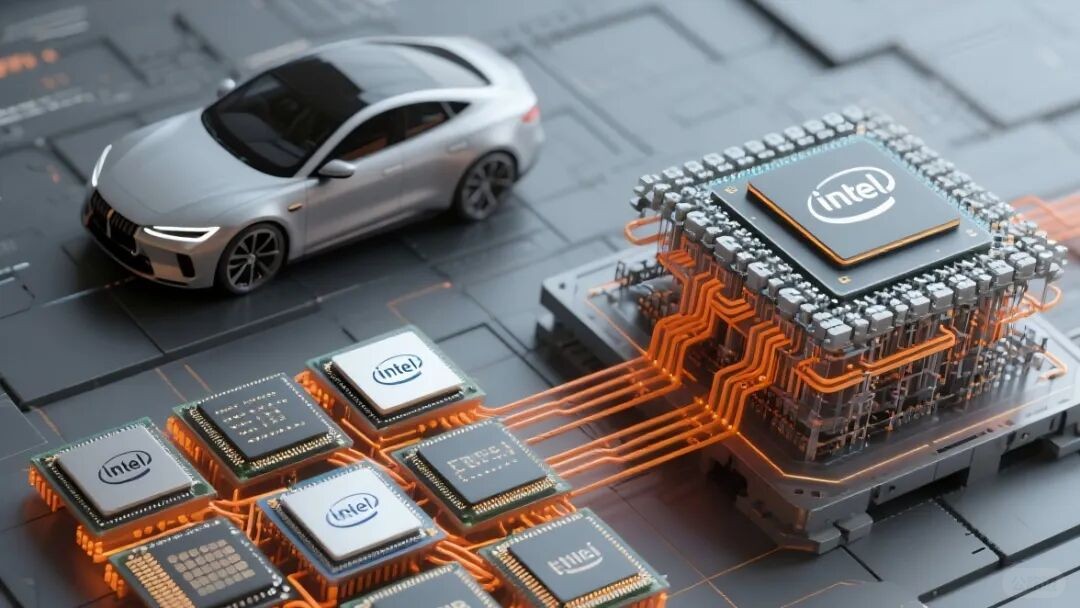
If valuation models are Wall Street’s numerical games, then FSD v13 and its underlying compute arms race represent Tesla’s hard-core war in Silicon Valley. By 2025, when FSD v13.2 rolled out widely to AI4 hardware users, the industry debate between “rule-based code” and “neural networks” had effectively ended.
Tesla’s introduction of an “end-to-end” neural network with FSD v12 completely rewrote the autonomous driving tech stack. Traditional approaches segmented perception, prediction, planning, and control into discrete modules stitched together by hundreds of thousands of lines of hand-coded C++ rules—a method doomed by engineers’ inability to enumerate every “long-tail scenario” in the physical world.
Tesla’s end-to-end strategy feeds millions of video clips directly into massive Transformer models, allowing AI to learn human driving intuition directly: given an input image, output steering and acceleration commands—no human-written “if-then” rules in between.
With v13, this “brutality” reaches new heights. Technical teardowns show FSD v13’s parameter count and compute requirements have grown exponentially compared to v12. This isn’t just a software triumph—it’s hardware domination.
Tesla’s Cortex clusters in Texas and New York, equipped with tens of thousands of H100/H200 GPUs and its proprietary Dojo chips, now rank among the planet’s largest AI training infrastructures.
This “compute hegemony” builds two deep moats. While Waymo meticulously optimizes operations for a few thousand Robotaxis, Tesla already has over 6 million FSD-enabled vehicles roaming globally. These 6 million mobile data collection nodes upload vast amounts of edge-case video daily.
This scale of data gives Tesla an unmatched “textbook thickness” for training end-to-end models. As one AI researcher put it: “In the deep learning era, data is the new oil—and Tesla owns the largest oil field.”
As Hardware 4.0 rolls out universally and HW3.0’s compute bottlenecks become apparent, Tesla displays the cold pragmatism typical of elite tech firms. Despite Musk’s promises to support legacy owners, FSD v13 performs significantly better on AI4 than AI3—a clear signal: to pursue peak AI performance, Tesla is willing to sacrifice part of its existing user experience.
This relentless chase of Moore’s Law in compute leaves traditional automakers in the dust. While Volkswagen and Toyota still wrestle with in-car chip allocation, Tesla is already optimizing collaboration between onboard inference chips and cloud training clusters.
Yet this gamble isn’t without cost. The “black box” nature of end-to-end models hangs over Tesla like the Sword of Damocles. Unlike rule-based systems, when an end-to-end model errs—say, hesitating at a complex construction zone—engineers can’t simply debug a faulty line of code.
They must correct the model through targeted data curation and retraining—a process that may burn weeks of compute time. And to sustain this iteration velocity, Tesla must keep pouring billions into GPUs and data center expansion.
It’s an endless arms race. Any break in the funding chain or slower-than-expected model convergence could instantly collapse the entire “AI autonomy” mythos. But in 2025, the market seems eager to believe that raw compute can solve everything.
The Ultimate Battleground: Embodied Intelligence
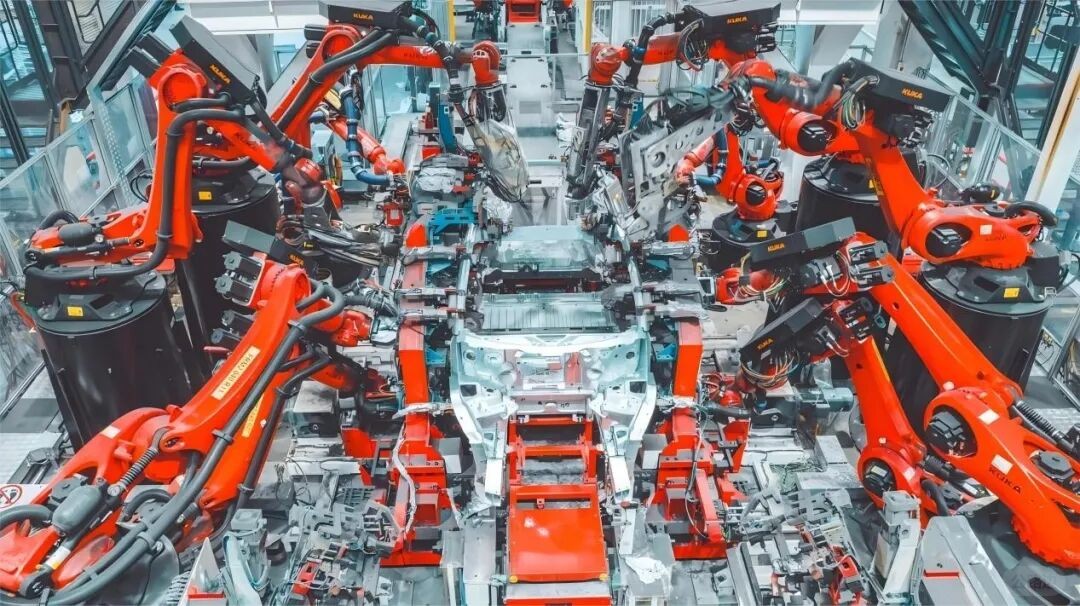
If FSD is Tesla’s software soul, then the Optimus humanoid robot and Cybercab Robotaxi are its physical vessels for dominating the real world. At the 2024 “We, Robot” event, Musk didn’t just unveil products—he revealed an ambition to reshape global labor structures through AI.
And Optimus’s evolution has indeed been staggering. From its initial wobbly prototype to the Gen 3 version now sorting batteries and performing precision assembly in factories, Tesla has proven FSD algorithms are transferable to robotics.
This is Tesla’s most terrifying closed loop: the vision networks trained for car autonomy can be seamlessly migrated to robotic visual navigation. Though cars are wheeled robots and Optimus is bipedal, their underlying AI logic is isomorphic.
Wall Street is electrified: the global labor market dwarfs even the multi-trillion-dollar auto industry. If Optimus can replace a 50,000?a?yearblue?collarworkerata20,000 unit cost, its commercial value will eclipse automotive sales. Goldman Sachs and Morgan Stanley analysts have already reserved massive growth space in their models for “Robotics-as-a-Service.”
Yet real-world physics is far harder than PPT curves. First, regulatory barriers loom large over Robotaxis. Technically, Tesla may be ready—but the law isn’t. Every FSD-related incident in the U.S. triggers “scorched-earth” investigations by regulators.
California’s DMV and Public Utilities Commission remain cautious about approving fully driverless commercial operations—a direct brake on Cybercab deployment. Meanwhile, in China—where Tesla pins high hopes—despite frequent rumors of FSD’s entry, complex compliance battles persist around data export, mapping licenses, and liability definitions for advanced driver assistance.
Moreover, achieving Musk’s promised “millions” of Optimus units presents manufacturing challenges rivaling the reinvention of the automobile assembly line. Actuator durability, high-density battery life, and fall risks in unstructured environments—each is a mountain of engineering difficulty.
Though Tesla aggressively drives down actuator costs, consumer-electronics-grade reliability remains distant. And China’s embodied intelligence ecosystem is surging. Leveraging robust hardware supply chains and rapid innovation cycles, Chinese startups and tech giants are launching competitive robots at astonishing speed.
Whether in quadruped or humanoid domains, labs in Shenzhen and Shanghai are proving Tesla isn’t the only player. If Tesla was the undisputed EV leader, in the robot era it faces a pack of equally hungry, faster-reacting wolves.
Still, Tesla holds one killer advantage: treating robots as “ultra-complex appliances” for mass production is exactly what Tesla does best. No other robotics firm possesses Tesla’s experience operating gigafactories at scale.
This dual DNA of “AI + manufacturing” is why Tesla can still credibly tell the $3 trillion story in 2025. Musk isn’t building isolated islands—he’s constructing an integrated system of energy and information. This combo locks out latecomers.
Amazon has cloud—but no electricity. NVIDIA has chips—but no network. Only Tesla turns photons into electrons, electrons into compute, and compute into physical action. Tesla holds pricing power at every link in this chain—that’s why traditional valuation models fail.
Analysts try applying “price-to-sales” ratios and find they don’t fit. You can’t benchmark a hybrid monster of “energy + compute + manufacturing + AI.” Tesla is the sole species standing at this crossroads. $3 trillion? That might just be the starting price. The company holding these three keys has already seized the operating system of modern commerce.
|

 Fear of God ESSENTIALS Hoodie Review: Mi83 人气#fashion
 The Derby of San Francisco Style 300 Cha108 人气#fashion
 Why the Derby of San Francisco Classic S127 人气#fashion
 Romaoss Launches "Rebirth Plan," in Talk65 人气#tech



 WeChat
 douyin