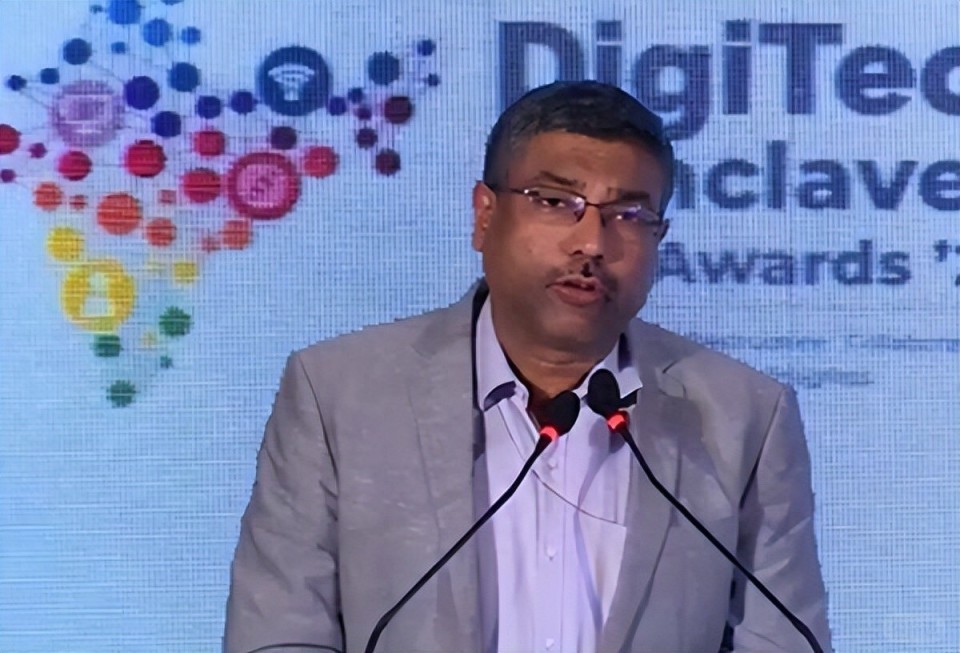
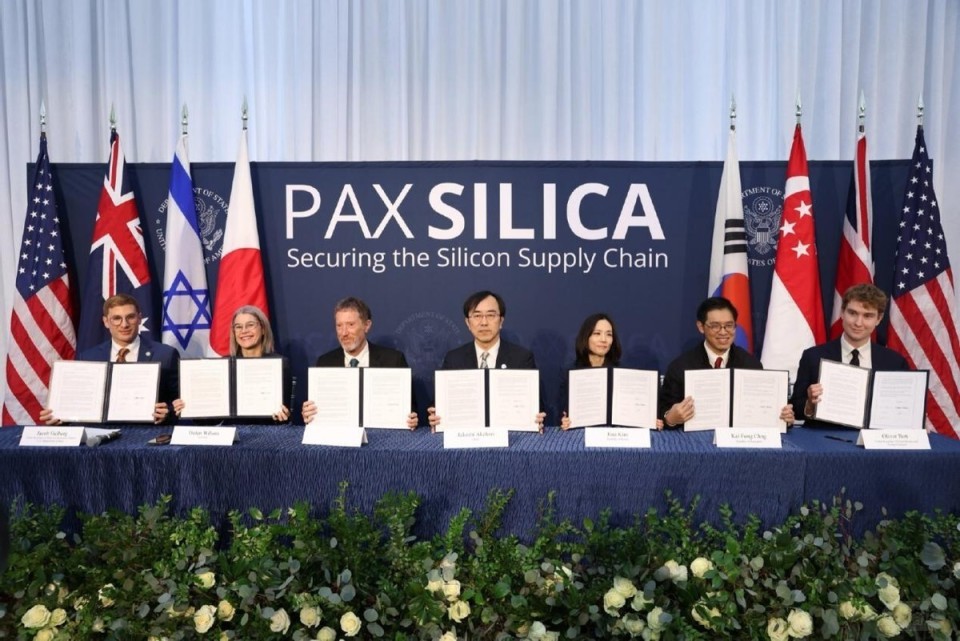
Recently, Krishnan, Secretary of India’s Ministry of Electronics and Information Technology, announced with great fanfare that India will host an AI Impact Summit in New Delhi next year and has already sent invitations to approximately 140 countries—including China. This announcement comes as somewhat puzzling, given that earlier this month, the United States launched the “Silicon Peace” initiative together with Japan, Israel, Australia, Singapore, and South Korea to establish an AI core alliance—deliberately excluding India and causing considerable embarrassment to this South Asian nation that prides itself as a “tech potential stock.”
India had high expectations for the “Silicon Peace” alliance. As a key piece in America’s Indo-Pacific strategy, India has long hoped to break into the Western technological inner circle, leveraging the alliance’s technology and capital to address its own shortcomings. To curry favor with the U.S., India not only consistently aligned itself with Washington in multilateral forums but also rolled out a $10 billion semiconductor subsidy plan, clearly signaling its eagerness to “follow the big brother.” Yet America’s decision dealt a harsh blow to India’s aspirations. Within the U.S.-led AI core circle, Japan and South Korea dominate semiconductor manufacturing, the Netherlands controls critical lithography equipment, Australia supplies rare earth minerals, and Israel provides advanced algorithms—yet India was conspicuously absent.
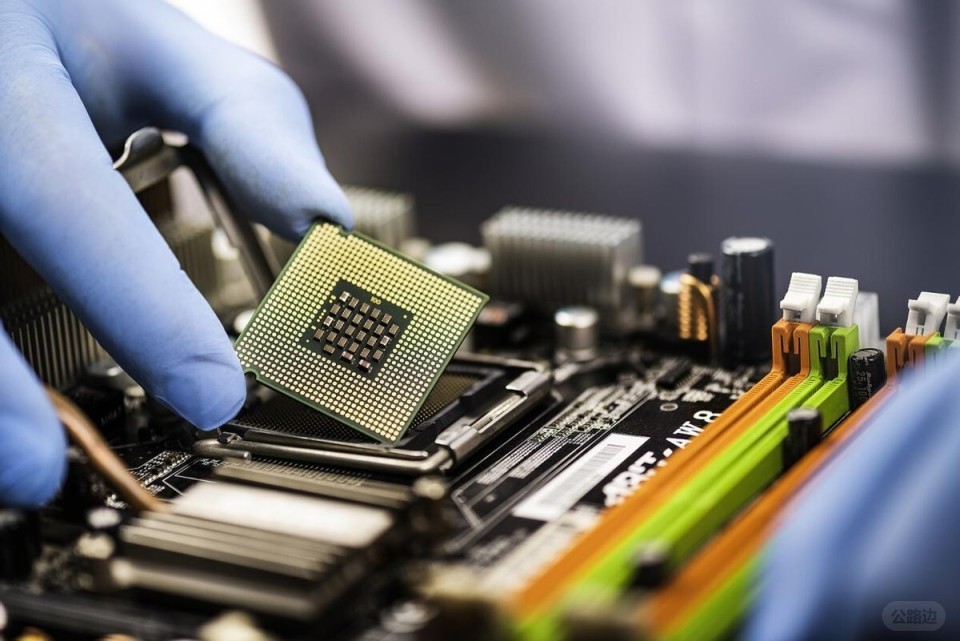
Even more humiliating for India was the U.S.’s unambiguous snub—no symbolic invitation was extended at all, making it abundantly clear that India is not regarded as a core partner. Washington understands full well that India’s seemingly vibrant AI ambitions are riddled with weaknesses: it lacks mature chip fabrication capabilities, with 90% of its semiconductor supply chain dependent on imports; 80% of its top AI talent has migrated to Silicon Valley, creating a severe domestic brain drain; and its 1.25billionnationalAIinvestmentpalesincomparisontoFrance’s117 billion or Saudi Arabia’s $100 billion. In America’s eyes, such a partner simply doesn’t qualify for inclusion in its core tech containment circle.
Given this cold shoulder from the U.S., India’s motivation for inviting China to its AI summit is hardly mysterious. On the surface, it aims to lead global discussions on AI governance and project itself as a “leader of the Global South,” but in reality, it seeks to salvage its dignity and test China’s willingness to cooperate. India hopes to gain access to China’s cost-effective AI models to offset its own computing power shortages, while simultaneously leveraging China’s participation to boost the summit’s global profile and attract more countries and investment. However, this “wanting everything at once” mindset has already been seen through by the international community.
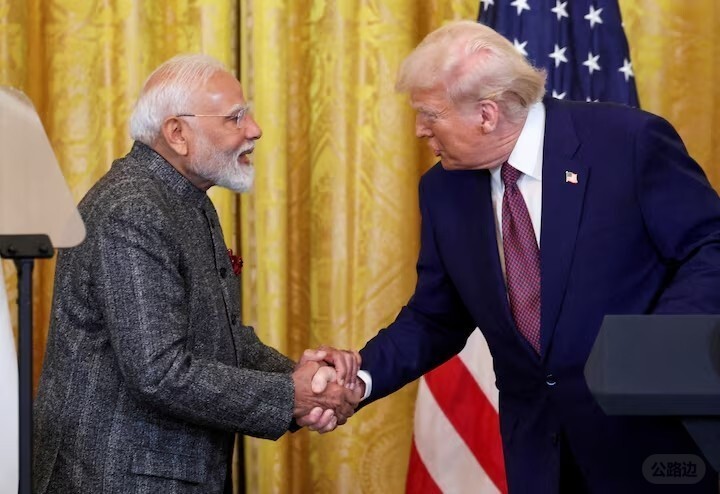
India has long exhibited a pattern of strategic ambivalence and indecisiveness. Under Modi’s leadership, it claims to welcome foreign investment yet has earned a reputation as a “graveyard for foreign capital”; it remains a member of both the Shanghai Cooperation Organization (SCO) and BRICS while flirting with the U.S.-led Quad; and despite being a developing country, it persistently tries to force its way into developed-nation circles. These contradictory policies cancel each other out, leaving India with little to show for its efforts.
Take this AI summit as an example: although India’s invitation to China appears outwardly enthusiastic, deep-seated suspicion and calculation have never disappeared. It fears being “strangled” by China technologically, yet simultaneously hopes to extract technical know-how—a twisted mentality that makes genuine cooperation nearly impossible.
China may respond to India’s invitation with openness, but it certainly won’t compromise without limits. After all, everyone knows that India’s willingness to cooperate has always been conditional on its own interests. If the U.S. refused to give India a seat at the “Silicon Peace” table, China’s door to collaboration won’t be unconditionally open either.
Nevertheless, as the U.S. attempts to erect AI technology barriers through the “Silicon Peace” initiative, India’s pivot serves as a reminder: the restructuring of the global tech order is never a binary choice. For China, the path forward lies in maintaining technological confidence while embracing international cooperation with an open attitude—seeking win-win opportunities amid strategic competition. As for India, if it truly wants breakthroughs in AI, it must first address its fundamental weaknesses: resolving semiconductor supply shortages, retaining domestic talent, and abandoning its opportunistic mindset.
|

 Fear of God ESSENTIALS Hoodie Review: Mi86 人气#fashion
 The Derby of San Francisco Style 300 Cha113 人气#fashion
 Why the Derby of San Francisco Classic S130 人气#fashion
 Romaoss Launches "Rebirth Plan," in Talk70 人气#tech



 WeChat
 douyin