|
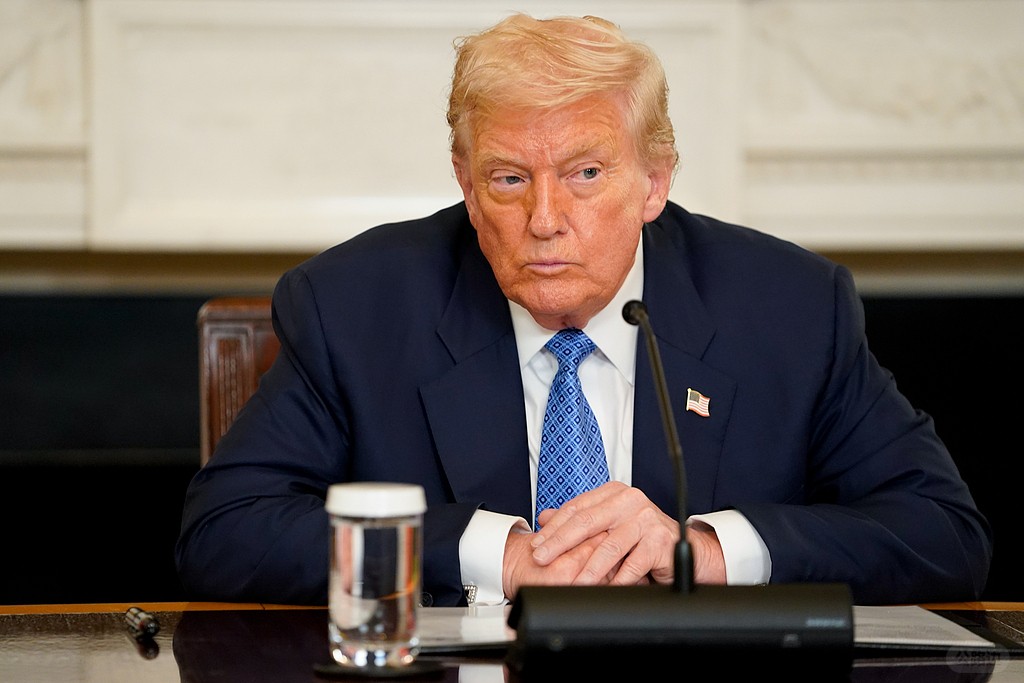
Donald Trump, President of the United States
Picking up where we left off, the "reality show" of Trump 2.0’s winning strategy continues to unfold. As noted at the end of the previous article, understanding how one person dominates the stage is not enough to grasp current U.S. domestic and foreign affairs. To comprehend how an era is rewriting the order through his figure, we also need to analyze the profound changes of the stage itself—the fracture of America’s social and political structure.
In recent years, talk of "American decline" has been rampant, sparking endless debates among political and academic circles. Many viewpoints are not without basis, but overall judgments often go astray by exaggerating trends. Objectively speaking, compared with the "unipolar moment" of the late 1990s, America’s relative advantages have indeed weakened: its share of the global economy has dropped from 30% to about a quarter, its technological leadership has shifted from absolute to parity with latecomers like China, and its soft power has been greatly diminished by domestic political disorder. However, this does not mean a precipitous decline in U.S. hard power. Since the turn of the century, the United States has remained the world’s largest economy in terms of total output; despite the impact of trade wars, the U.S. dollar’s status as the global reserve currency remains solid, and the siphon effect of its financial markets is unparalleled. More critically, U.S. military strength still maintains overall global leadership, forming the backbone of its hard power through global strategic deterrence.
While the narrative of "American decline" is exaggerated, it is an undeniable fact that in recent years, U.S. domestic politics has become polarized, policies generally lack continuity, domestic governance efficiency is low, and global soft power has declined. Ultimately, the root cause of changes in U.S. foreign policy and the resulting turmoil in the international order is not the decline of America’s relative strength, but the fracture of U.S. domestic politics and the collapse of diplomatic consensus. Changes in U.S. domestic politics have fueled strong anti-establishment and anti-elite sentiments in society, leaving the elite class that has dominated foreign affairs since the Cold War unable to continue isolating domestic politics from foreign policy. Thus, the domestic political characteristics of high fragmentation under the polarized structure, where a key minority holds sway over policy discourse, have begun to directly manifest in U.S. foreign policy decisions. This structural problem of "internal division spilling outward" is the key variable driving the narrative of American "decline" and the turbulence of the U.S.-led global order.
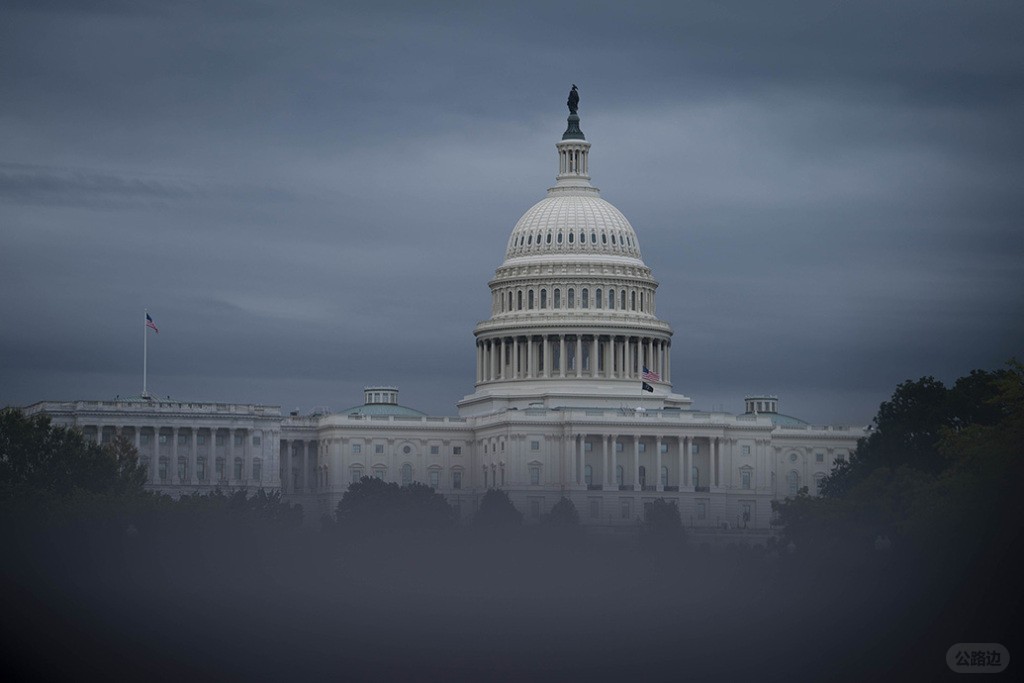
The U.S. Capitol Building
Political Polarization and the Decline of Traditional Elites
Political polarization is no longer a new phenomenon in U.S. politics. Traditional views hold that since the 1970s, the United States has entered a new cycle of polarization: the two major parties have successively purged internal dissent and moved closer to the extremes of their respective ideologies. The Democratic Party has shifted leftward, the Republican Party rightward, centrists have been marginalized, and cross-party consensus has collapsed. Intensified partisan strife, institutional constraints, and veto politics have become the norm. Entering the 21st century, the core bases of both parties have become increasingly solidified; presidential elections are often decided by tens of thousands of votes in swing states, while control of Congress alternates frequently between the two parties. This political situation—characterized by strong periodicity and weak continuity—has made it difficult for the United States to form stable governing coalitions, leading to a decline in policy coherence and governance efficiency.
While the impact represented by Trump 2.0 has increased pressure on institutional resilience, it is not unprecedented. Throughout U.S. history, consensus politics has been the "exception" rather than the "norm." The convergence of the two parties and elite dominance that emerged in the mid-20th century was actually a brief "golden age" of stability in America’s political structure. In contrast, looking at the partisan landscape around the 19th century—whether the fragmentation before the Civil War or the restructuring during the Gilded Age and Progressive Era—U.S. politics has long experienced cycles of intense division, voter restructuring, social rifts, and policy upheaval. In other words, the image of the United States as "stable, rational, and predictable" held by many observers in the international community is to some extent an "illusion" constructed by elite narratives. The "populist era" ushered in by Trump in 2016 has merely torn off this elite narrative filter, exposing the true colors and essence of U.S. politics more nakedly to the world.
So, how did America’s elite class—the so-called bipartisan establishment—gradually lose its dominance over domestic and foreign politics?
During the Cold War, regardless of which party controlled the White House, U.S. foreign policy was largely shaped jointly by the establishment within both parties. Despite differences in style and strategy, policies basically reflected a consensus between senior party politicians, Washington think tanks, and the strategic community. This elite-dominated foreign policy framework was sustained, on the one hand, by cross-party strategic identity formed under U.S.-Soviet confrontation, when America had a clear "enemy" and a distinct sense of mission; on the other hand, it relied on post-war economic prosperity and the aura of "victory elites," as the public maintained a high degree of trust in the political and strategic classes, allowing foreign affairs to exist relatively independently of domestic partisan strife.
This "golden age" did not last long. The quagmire of the Vietnam War, stagflation triggered by the oil crisis, and the political scandal of the Watergate affair severely eroded public trust in the government and elites. In the early 1980s, anti-establishment and anti-elite sentiments began to surge, eventually spawning the "Reagan Revolution" and laying the groundwork for the current political polarization. However, Reagan, elected as an "outsider," quickly merged with the Washington establishment, integrated his ideas, and transformed from a subversive into a founder of the new mainstream order. Subsequently, during the administrations of Reagan and George H.W. Bush, the collapse of Eastern Europe and the end of the Cold War occurred, the Gulf War erased the shadow of the Vietnam War, and coupled with the economic prosperity during the Clinton administration in the 1990s, the dual domestic and foreign successes led by elites propelled the United States into an arrogant "unipolar moment," and the prestige of the foreign policy establishment reached its peak.
The real turning point came in the 21st century. After the 9/11 attacks, the George W. Bush administration launched wars in Afghanistan and Iraq successively. Despite huge investments, these led to long and fruitless "endless wars," repeating the arrogance and miscalculations of the Vietnam War era and shaking public trust in the foreign policy establishment. The outbreak of the 2008 financial crisis further undermined the legitimacy of elite rule, transforming deep-seated grievances into a populist wave and paving the way for Trump’s rise. Since then, many American voters have no longer held the traditional elite class in awe, and the "soundproof wall" symbolizing rationality and professionalism between foreign and domestic affairs has collapsed.
Therefore, the key to understanding today’s fractured and fragmented U.S. foreign policy no longer lies in traditional foreign policy magazines or research reports from Washington think tanks, but in truly understanding the demands and voices of the key minority groups that have emerged due to political landscape changes and power restructuring, which can directly influence domestic politics and election outcomes. As some observers have pointed out, the influence of the foreign policy elites who once dominated Washington and were seen as shaping the country’s strategic direction is not what it used to be. This trend became more widely known after the Trump administration suspended cooperation between the Department of Defense and Washington think tanks.
The Solidification of the Political Landscape and the Rise of the Key Minority
In the era of polarization, U.S. politics has shown a significant trend of landscape solidification. Over the past two to three decades, the core bases of both parties have become highly entrenched, voter behavior has become increasingly "tribalized," and support for their party’s candidates is barely affected by actual performance. Politically, this means elections are increasingly decided by a handful of swing states and districts—the true deciders are a small group of persuadable "key minorities." In terms of policy, their political demands far outweigh those of the large but stable mainstream voters of both parties in shaping America’s major national policies.
In the Trump era, the key minority with the most direct impact on domestic and foreign policies is the white working-class population in the Rust Belt of the Midwest. The tariff barriers, industrial relocation, and trade rebalancing promoted by Trump during his two terms all responded to the economic anxieties of working-class voters in states such as Michigan, Wisconsin, and Pennsylvania. This group is highly sensitive to major U.S. trade relations with China, Europe, Japan, Canada, Mexico, etc. Their political mobilization and structural anxieties have driven a fundamental challenge to the free trade consensus and reshaped the foundation of U.S. foreign economic policy. Both the "America First" protectionist line and the "worker-centered" foreign policy proposed during the Biden administration essentially respond to the core demands of this group. Under the current structure of a solidified political landscape, this small but pivotal key minority has become a decisive force influencing U.S. tariff policies, trade arrangements, subsidy strategies, and other issues.
More importantly, political polarization has not only reshaped the key minority within the existing voter structure but also spawned a number of new political forces. For example, the Silicon Valley right wing and the new military-industrial complex, which attracted much attention in last year’s election, are new forces emerging in the era of U.S. political fragmentation. Traditionally, Silicon Valley, representing America’s technology industry, was highly aligned with left-wing progressive values and has long been a stronghold and important source of funding for the Democratic Party. However, since last year, the center-right in Silicon Valley, led by Elon Musk and Peter Thiel, has risen strongly. Their alignment with the MAGA movement in the 2024 election was one of the key factors enabling Trump’s return to the White House. Companies such as SpaceX, Starlink, and Palantir have essentially transformed from "tech companies" to "digital military-industrial enterprises," participating in national security strategies and foreign policy agendas in a manner similar to Lockheed Martin and Boeing. The concepts they promote—such as "tech nationalism," "crypto sovereignty," and "AI arms race"—are gradually influencing U.S. foreign strategy in key technological fields. Although Musk and Trump have recently had rifts, casting a shadow over the political influence of this camp, the "new military-industrial-new right alliance" they represent has become a powerful force in U.S. politics and policy.
Another force that has entered the mainstream of politics in the Trump 2.0 era is the cryptocurrency circle. Previously regarded as a challenge to U.S. financial hegemony and monetary sovereignty, with the goal of developing decentralized finance, cryptocurrency was once rejected and alienated by the U.S. political mainstream. However, the crypto sector, which has demonstrated unprecedented financial strength through political donations in the past two election cycles, has gradually gained the support of Trump’s inner circle and mainstream Republican politicians through the enormous wealth created in recent years. The recent passage of stablecoin regulatory legislation by the U.S. Congress marks the official political recognition of this emerging financial force, and its political demands will occupy a place in future financial policies and international economic governance.
In contrast, within the Democratic camp, although the establishment has not lost power as much as the Republicans, it has shown signs of fatigue after the 2024 election defeat. Polls show that even if voters are dissatisfied with Trump’s governance, the Democratic Party’s approval rating has fallen to a historic low, reflecting widespread disappointment among its base with the party’s establishment forces. This sentiment may spawn a "Democratic version of the Tea Party" movement: a new force represented by young, left-wing, and grassroots groups challenging the existing order within the party. In the New York City mayoral primary, socialist and Muslim candidate Shahana Hanif defeated establishment representative and former New York Governor Andrew Cuomo, which may reflect that the main contradiction within the Democratic Party is not an ideological struggle, but a conflict between generations and between elites and grassroots. Some of Hanif’s proposals echo the "abundance agenda" that has rapidly gained traction within the Democratic Party after the election—a rethink of the suppression of efficiency and productivity by neoliberalism in search of a new development narrative. This ideological trend may become the ideological foundation for the next wave of key minority forces within the Democratic Party.
Donald Trump, President of the United States
The "Trump Phenomenon" and the Future of U.S. Politics
One of the core issues in current U.S. politics is whether Trump can transform the multiple fragmented new political forces he successfully integrated in previous elections into a sustainable, cross-class, and cross-ideological political coalition that can be inherited. Is the political momentum inspired by Trump merely a fleeting anomaly dependent on his personal charisma and the spirit of the times, or does it have the historical potential to move from the margins to the establishment like "Reaganism"? This is no longer a short-term issue about one person’s victory or defeat and the gains and losses of his interest groups, but a key variable related to the evolution of U.S. domestic politics and the restructuring of the global order.
Musk’s growing estrangement from Trump, and even his idea of forming a "third force," exposes the rifts in this alliance due to differences in governance concepts and interest structures after achieving their common goal—winning the 2024 election. Although Musk may not represent the entire Silicon Valley right wing, his rift with Trump reflects structural contradictions within the MAGA coalition. In the future, if figures like J.D. Vance or Marco Rubio take over, they may struggle to balance the diverse demands of groups such as Musk’s faction, the crypto circle, and working-class voters, falling into a dilemma of being caught between two stools.
At the same time, the ongoing fermentation of the Jeffrey Epstein scandal not only further reveals the "reality show-ization" of U.S. politics but also highlights that within the MAGA base on which Trump relies, there exists a group of unstable factors with enormous political influence but difficult to control. Even Trump, who holds a transcendent leadership position within the MAGA group, may face a backlash if he breaks his promises on core issues concerned by these voters. Furthermore, Trump cannot completely escape the underlying logic of U.S. politics, and his successors are even more likely to lose control when mobilizing these grassroots forces with complex emotions and diverse demands, leading to the disintegration of the political coalition.
Ultimately, how the "reality show" of Trump 2.0 unfolds on this fractured stage will determine whether Trump-style politics is a fleeting phenomenon closely tied to one individual or will lead a new era of U.S. politics in the coming decades. Will the "Trump phenomenon" be tamed by the U.S. political system? Will the out-of-control elites regain legitimacy and return to the mainstream after Trump 2.0?
In other words, after Trump, will U.S. politics return to order or continue to fracture? This trend will be constrained by the fundamentals of the U.S. economy and society, emerging key minority groups, and the evolution of international trends. The continued fragmentation of U.S. politics will, in turn, profoundly impact the restructuring of the global order.
The "Lan Mu Jing Guan" column is written by two senior U.S.-based researchers and observers: James McGregor, Vice President of the Asia Society and Co-Founder and Director of the China Center, and Wang Haolan, Research Fellow at the Asia Society China Center. It aims to penetrate the characteristics and logic behind "Trump 2.0" and provide a serious, neutral, and long-term analytical framework and empirical basis for policy discussions and formulation. The column is published at the beginning of each month—stay tuned.
|

 Fear of God ESSENTIALS Hoodie Review: Mi86 人气#fashion
 The Derby of San Francisco Style 300 Cha112 人气#fashion
 Why the Derby of San Francisco Classic S130 人气#fashion
 Romaoss Launches "Rebirth Plan," in Talk70 人气#tech




 WeChat
 douyin