It is reported that nearly 70,000 people have registered to apply for the brand-new "Trump Golden Card" program. This visa initiative, spearheaded by U.S. Secretary of Commerce Howard Lutnick, will grant legal residency rights in the United States to foreign applicants at a price of $5 million per card.
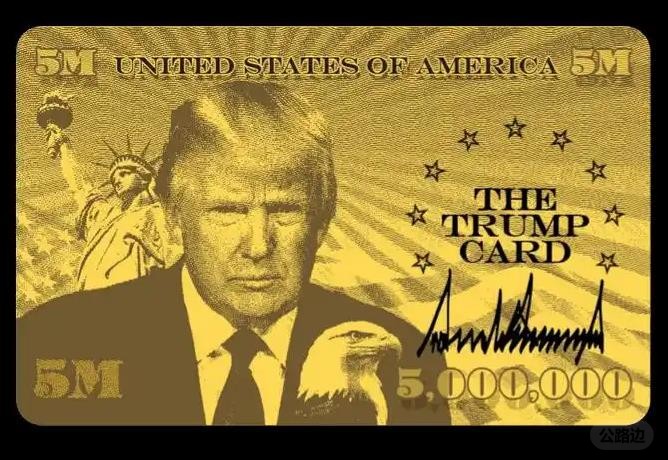
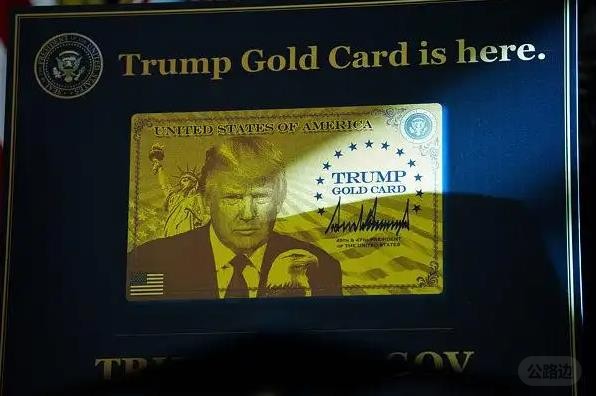
Last week, the department under Lutnick's supervision officially launched its dedicated official website, trumpcard.gov, for interested potential applicants to submit registration of intent. The website displays the card design: the front features a portrait and signature of Trump, with a background incorporating highly symbolic motifs such as the eagle, the Statue of Liberty, and the American flag.
Trump Gold Card
In an interview with the Financial Times on Monday morning, Lutnick revealed that internal dashboard data of his department showed the number of people on the waiting list surged from 67,697 to 68,703 in just one hour. He emphasized that the card would be made of gold, adding, "It will be extremely exquisite." He further noted, "Trump is very particular about details like this; he cares about the look and feel. I mean, he really cares. If someone is willing to make an investment of this scale in the United States, we ought to provide a reward that is exquisite and satisfying enough."
According to Lutnick, the initial inspiration for the visa program came from billionaire John Paulson, a long-time financial backer of Trump. At its core, the initiative is designed to generate revenue for the U.S. government and help pay down the country's current national debt, which stands at a staggering $36 trillion. He believes the "Trump Golden Card" will attract business leaders and companies from around the globe seeking legal residency in the U.S. for themselves or their core employees.
The CEO of a global technology company, who requested anonymity, stated through a spokesperson that if the program is successfully implemented, the company will consider purchasing more than 100 "Trump Cards." He views this approach as "an effective channel to welcome the world's top talent, particularly entrepreneurs, engineers, and scientists, to join the United States."
As far back as 1990, the U.S. Congress introduced the EB-5 Immigrant Investor Program, offering a green card pathway to foreign investors with a minimum investment threshold of approximately $1.8 million. According to data from Invest In the USA, the industry association for the EB-5 program, around 14,000 visas were issued under the program last year. Now, Lutnick intends to replace the EB-5 program with the "Trump Golden Card," accelerating the rollout of the new policy in the coming months with the goal of building a larger-scale visa system.
Sources familiar with the matter disclosed that the U.S. Department of Commerce plans to start issuing the first batch of "Trump Cards" this summer, with the number potentially reaching tens of thousands. Lutnick has stated that if 200,000 visas are successfully issued, it will bring in approximately $1 trillion in revenue for the U.S. Treasury. In May this year, he accompanied Trump on visits to Saudi Arabia, Qatar, and the United Arab Emirates, and did not miss the opportunity to actively promote the program during talks with government officials from various countries. "Whenever I meet international executives, I introduce and promote this program—I simply can't help it."
Immigrating to the United States
However, despite Lutnick claiming on the All-In podcast three months ago that the program would be launched "within two weeks," the White House has yet to make a final decision on key policy details. Specifics such as the tax arrangements applicable to holders of the "Trump Golden Card" remain undetermined. Additionally, while background checks on applicants are expected to be jointly conducted by the Department of Homeland Security, the Department of State, and the Department of Commerce, Trump has not yet decided whether to exclude citizens from certain countries from applying. Currently, citizens of 12 countries are subject to U.S. travel bans, and there is speculation that the list may be further expanded.
Opinions are divided regarding the feasibility and attractiveness of this program. Paolo Ardoino, Italian billionaire and CEO of Tether, admitted in an interview with the *Financial Times* last April that the key to whether the program can attract high-net-worth individuals lies in the design of its tax treatment. He bluntly stated, "The problem with the U.S. is that you have to pay taxes to the U.S. no matter where you are in the world." He added, "I haven't studied this program in depth, but I live in Switzerland and El Salvador—why would I want to buy this card?"
|

 Fear of God ESSENTIALS Hoodie Review: Mi86 人气#fashion
 The Derby of San Francisco Style 300 Cha112 人气#fashion
 Why the Derby of San Francisco Classic S130 人气#fashion
 Romaoss Launches "Rebirth Plan," in Talk70 人气#tech




 WeChat
 douyin