On the local time of the 10th, the U.S. Federal Reserve concluded its two-day monetary policy meeting and announced that it would lower the target range for the federal funds rate by 25 basis points to between 3.50% and 3.75%. This marks the Federal Reserve's third interest rate cut this year and the sixth since September 2024.
Elevated Uncertainty in Economic Outlook and Growing Downside Risks to Employment
On the 10th, the Federal Open Market Committee (FOMC), the Fed's policy-making body, stated in a post-meeting statement that available indicators suggest U.S. economic activity has been expanding at a moderate pace. Employment growth has slowed this year, the unemployment rate has edged up slightly, and inflation has picked up since the start of the year, remaining at an elevated level. Uncertainty surrounding the economic outlook remains high, and downside risks to employment have increased in recent months. In light of the shifting balance of risks, the Committee decided to lower the target range for the federal funds rate by 25 basis points.
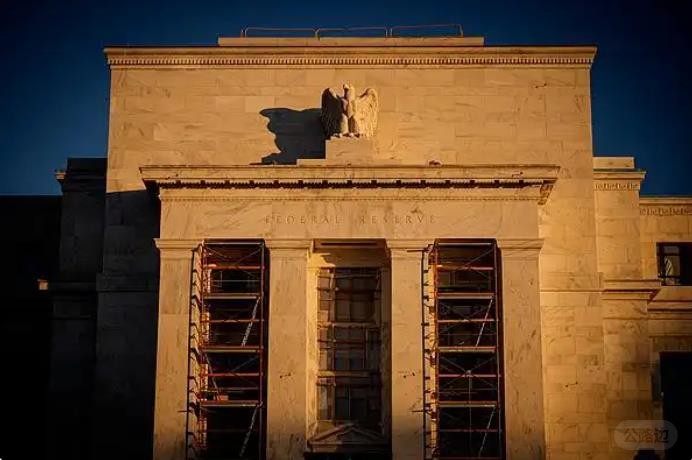
Federal Reserve Board of the United States
Prior to this meeting, Fed officials were divided over the impact of tariff policies on inflation and whether to implement a further rate cut in December. However, the deteriorating U.S. job market data has boosted expectations for an interest rate reduction.
Powell: U.S. Tariff Policies Have Caused Excessively High Inflation
Federal Reserve Chair Jerome Powell said at a press conference on the 10th that the Fed has cut interest rates by a total of 75 basis points through three meetings this year. The further normalization of this policy stance will help stabilize the labor market while allowing inflation to move back toward the 2% target as the effects of tariffs fade. Powell also pointed out that U.S. tariff policies have led to excessively high inflation.
Trump: The Rate Cut Is Too Small; It Could Have Been Larger
In response to the rate cut, Donald Trump commented that economic growth does not equate to inflation, and even if inflation occurs, it is manageable and can be mitigated. Trump added that the magnitude of the rate cut is too small and could have been much larger.
Trump
Previously, former U.S. President Trump has publicly criticized Powell multiple times over the Fed's monetary policies. After taking office again in January this year, Trump has repeatedly criticized Powell, accusing the Fed of cutting interest rates too slowly and threatening to dismiss him. This has sparked widespread concerns about whether the Federal Reserve can maintain its monetary policy independence.
When asked about candidates for the Federal Reserve Chair, Trump said he would meet with one of the candidates, former Fed Governor Kevin Warsh, on the same day. Trump stated that he wants "someone who is honest on interest rates" and hopes interest rates can be "much lower". He added that U.S. interest rates should be the lowest in the world.
On the 10th, another candidate for the position, White House National Economic Council Director Hassett, said the Federal Reserve has ample room for further interest rate cuts and may need to lower rates more. Hassett noted that stronger economic data could support a 50-basis-point rate cut. He added that Trump will decide on the next Federal Reserve Chair within the next one or two weeks.
Expert Analysis: The Fed's Monetary Policy Plagued by Multiple Headwinds
The market had already reached a strong consensus on this rate cut prior to the meeting. According to expert analysis, the real focus lies in the future policy signals delivered by the meeting and the level of internal unity within the Fed.
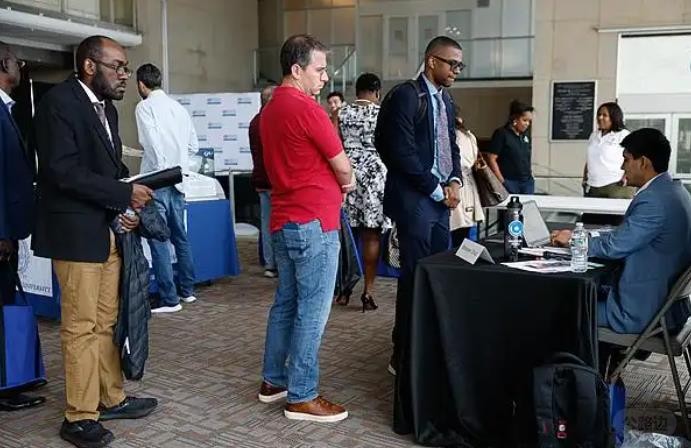
On site job fair in the United States
Analysts noted that the Federal Reserve is facing a direct conflict between stabilizing prices and achieving full employment. Recent data indicate that the U.S. labor market is showing more pronounced signs of cooling: private-sector employment unexpectedly fell by 32,000 in November, marking the largest decline in two and a half years and serving as the final key employment indicator ahead of the Fed's meeting. The unemployment rate also rose from 4.1% in June to 4.4% in September. The consumer engine is also losing steam, with signs of strain emerging in household consumption, the core driver of the economy. On the other hand, the inflation gauge most closely watched by the Fed remains significantly above its long-term 2% target.
The complexity of the decision-making process is further compounded by data gaps. Due to the previous U.S. government shutdown, the Fed lacked official employment and inflation data since September for this meeting, having to rely on unofficial data instead. This is tantamount to making policy decisions "blindfolded", increasing the risk of misjudgment.
Internal divisions within the Federal Reserve have also drawn attention. The mainstream faction within the Fed believes that the current magnitude of the rate cut is sufficient to address employment risks while preserving policy flexibility. Meanwhile, the hawkish faction has repeatedly voted against the decision, advocating for larger rate cuts on the grounds that the employment situation is more severe than official data suggests. The cautious faction, for its part, worries that rapid rate cuts may prolong the inflation cycle or trigger asset bubbles.
Regarding the 25-basis-point rate cut, 9 out of the 12 members of the Federal Open Market Committee voted in favor, while 3 members dissented. One dissenting member called for a 50-basis-point rate cut, and the other two advocated for keeping interest rates unchanged. It is reported that this marks the first time since 2019 that there have been so many dissenting votes.
Furthermore, experts analyzed that the effects of interest rate cuts are subject to lags and are constrained by external factors such as slowing global economic growth and geopolitical risks. Coupled with conflicting economic data, deep internal divisions within the Fed, and a complex external environment, the decision to cut interest rates was by no means an easy one.
|

 Fear of God ESSENTIALS Hoodie Review: Mi86 人气#fashion
 The Derby of San Francisco Style 300 Cha113 人气#fashion
 Why the Derby of San Francisco Classic S130 人气#fashion
 Romaoss Launches "Rebirth Plan," in Talk70 人气#tech




 WeChat
 douyin