A few days ago, posts about a large number of foreign "refugees" flocking to Xiaohongshu to "compare notes" with domestic users went viral online. Yet amid the stark contrast between the two sides, some still firmly believe that America is enduring and prosperous, asking for evidence of its decline and demanding an objective, balanced view of the issue.
Those who hold such doubts are either lacking in information or suffering from a classic case of ostrich mentality. Today, we will explain why America is declining, starting from the Trump 2.0 era.
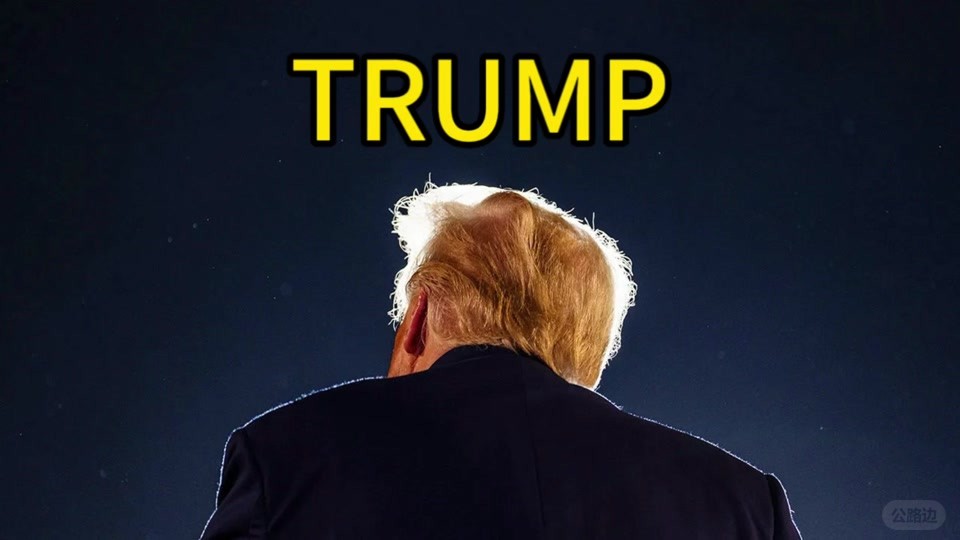
At 9:30 a.m. on January 20th, Trump officially took the oath of office as the 47th President of the United States, administered by the Chief Justice of the U.S. Supreme Court, marking the official start of the Trump 2.0 era. Unlike his 2017 inauguration speech, which started high but fizzled out, his latest address was filled with rhetoric such as "golden age" and "prosperity once again," painting a picture of America’s MAGA future.
The biggest difference from previous inauguration speeches was Trump’s focus on outlining his policy agenda. In the sensitive ideological sphere, he emphasized measures such as re-withdrawing from the Paris Agreement, using the military to expel illegal immigrants, ending "birthright citizenship," and recognizing only two genders—male and female.
Gone were the unfounded accusations and threats against specific countries. It was clear that Trump was shifting his focus more toward unifying domestic thinking rather than hyping up so-called external threats. Of particular note domestically was the absence of the expected verbal attacks and threats against China.
In addition to the four major measures mentioned above, Trump also announced in his speech plans to declare a national energy emergency, end the Biden administration’s "Green New Deal," and expand traditional energy extraction; establish an International Taxation Bureau specifically to impose additional tariffs on imported foreign products; and expand U.S. territory, planting the American flag on new horizons and renaming the Gulf of Mexico the "Gulf of America."
In summary, Trump’s overarching policy goals are to "raise money, seize land, and unify ideology."
When it comes to money, we must revisit the policy framework of the "3-3-3 target" proposed by Trump’s Treasury Secretary, Janet Yellen—achieving 3% economic growth, reducing the fiscal deficit rate to 3% by 2028, and increasing daily oil production (or equivalent energy) by 3 million barrels.
Let’s look at two sets of relevant data: According to the U.S. Department of the Treasury, the U.S. deficit so far in fiscal year 2025 stands at $711 billion; as of today, the total U.S. national debt is $36.1 trillion; while the 2024 U.S. GDP has not yet been officially released, the Congressional Budget Office (CBO) projects it to be $28.79 trillion.
In other words, the U.S. is currently burdened with national debt that exceeds its GDP by at least $7.31 trillion—and this figure is still growing. Projections suggest that by 2035, U.S. national debt could rise further to $52 trillion, posing a severe crisis to the U.S. economy and the hegemony of the U.S. dollar. Additionally, this means Trump is inheriting a $700 billion deficit right from the start.
As a businessman, Trump has always attached great importance to economic data. Now, having taken over a mountain of debt, raising money has become his top priority.
America’s economic model is fundamentally different from China’s. The reason there are frequent claims domestically criticizing China’s weak consumption power lies precisely in this difference. The U.S. economy is highly dependent on household consumption, as it relies on consumption to drive economic growth—a path with inherent advantages but also natural flaws.
The flaw is the need to maintain disposable household income. The cost of relying on consumption-driven growth is reduced investment, which in turn leads to lower incomes. Lower incomes suppress consumption, ultimately creating a cycle of weakened consumption and hindered economic growth. This is a crucial point. It is precisely for this reason that U.S. industrial transfer has ultimately led to deindustrialization, leaving America in a situation where "even a skilled housewife can’t cook without rice."
There are also differences between the two major U.S. parties in fiscal and regulatory policies. The Republican Party clearly leans toward tax cuts, spending reductions, and deregulation. Trump previously announced the largest tax cut plan in U.S. history, lowering the corporate income tax rate to 15%, adjusting personal income taxes, and providing tax relief ranging from $900 to $61,090 for households.
Both the tax cut plan and the establishment of a Department of Government Efficiency are concrete measures to cut taxes and spending, aligning with Republican policy preferences. While these initiatives may seem unrelated, they are essentially centered on stimulating consumption and increasing incomes.
The most direct benefit of lowering the corporate income tax is that businesses can retain more funds for other purposes—such as R&D investment, wage increases, and new investments. This helps attract the return of overseas enterprises, boosts the revitalization of U.S. industrial chains, creates more jobs, and increases personal incomes.
Lowering personal income taxes is even simpler: it puts more money in people’s pockets to spend. However, the tax cut policy conflicts with Trump’s fiscal deficit. Reduced tax revenue combined with a large deficit puts the U.S. government at risk of a shutdown.
To address this, Trump has adopted a multi-pronged approach: first, establishing a business-style Department of Government Efficiency led by Mark Meadows to minimize government spending; second, creating an International Taxation Bureau to impose additional tariffs on imported goods; and third, pursuing quick wins through traditional energy extraction and, by extension, territorial expansion.
In his inauguration speech, Trump specifically mentioned rehanging the name of William McKinley—the 25th U.S. President—on Mount McKinley. McKinley is regarded as the "father of U.S. tariff hikes," and his McKinley Tariff Act played a pivotal role in America’s economic recovery and eventual rise as the world’s largest manufacturing power.
Revenue from additional tariffs will flow into the U.S. Treasury, which is crucial for Trump to address the fiscal deficit. Of course, tariffs alone are far from sufficient. Trump’s other major move is to expand traditional energy extraction.
The greatest advantage of traditional energy extraction is its speed and simplicity: it merely requires auctioning off drilling rights, with the resulting large sums of money flowing directly into the Treasury. In theory, the more exploitable resources there are, the higher this "zero-cost" revenue will be. This is why Trump is pursuing territorial expansion—Mexico, Canada, and Greenland, the three regions he named, are all resource-rich with vast reserves.
Greenland, in particular, has even drawn threats of military force from Trump. Beyond its future maritime strategic value, the immediate temptation lies in its abundant strategic resources: 90 billion barrels of crude oil, 1,600 trillion cubic feet of natural gas, and rich rare earths—all irresistible incentives.
Trump naturally wants as much as possible, and military seizure cannot be ruled out. Additionally, expanding traditional energy extraction helps lower U.S. energy prices, which will somewhat curb America’s high inflation. If the U.S. can plant its flag on these regions, it will be like "being fed by heaven," allowing America to "count money while lying down" and live comfortably for another century.
Increased energy extraction inevitably requires broader consumer markets. This is why Trump has issued blatant threats to Europe: if Europe refuses to buy U.S. energy, it will face tariffs. Trump’s return to the White House has been relatively pragmatic, avoiding verbal confrontations with China. Beyond coveting China’s massive market, he also harbors a love-hate relationship with China’s manufacturing sector.
On the surface, Trump’s policy loop—raising money, seizing land, and opening up markets—seems sound. Yet it is precisely this apparent soundness that reveals America’s irreversible decline.
Whether it’s tax cuts, tariff hikes, or spending reductions, these are merely superficial measures. The core goal is to boost the U.S. economy, which in turn requires resolving policy contradictions. While the loop is closed, the fundamental question remains: can America revitalize its manufacturing sector and fundamentally address deindustrialization?
Currently, Trump’s focus—whether through tariff hikes, a return to traditional energy, or territorial expansion—is still on solving his own debt problems. The supposed benefits, such as industrial return, job creation, increased incomes, and stimulated consumption, are secondary to the economy.
If America cannot solve deindustrialization, it will be difficult to further increase household incomes or balance inflation with the needs of consumption-driven growth. The share of household consumption, which the U.S. economy relies heavily on, will only continue to decline, and this gap will need to be filled by other sectors.
Without revitalizing manufacturing, America’s advantages in the tech sector will also be endangered. Strong productivity is essential to sustaining technological leadership in the tech industry. This goal has been emphasized since the Obama administration, but after more than a decade, there has been no significant progress. Relying solely on the Trump 2.0 era will be nothing more than "drawing a cake to satisfy hunger."
In the longer term, if the U.S. economy fails to improve fundamentally—combined with the Federal Reserve’s policies and America’s erosion of the monetary credibility that once embodied "the wind and rain may enter, but the king cannot"—the growing national debt and the U.S. economy will be unable to find a new balance, and the foundation of the U.S. dollar’s hegemony will be shaken by America itself.
Furthermore, in the past, progressive forces led by the Democratic Party have used a series of policies promoting diversity, equity, and inclusion to advance identity politics, which has eroded American patriotism and plunged the country into severe internal division. Beyond anti-China sentiment, the two parties can barely reach consensus on any other issues, and partisan confrontation has intensified. This is a key reason Trump was able to stage a comeback and launch the 2.0 era. Isolationism and right-wing politics have risen in the U.S. against this backdrop.
Despite the attractive MAGA blueprint Trump has painted and the seemingly closed policy loop, his policy choices are largely forced. In particular, Trump’s territorial expansion ambitions may prioritize economic benefits, but politically, they will reinforce the belief that a historical watershed has arrived. America’s efforts to consolidate its North American stronghold signal that it is already preparing for its post-great power competition status.
If America were not in decline, Trump would have better options—more radical policies than his first term. The loop of "raising money, seizing land, and unifying ideology" fully reflects the irreversibility of America’s decline. When a global hegemon needs to unify internal thinking, its core is already rotten.
|






 14
14 0
0