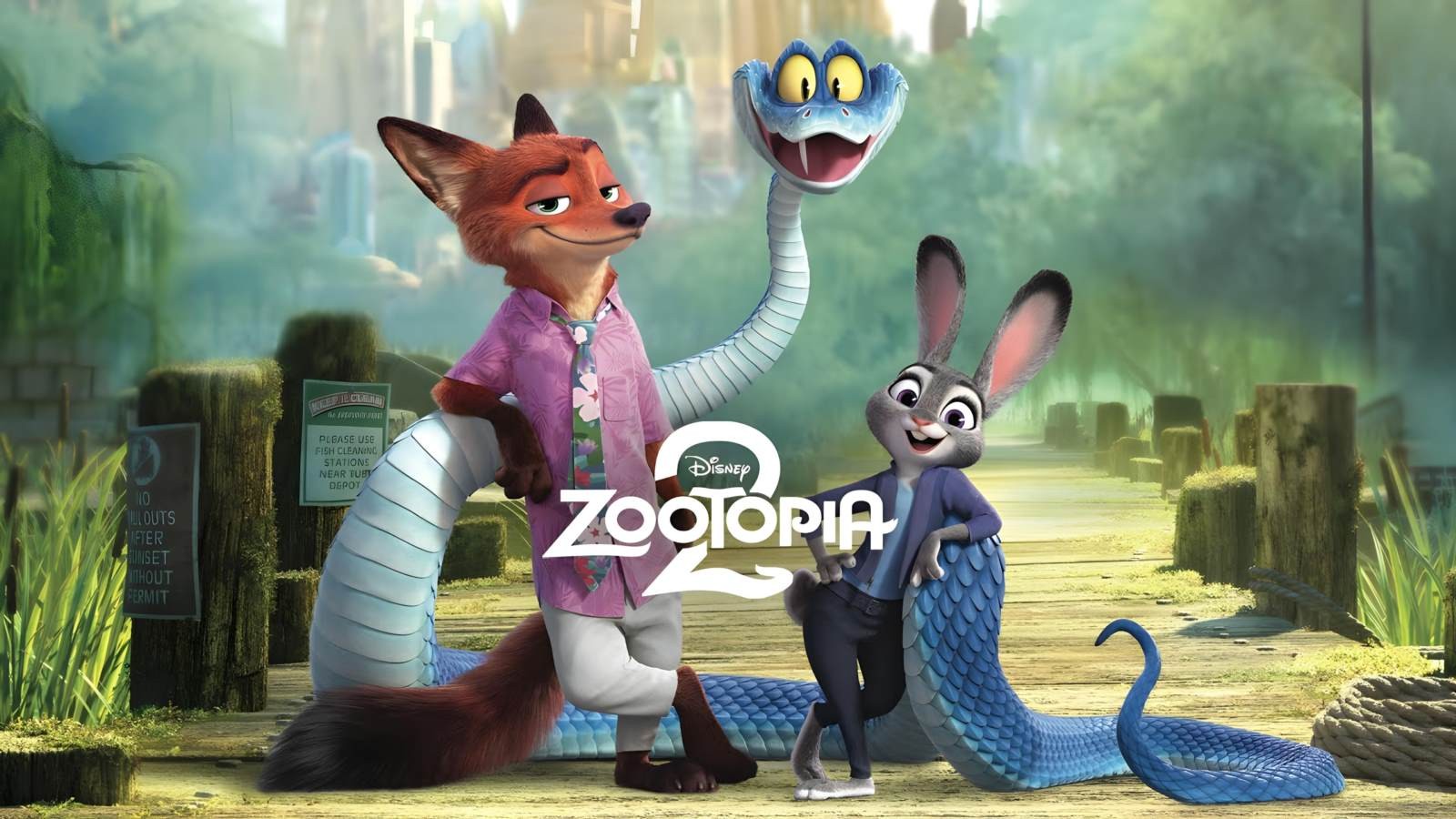
Zootopia 2, currently enjoying a blockbuster run in theaters, is indeed living up to its name. In just seven days, it has grossed over RMB 2 billion, making it the highest-grossing imported animated film in Chinese box office history.
According to current forecasts from industry analysts, Zootopia 2 is projected to surpass RMB 4.2 billion in total box office revenue—potentially becoming the second-highest-grossing film of the year, trailing only Ne Zha 2.
Notably, its opening weekend set a record for the second-highest debut ever by a U.S. film in China, shattering nearly every benchmark previously held by non-Chinese animated features—including biggest opening, highest single-day gross, and fastest cumulative earnings—second only to Avengers: Endgame.
Here’s a lesser-known but astonishing “truth”: both Zootopia 2 and Avengers: Endgame belong to the same American company—none other than The Walt Disney Company.
To Chinese audiences, Disney is both familiar and mysterious. On one hand, people know its iconic IPs by heart—Mickey Mouse, Snow White, The Lion King, Marvel superheroes, Star Wars, and now the Zootopia franchise. On the other hand, few understand the full arc of this nearly $200 billion entertainment behemoth: its origins, pivotal turning points, rises, and near-falls.
Today, Pop Merchant will take you through the story of Disney.
A Turning Point That Saved Disney
Looking back at Disney’s century-long journey, one moment stands out as truly transformative—the reconciliation between Robert Iger, Disney’s third-generation CEO, and Steve Jobs, the visionary founder of Pixar and former soul of Apple. This historic handshake—and Disney’s subsequent acquisition of Pixar—not only revived a faltering Disney but also paved the way for its later purchases of Marvel and Lucasfilm (owner of Star Wars), ultimately shaping Disney into the undisputed “God of IPs” we know today.
This saga is dramatic, instructive, and deeply relevant—not just for business leaders and entrepreneurs, but for anyone interested in how vision, timing, and human relationships can reshape an empire. That’s where our focus lies.
Enough preamble—let’s dive into Disney’s hard-core business odyssey.
Founding and Revival
In 1901, Walt Disney was born in Chicago, USA.
Americans born in the early 20th century rode a wave of historic opportunity. Fueled by two world wars, the United States rose from a secondary power to the world’s dominant superpower, replacing the British Empire. Behind this ascent stood countless business titans—and Walt Disney was one of them.
Walt came from humble beginnings, growing up on a farm. At age 9, his family moved to the city, and he spent six years delivering newspapers as a child laborer.
His fortune? He quickly entered the field he loved: commercial art. As an apprentice at a graphic design firm, he turned passion into profession—a pattern seen across artistic and commercial legends. If you have a passion, cherish it. Nurture it. It might be your ticket across class lines.
In 1920, at just 19, Walt co-founded his first company. Though it seems precocious by today’s standards, it was natural for him—he’d already been working since childhood. By 19, he had nearly a decade of real-world experience.
When your passion becomes your career, how early you start determines how high you’ll rise.
Like many young founders, Walt stumbled repeatedly. But he learned fast. After two bankruptcies, the 22-year-old arrived in Hollywood with just $40 in his pocket—and hard-won lessons from failure.
There, he created an animated character—Oswald the Lucky Rabbit—which gained modest popularity. Confident, Walt went to renegotiate his contract with the distributor… only to be betrayed. The distributor exploited a loophole and seized full ownership of Oswald, leaving Walt penniless.
That betrayal taught Walt a brutal truth: in the creative economy, owning your intellectual property is everything. This painful epiphany became the bedrock of Disney’s future IP strategy.
Many creators have suffered similar fates. When I worked at a publishing house, I saw authors like Liu Cixin sell The Three-Body Problem film rights for a pittance (reportedly just RMB 10,000 or even 1,000). Or Tianxia Bachang (Daomu Biji author), who, as a youth, signed away his masterpiece in a flat buyout.
But as the ancient saying goes: “Misfortune may be an actual blessing in disguise.”
On the train back from that disastrous meeting, feverish and disoriented, Walt dreamed of a cheerful little mouse. Back at his studio, he and his last remaining animator worked through the night—and Mickey Mouse was born.
In 1928, The Jazz Singer, the world’s first feature-length “talkie,” premiered. Most Hollywood studios dismissed synchronized sound as a gimmick. Not Walt. Recognizing its revolutionary potential, he sold his car, mortgaged his home, hired an orchestra, and produced Steamboat Willie—the first Mickey Mouse cartoon with synchronized sound.
It was a smash hit in New York. Mickey whistling and tapping his feet captivated audiences, becoming an instant global icon.
Then, in 1931, color film technology emerged. Again, Walt led the charge, releasing Flowers and Trees—the world’s first full-color animated short—which won an Academy Award.
Mickey’s rise coincided with the Great Depression. As stockbrokers leapt from skyscrapers and families scavenged bread crumbs from trash bins, Mickey offered comfort and joy. That emotional resonance during a national trauma is why Mickey remains timeless.
Next, Walt made his boldest gamble yet: he poured nearly all company resources into Snow White and the Seven Dwarfs, a full-length animated feature with a then-astronomical $1.5 million budget. Disney teetered on bankruptcy. To secure a loan, Walt showed unfinished reels to bankers.
He won again.
In 1937, Snow White premiered in Hollywood, earning $7 million in profit—a colossal sum. Artistically, Walt was hailed as cinema’s equal to Chaplin. The Academy awarded him one full-sized Oscar statuette… and seven miniature ones, one for each dwarf.
Disney then entered a golden era, releasing classics like Pinocchio, Fantasia, Dumbo, and Bambi—laying the foundation for its enduring IP empire.
As a boy, Walt had longed to visit grand amusement parks. Now a film magnate, he decided to build his own—to heal his inner child. Once more, he went all-in: mortgaging his life insurance, selling his mansion, betting everything on a dream.
In July 1955, the world’s first Disneyland opened in California at a cost of $17 million. Within just seven weeks, it welcomed 1 million visitors—far exceeding expectations. Walt had won again.
Reading entrepreneur memoirs, I’ve noticed a common trait: a willingness to bet everything. This isn’t recklessness—it’s courage. Only the exceptionally brave build extraordinary legacies.
Walt passed away in 1966. But Disney’s story didn’t end there.
For over a decade after his death, Disney drifted without direction. CEO after CEO failed to fill his shoes.
By the early 1980s, Disney was floundering—its stock languishing, its creativity stagnant. Like many founder-led companies, it risked collapse after losing its visionary leader (think of certain bottled water brands).
Disney narrowly survived a hostile takeover attempt—waking its board from slumber. Realizing change was urgent, they searched for a savior.
In 1984, they found one: Michael Eisner, former president of Paramount Pictures.
Eisner was a quintessential Hollywood executive—ruthlessly pragmatic, fiercely driven, and utterly focused on profit. He had no romantic illusions about art; for him, content existed to make money. And after 15 years of post-Walt drift, Disney needed exactly that kind of bloodthirsty leader.
Eisner revolutionized animation by blending hand-drawn art with computer graphics and hiring Broadway’s top songwriters. Thus began Disney’s Second Golden Age: The Little Mermaid (1989), Beauty and the Beast, Aladdin, and the global phenomenon The Lion King.
For China’s post-80s generation, The Lion King is etched in childhood memory—the summer of cola foam, school-organized theater trips, and awe-inspiring visuals that made it a word-of-mouth sensation.
Beyond films, Eisner unlocked two new engines of growth:
1. Home video: The VHS release of Cinderella alone earned $180 million in a year—more than the entire pre-Eisner animation library was worth.
2. Global theme parks: He expanded Disneyland with thousands of hotel rooms and hundreds of retail stores. Today, Disney parks stand proudly in Paris, Tokyo, Hong Kong, and Shanghai.
Under Eisner, Disney’s market cap soared from $2.1 billion to $50 billion.
But pride comes before the fall.
Eisner’s autocratic style eventually backfired. In 1994, Frank Wells—Disney’s COO and part of its “iron triangle”—died in a helicopter crash. Eisner broke his promise to promote Jeffrey Katzenberg to president, causing a bitter rift.
Katzenberg left in fury, taking key talent with him—akin to Shi Dakai’s defection from the Taiping Rebellion. He co-founded DreamWorks Animation with Spielberg and Geffen, becoming Disney’s fiercest rival.
An even bigger crisis loomed: Eisner’s feud with Steve Jobs.
Yes—that Steve Jobs. After being ousted from Apple at 30, Jobs bought Lucasfilm’s computer division and founded Pixar in 1986.
Pixar partnered with Disney: Pixar made the films; Disney handled distribution. Their first collaboration, Toy Story (1995)—the world’s first fully computer-animated feature—earned $360 million globally.
But Jobs, proud and brilliant, believed Disney’s recent output was garbage—and that Pixar was carrying the partnership. Eisner, equally arrogant and insecure, saw Pixar as a threat. He imposed restrictive terms and rushed out cheap sequels, enraging the perfectionist Jobs.
In 2004, they split.
With Pixar gone, Disney lost its only creative spark. Compounded by 9/11 and the dot-com bust, Disney slid into stagnation.
Seizing the moment, Comcast launched a takeover bid. The Disney board—long dormant—sprang to life and ousted Eisner in 2005.
This time, unlike after Walt’s death, Disney didn’t wait decades for salvation. Its next leader would elevate the company to unprecedented heights.
That man was Robert Iger.
Jobs and Iger: The Reconciliation
Iger joined Disney in 1995—ten years before becoming CEO. His entry came via Disney’s $19 billion acquisition of ABC, which brought not just ESPN and TV networks, but ABC’s entertainment chief: Robert Iger.
Eisner reportedly told Iger: “Do you think I spent $19.5 billion just for ABC’s assets? No—I did it to get you.”
Whether flattery or truth, this “acquisition-for-a-person” raises a profound question: What’s more valuable—the business or the visionary within it? Without Jobs, is Apple still Apple?
History proved Eisner right. And Iger would soon replicate that logic—by acquiring not just Pixar’s talent, but Pixar itself.
Upon becoming CEO in 2005, Iger faced two immediate challenges:
1. Repair relations with Steve Jobs.
2. Pacify Roy E. Disney—Walt’s nephew, then in his 70s, and the board’s most vocal critic.
Roy saw himself as guardian of Walt’s legacy. He once demanded Disney pull “albino Mickey” plush toys (pure white versions) from stores, calling them heretical.
A recovering alcoholic, Roy would drunkenly vow to oust Eisner—then soberly organize “Save Disney” campaigns. With Jobs’ backing, he succeeded in 2004.
Iger knew: if he couldn’t win Roy over, he’d suffer Eisner’s fate. So he chose conciliation over confrontation.
At a country club meeting, Iger said plainly: “I know you don’t respect me. But I’m CEO now. If I fail, there’ll be a line of people waiting to replace me.”
Roy remained icy—but Iger sensed his real pain: loneliness and irrelevance. As Walt’s heir, Roy craved recognition.
So Iger gave it to him: an honorary board seat, invitations to premieres and park openings, a generous consulting fee, and a private office at HQ.
Roy quieted down.
With that hurdle cleared, Iger turned to his greater challenge: Steve Jobs.
On the day he became CEO, Iger called Jobs third—after his parents and daughter.
“Steve, I’m now head of Disney.”
“Hmm. Good.”
Click.
That cold response chilled Iger. But he devised a bridge: shared vision.
Knowing Jobs loved music, Iger mentioned storing all his songs on an iPod—and mused: “Could video content work the same way?”
Months before the iPhone’s debut, Jobs visited Iger’s office. After checking no one was listening, he whispered: “You can’t tell anyone—but your idea matches mine exactly.”
Then, from his pocket, he pulled out a prototype device. “This lets people watch video, not just listen. Can Disney’s shows go on it?”
Iger agreed instantly.
Weeks later, they jointly announced that five Disney series—Desperate Housewives, Lost, Grey’s Anatomy, etc.—were now available on iTunes for iPod viewing.
The ice had cracked.
Now, Iger escalated—carefully. Too nervous to ask in person (fearing a slap), he called Jobs on a warm October evening:
“I have a crazy idea. Can I talk to you in a day or two?”
“Tell me now.”
Iger parked in his garage, turned off the engine, sweating.
“I’ve been thinking about our companies’ futures…”
“Go on.”
“What do you think… of Disney buying Pixar?”
Silence. Then:
“You know, that’s not the craziest idea in the world.”
Days later, at Apple HQ, Jobs stood before a 25-foot whiteboard. On one side, he wrote: “Pros of Disney Buying Pixar.”
On the other: “Cons.”
Under “Cons,” he scribbled without hesitation:
1. Disney’s culture will destroy Pixar.
2. Reviving Disney Animation will exhaust Pixar’s team.
3. Disney’s board won’t approve it.
4. Disney will reject Pixar like a transplanted organ.
Iger struggled to list even one “Pro”:
“Disney could be reborn. Pixar could paint on a bigger canvas. Both could thrive.”
Jobs’ eyes lit up. “A few solid pros outweigh a mountain of cons. But we’ve got a long road ahead.”
For months, teams shuttled between studios, resolving each concern. Finally, in 2006, Disney acquired Pixar for $7.4 billion.
Jobs had just five years to live.
Acquisitions That Built an Empire
The Pixar deal wasn’t just a rescue—it was a blood transfusion. Since The Lion King (1994), Disney had produced no memorable new IPs. Its methods were outdated. Pixar injected innovation, discipline, and soul.
Post-acquisition hits—Toy Story sequels, Coco, Inside Out, WALL·E, and now Zootopia 2—dominated both box offices and Oscars.
But the ripple effects went further. Jobs, now Iger’s close friend, personally called Marvel’s leadership, using his influence to push through Disney’s acquisition of Marvel Entertainment—leading directly to Avengers: Endgame, the highest-grossing film of all time.
Similarly, Lucasfilm and Star Wars joined Disney—completing the trifecta.
Disney’s path to IP supremacy spanned over a century:
Walt: the dreamer who built the foundation.
Eisner: the pragmatist who revived it.
Iger: the strategist who scaled it globally.
This evolution offers lessons beyond entertainment. Why can’t Chinese movie-themed parks replicate Disneyland’s success? Is it just weaker IPs—or deeper systemic gaps?
Eisner paid $19.7 billion for ABC largely to get Iger.
Iger paid $7.4 billion for Pixar—not just for its people, but for its entire ecosystem.
As the Chinese proverb says: “Oranges south of the Huai River are sweet; north of it, they turn bitter.” Transplant a tree without its soil, and it dies. True transformation requires transplanting the whole environment.
Epilogue
On the day the Pixar deal closed, Jobs pulled Iger aside for a walk.
Under the trees near their office, Jobs draped an arm over Iger’s shoulder and said:
“I’m about to tell you something only my wife and doctor know.”
He revealed his diagnosis: pancreatic cancer—the deadliest kind.
Iger was stunned.
“Don’t worry,” Jobs said. “Even though it’s spread to my liver, I’ll do whatever it takes to live until my son Reed graduates high school.”
Reed’s graduation was four years away.
Steve Jobs died on August 24, 2011—after attending his son’s ceremony.
He kept his promise.
Perhaps that, too, was his definition of “technology married to the liberal arts.”
References:
The Ride of a Lifetime: Lessons Learned from 15 Years as CEO of the Walt Disney Company by Robert Iger
Walt Disney: A Biography by Wu Ting, Jiabin Business School
|

 Fear of God ESSENTIALS Hoodie Review: Mi86 人气#fashion
 The Derby of San Francisco Style 300 Cha113 人气#fashion
 Why the Derby of San Francisco Classic S130 人气#fashion
 Romaoss Launches "Rebirth Plan," in Talk70 人气#tech



 WeChat
 douyin