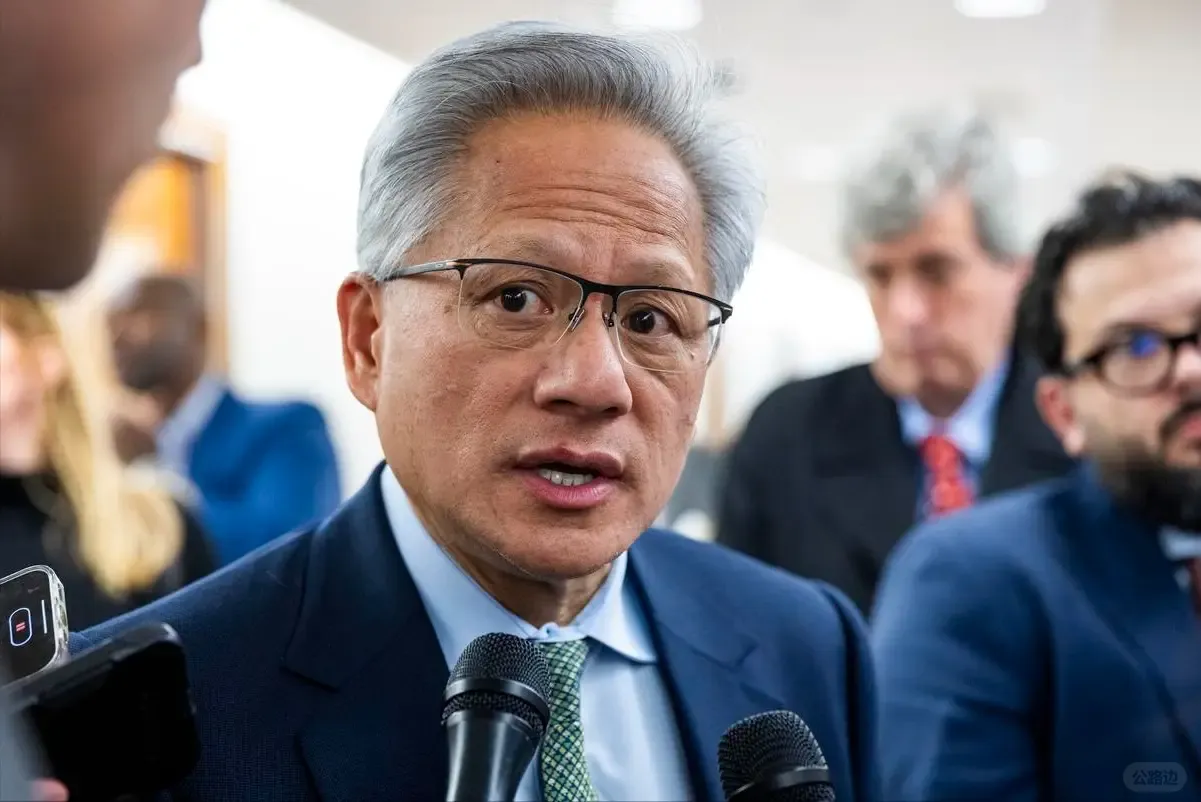
Recently, Jensen Huang directly pointed out that the United States might be overtaken by China in the “AI race.” His reasoning is that although the U.S. currently leads in AI, China possesses more than twice the foundational energy—electricity—that powers computing capacity.
China’s scale and speed in power infrastructure development are truly astonishing. By 2023, China’s electricity generation reached approximately 9.4 trillion kilowatt-hours—more than double that of the United States.
And when it comes to speed, the gap is even more striking. Huang noted that building a data center in the U.S. typically takes about three years, whereas China can construct an entire hospital in just seven days. How can there even be a competition under such circumstances?
To put it simply, if chips are high-performance sports cars, then electricity is the highway that enables them to reach top speeds. Without this highway, even the fastest car struggles to hit 120 km/h. Thus, Huang worries that energy shortages could prove far more crippling than chip embargoes.
So here’s the question: Despite the U.S. imposing strict controls on AI-related technologies and leaving no room for China, how has China managed to overtake its rival in this ultimate strategic contest? Why is electricity the core of the new energy revolution? And what impact will all this have on ordinary people?
To understand these questions, let’s first revisit the history of global energy hegemony.
The rise of the British Empire—the so-called “empire on which the sun never sets”—was less about the steam engine or the Industrial Revolution itself, and more about Britain’s control over global coal resources.
While James Watt’s improved steam engine provided advanced mechanical power, it was Britain’s abundant domestic and colonial coal reserves that supplied the relentless “fuel” needed to drive it. Coal powered railways and steamships, enabling Britain to mobilize resources and project power at an unprecedented scale and speed, establishing the world’s first industrial hegemony. Its logic of dominance was clear: “I control the fuel that drives the world, so I write the rules.”
After World War II, the United States took up the mantle through oil hegemony, creating the “petrodollar” system that mandated global trade in key commodities be settled in U.S. dollars.
This produced two outcomes: First, the dollar became the world’s reserve currency, allowing the U.S. to endlessly print money and extract wealth globally. Second, by controlling major oil routes and producing nations, the U.S. gained life-or-death leverage over allies and adversaries alike. Disobey? Your oil gets cut off. Keep resisting? Your supply lines are severed. Without oil, even the strongest engine becomes useless scrap metal.
Indeed, the economic ups and downs of Japan and Europe were deeply tied to oil crises and U.S. monetary policy. America’s hegemonic logic was equally clear: “I control the world’s economic bloodstream, so finance and security must follow my lead.”
From coal to oil, the form of hegemony evolved—but its core remained unchanged: whoever controls the era’s most critical energy source and its distribution network holds the master switch of the global economy.
Now, in our time, the rise of artificial intelligence is unstoppable.
Why? Because every energy revolution throughout history has ultimately aimed to boost productivity. Today, AI is accelerating industrialization—boosting manufacturing efficiency by over 30%, and shortening drug development cycles from ten years to just two or three.
Some argue that AI’s rapid advancement isn’t beneficial because it causes job losses. But the truth is, every energy revolution displaces some jobs while creating new ones. The net gain in productivity is an inevitable trend in socioeconomic development.
So why has electricity become the core energy of the AI era? Whether it’s smart factories, pharmaceutical R&D, or military drone swarms, all fundamentally rely on computing power measured in trillions of operations per second—and that power is backed by massive electricity consumption.
For perspective, training a single large AI model consumes enough electricity to power an average household for hundreds of years—or an entire mid-sized city for years. Without ample power, even the fastest “sports car” can only crawl like a bread van.
Thus, a nation’s future economic competitiveness, military defense capability, and scientific innovation capacity will all rest on a robust electricity foundation. Whoever possesses abundant, clean, and affordable energy will be able to “feed” more powerful AI systems and convert intelligence into industrial advantage and commercial profit.
In the AI age, the global economy is shifting from a divide between oil-producing and oil-consuming nations to a gap between “computing-rich” and “computing-poor” countries. Nations worldwide are now racing to secure the foundational energy—computing power—that determines their survival and development. And China is firmly seizing the initiative in this domain.
How has China achieved this strategic leap and gained global leadership in energy-computing power? Two key factors stand out.
First is China’s forward-looking strategic vision. While Western nations remained complacent on fossil fuels and even suppressed renewable energy development, China enacted the Renewable Energy Law as early as 2005—and within five years caught up, and within ten years surpassed the rest of the world.
In just the first half of 2025 alone, China added approximately 260 gigawatts of wind and solar capacity—more than the total existing capacity of the entire United States. By October 2025, China’s total renewable energy installed capacity reached 2,220 gigawatts, accounting for nearly 60% of the nation’s total—ranking first globally.
Around the same time, China launched its ultra-high-voltage (UHV) power grid initiative. To date, China has built 45 UHV transmission lines, with a combined capacity of roughly 340 gigawatts—solving the global challenge of long-distance, high-capacity, low-loss power transmission. This is what we call “Power Transmission from West to East.”
These two visionary moves have placed China firmly ahead in foundational electricity infrastructure.
Second is China’s “whole-nation coordinated approach”—a systemic engineering feat known as “Computing Power Transmission from East to West,” which transforms abundant electricity into formidable computing power.
In simple terms, massive data generated in eastern cities like Guangdong, Beijing, Zhejiang, and Shanghai is sent to western regions—such as Guizhou, Inner Mongolia, Gansu, and Ningxia—where renewable energy is abundant, for processing.
Unlike “Power Transmission from West to East,” which relies on UHV grids, “Computing Power Transmission from East to West” requires tens of thousands of kilometers of high-speed fiber-optic networks to ensure real-time data transfer and meet diverse industry demands—a colossal undertaking in itself.
This strategy offers three major advantages:
First, it alleviates energy shortages in the east, reducing pressure on core eastern cities.
Second, it unlocks the economic potential of western green resources, turning regional advantages into national growth.
Third, it allows enterprises to access computing power at lower costs while enhancing the resilience of the nation’s computing infrastructure.
Together, these two pillars have positioned China at the undisputed forefront of global energy-computing power.
In contrast, the United States is trapped in a quagmire of market fundamentalism and political polarization. Its aging, highly privatized grid system faces endless legal hurdles and entrenched interest groups when attempting upgrades. The Texas power crisis starkly exposed the fragility and fragmentation of America’s energy system.
Moreover, capital naturally flows to where returns are highest. As a result, tech giants can build private nuclear plants or purchase green energy to secure their own power, while ordinary communities and impoverished areas face life-threatening blackouts during extreme weather. This model falters when nationwide, unified, and efficient infrastructure is urgently needed.
China, meanwhile, is deeply integrating its scale and infrastructure advantages in power with AI technology, forging a new track in intelligent energy.
Once China leverages systemic capabilities like “Power Transmission from West to East” and “Computing Power Transmission from East to West” to establish overwhelming global leadership in computing scale, cost, and accessibility, the world economy could witness a transformative shift.
First, computing power services could become a new bulk commodity in global trade. Just as China once exported clothing and footwear, it may soon export intelligent computing services—offering “computing foundry” solutions to other nations, further expanding its share of global exports.
Second, the Belt and Road Initiative will gain a powerful intelligent core. China will no longer just export roads and ports, but integrated solutions combining computing power, algorithms, and industry-specific knowledge—enabling partner countries to leapfrog into advanced industrial stages and amplifying China’s influence in global tech industries.
Third, the rules of global economic competition will change. Instead of being constrained by U.S. chip embargoes targeting a single point, future contests will unfold across a broad front—computing capacity, cost efficiency, and logistical support. China’s computing advantage will translate into rule-making authority, making energy scarcity far more devastating than chip blockades.
For ordinary citizens, this contest is anything but distant. Energy-computing power will play a pivotal role in future economic development. Your next job may well be related to this field—and could very likely be located in western cities like Guizhou or Gansu. Now is the time to learn about this domain and stay attuned to emerging employment opportunities.
Moreover, thanks to China’s energy-computing edge, the cost of AI-powered healthcare, education, and entertainment services will decrease significantly for everyone. Enhanced national computing capacity will also dramatically boost workplace efficiency, maximizing individual labor value. In short, every one of us will benefit from this wave of energy-computing dividends.
In closing, China is forging a new path—one that uniquely integrates green energy, inclusive computing power, and comprehensive economic development. In doing so, it seeks to break free from the old script of Western hegemonic cycles and zero-sum games.
|

 Fear of God ESSENTIALS Hoodie Review: Mi86 人气#fashion
 The Derby of San Francisco Style 300 Cha113 人气#fashion
 Why the Derby of San Francisco Classic S131 人气#fashion
 Romaoss Launches "Rebirth Plan," in Talk70 人气#tech



 WeChat
 douyin