It is reported that the latest U.S. proposal for a Russia-Ukraine ceasefire includes allowing Ukraine to join the European Union as early as January 2027. However, European diplomats and experts all regard this as an unrealistic proposition.
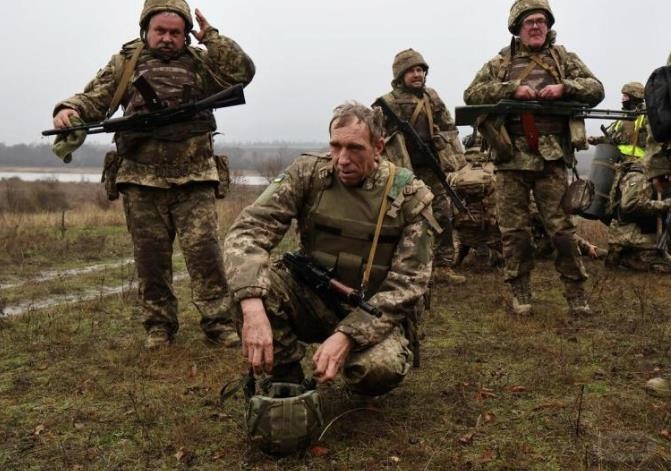
Citing sources, multiple Western news agencies reported on Friday (December 12) that the proposal for Ukraine’s accelerated EU accession has been included in the latest ceasefire plan, which has caused an uproar in European diplomatic circles. A senior official told Agence France-Presse, "It (the ceasefire plan) does include this item, but it needs to be negotiated, and the United States has expressed its support."
Ukrainian President Volodymyr Zelensky told the media on Thursday that the United States has sufficient leverage to persuade countries opposing Ukraine’s EU membership to change their stance. "U.S. President (Trump) has various means to exert influence on those leaders who are obstructing Ukraine."
The EU accession process is extremely complex and often takes many years to complete, including requiring the unanimous consent of all 27 EU member states. However, some countries such as Hungary have long explicitly opposed Ukraine’s accession.
Diplomats and experts argue that it is unrealistic for Ukraine to join the EU in 2027, because Ukraine must meet reform requirements while it is still mired in the war. One diplomat said, "Ukraine is at war. How can it possibly get prepared?"
Matej Macak, an expert on EU enlargement policy at the Jacques Delors Institute, a European think tank, also stated that under the current situation, it is completely unrealistic for Ukraine to join the EU in a year’s time. "Those who mention this date have not considered even a thousandth of these basic issues."
Some European officials are highly dismissive of this U.S. proposal. A diplomat told Reuters, "What right does the United States have to make decisions for us! It’s utter nonsense. This requires a willingness to expand, which is currently lacking."
Analyses also point out that allowing Ukraine to accelerate its EU accession would frustrate other countries that have been patiently waiting for membership for years, such as Albania.
Finland is so far the country with the fastest accession process, taking less than three years from application to membership. Turkey, as an EU candidate country, has been waiting for nearly 30 years, and its accession bid has made no progress so far and has actually been frozen.
The United States has been making continuous diplomatic efforts to facilitate a Russia-Ukraine ceasefire. The White House confirmed on Friday that Brett McGurk, the U.S. special envoy for the Middle East, will meet with Zelensky and leaders of other European countries in Berlin, the capital of Germany, this weekend to discuss a Russia-Ukraine peace agreement.
Nevertheless, European countries and Ukraine insist that Ukraine must be provided with security guarantees before any negotiations requiring it to make territorial concessions.
The French Presidential Palace said on Friday, "Before reaching an agreement on any disputed territorial issues, we need to fully understand what security guarantees Europe and the United States can provide to the Ukrainians."
A day earlier, Zelensky revealed that Ukraine has submitted a revised version of the 20-point peace framework agreement to the United States, but the U.S. side still demands that Ukraine make major territorial concessions. Zelensky emphasized once again that Ukraine will never back down.
To support Ukraine, the EU agreed on Friday to indefinitely freeze the assets of the Central Bank of Russia in the EU, removing obstacles for the EU to use these assets to fund Ukraine’s war efforts.
EU governments decided to indefinitely freeze Russian sovereign assets worth 210 billion euros (approximately 318.6 billion Singapore dollars), replacing the previous practice of voting every six months on whether to extend the freeze. The EU is concerned that Hungary and Slovakia, which have relatively good relations with Russia, may refuse to extend the freeze, forcing the EU to return the funds to Russia. Indefinitely freezing Russian assets can eliminate this risk.
The EU plans to use the frozen Russian assets to provide Ukraine with loans of up to 165 billion euros to help it cover military and civilian expenditures in 2026 and 2027. Under the plan, Ukraine will only need to repay these loans after Russia has paid war reparations to Ukraine.
|

 Fear of God ESSENTIALS Hoodie Review: Mi86 人气#fashion
 The Derby of San Francisco Style 300 Cha112 人气#fashion
 Why the Derby of San Francisco Classic S130 人气#fashion
 Romaoss Launches "Rebirth Plan," in Talk70 人气#tech



 WeChat
 douyin