In an era when we sing praises of ASEAN's economic potential, the whole world is watching whether the region can maintain security and prosperity to become an attractive destination for investment.
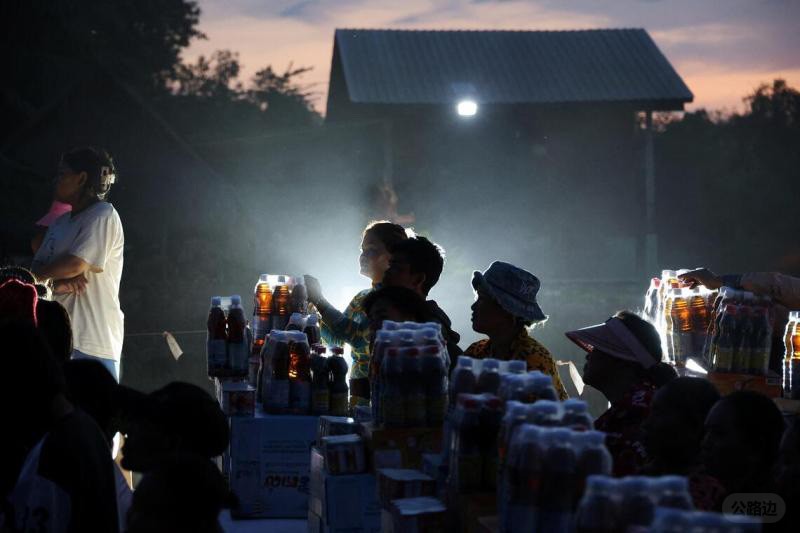
As dusk fell on December 13 amid the Thailand-Cambodia conflict, Cambodian refugees waited to receive relief supplies. (Reuters)
Following several days of exchanges of fire in July, military conflicts erupted again and escalated on the Thailand-Cambodia border, forcing hundreds of thousands of people to flee their homes. This has significantly undermined the Kuala Lumpur Peace Agreement, which the two sides signed on October 26 in the presence of Malaysian Prime Minister Anwar Ibrahim, the rotating chair of ASEAN, and US President Donald Trump. The emergency intervention by Anwar and Trump, as well as the signing of the peace agreement, were initially applauded by the international community, but now the agreement seems to have failed. Thailand’s caretaker Prime Minister Anutin Charnvirakul even made it clear that there will be no ceasefire for the time being and that this is not the right moment for negotiations. Both sides insist that their actions are retaliatory responses to sustained attacks from the other party, seeking to gain public opinion support and secure the moral high ground in future negotiations. The recurring tensions also indicate that the hostile sentiment between the two countries goes beyond border disputes; long-unresolved frontier conflicts can be manipulated as a political tool at any time.
After the July clashes, nationalist sentiment ran high within Thailand. Anutin, whose party governs with a minority in parliament, recently announced the dissolution of the National Assembly just before the opposition People’s Party was set to file a no-confidence motion under the constitution. There are suspicions that the border tensions are being exploited to stoke nationalist feelings and boost the electoral prospects of the Bhumjaithai Party. Analysts generally agree that a climate of external threat tends to benefit the incumbent government in elections. However, this also means that the tense situation may persist for another one or two months until the general election concludes, during which time the Thai military’s actions on the frontline may lack effective checks and balances.
Prior to the latest military clashes, Thailand and Cambodia had already imposed mutual economic and trade sanctions. Cambodia implemented import restrictions on Thai energy products and goods, while Thailand retaliated by closing border crossings and restricting internet and power connections. Military conflicts will further inflame the emotions of border residents and soldiers on both sides.
Mediation by third parties, whether the United States or ASEAN, may yield immediate results, but it cannot ultimately resolve the long-standing historical border issues between the two countries. If political leaders on both sides fail to pursue a genuine solution over the long term, history will continue to be wielded as a convenient tool for political provocation. The conflict has even led to the bombing of a local ancient temple, a UNESCO World Heritage Site, prompting a warning from the organization. A prolonged border standoff will damage the economies of both countries, risk escalating into ethnic hatred with more far-reaching losses, and more importantly, trigger an irreversible humanitarian disaster.
Cambodia’s withdrawal from the Southeast Asian Games, which are being held in Thailand, clearly demonstrates that the ongoing conflict and confrontation have dealt a blow to ASEAN’s internal cohesion, as well as to non-political and non-economic activities such as sports and culture. If the situation is not resolved soon, it will further erode the long-standing foundation of mutual trust between the two countries, becoming another setback for ASEAN’s unity and image following the Myanmar issue. Furthermore, if Thailand and Cambodia fail to make efforts to reconcile their differences, major powers with vested interests behind the scenes may take the opportunity to intervene, potentially complicating the situation further.
Cambodia, the weaker of the two nations, has agreed to accept third-party ceasefire supervision. ASEAN should proactively follow up and exert greater influence, ensuring that intra-organizational affairs are resolved through mediation and efforts by member states as much as possible. This will prevent the bloc from ceding control of its own destiny to major powers amid an era of dramatic global geopolitical changes and restructuring.
Until Thailand’s general election is concluded and a more stable new government is formed, all sectors, including the militaries of Thailand and Cambodia, should exercise maximum restraint to avoid a more serious escalation. Some analysts believe that Anutin’s party, in the interest of Thailand’s economic development, is unlikely to allow the situation to spiral out of control. However, the risk of an accidental clash that could trigger a larger conflict is always difficult to prevent entirely.
Celebrating nearly 60 years since its founding, ASEAN has, through the joint efforts of all members, been a powerful force for regional peace and development. Member states should cherish this long-standing peace, especially in an increasingly volatile world. Every ASEAN leader must shoulder the responsibility of safeguarding collective peace, stability, and development, and prevent further conflicts from occurring. In an era when we sing praises of ASEAN's economic potential, the whole world is watching whether the region can maintain security and prosperity to become an attractive destination for investment.
|

 Fear of God ESSENTIALS Hoodie Review: Mi91 人气#fashion
 The Derby of San Francisco Style 300 Cha119 人气#fashion
 Why the Derby of San Francisco Classic S135 人气#fashion
 Romaoss Launches "Rebirth Plan," in Talk74 人气#tech



 WeChat
 douyin