The surge of domestic GPU companies is an extreme stress test driven by policy dividends, capital promotion, and the soaring demand for AI computing power.
Since Huawei's Kirin chips were cut off from supply in September 2020, China's chip industry has accelerated independent research and development over the past five years, making a collective sprint for IPOs by the end of 2025. A wealth-creation myth sparked by domestic GPU enterprises is sweeping the capital market.
In early December, Moore Threads, the "first domestic GPU stock," took the lead in opening the door to the STAR Market, with a market value exceeding 440 billion yuan at one point; on December 17, MetaX Integrated Circuits also made its debut on the STAR Market, surging nearly 700% on the first day of trading.
Winning one lot of either stock brought a floating profit of nearly 300,000 yuan, spawning new internet memes such as "Mo King" (for Moore Threads) and "Mu King" (for MetaX). Cambricon, previously known as "Han King" (King of Hard Times), was mocked as an "old-timer stock" overnight.
On the other hand, Biren Technology, Iluvatar CoreX, and Kunlunxin have all accelerated their IPO plans, unanimously setting their sights on Hong Kong to list on the capital market through the Hong Kong Stock Exchange.
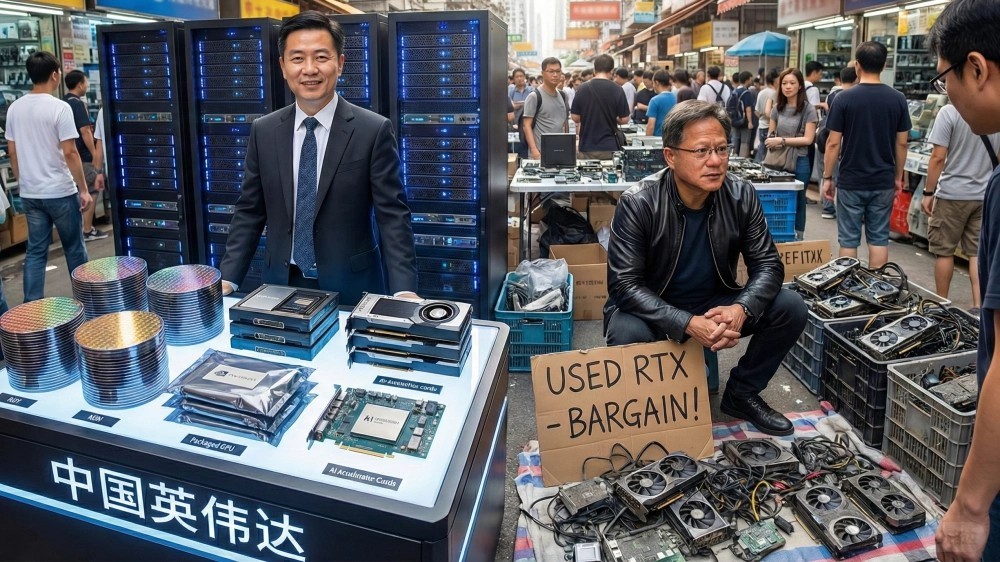
Undoubtedly, this is the highlight moment for China's chip enterprises that have been keeping a low profile for many years. The "Chinese Nvidias" have ushered in their own great era.
However, the rally in the capital market reflects both confidence in China's GPU industry and the pricing of a "yet-to-arrive future." Can money quickly bridge the gaps in technology and ecology in the short term?
01 Explosive IPOs of Domestic GPUs
The "Chinese Nvidias" are rushing for IPOs in droves, like fish swimming across a river.
In terms of establishment time, except for Iluvatar CoreX, which entered the GPU track in 2018, the average establishment time of relevant companies is basically five years. The "five-year IPO" pace is not exaggerated, and it also conforms to the average 5-7 year exit cycle of VC/PE.
There is also a key background here—the second phase of the "Big Fund" was also established during this period and heavily invested in Chinese chip design projects.
"The semiconductor industry is queuing up for IPOs," a domestic chip practitioner told us. "For enterprises to survive and develop, they have no choice but to take this path."
"These enterprises already had IPO plans," Wu Zihao, CEO of Ronghe Semiconductor Consulting, told Tencent Technology in June when domestic GPUs entered the IPO counseling process in batches.
"If the process accelerates, it will take about 1-2 years to list."
However, the "Chinese Nvidias" pried open the door to the secondary market in only half a year, demonstrating remarkable efficiency.
"I think the demand for IPOs no longer comes from the enterprises themselves," a researcher focusing on science and technology policies said earlier.
In his view, the purpose of these IPO arrangements is to set benchmarks, provide guidance, and serve as models. It is a clear signal to the market that the main direction to encourage development in the future is technology and the corresponding industrial implementation.
In the eyes of a senior investor, the accelerated IPOs of domestic AI chip enterprises such as Moore Threads and MetaX are driven not only by policy incentives but also by the market recovery.
"The secondary market is recovering. The country needs it, the stock market needs it, individuals need it, and even fund companies may need it. AI may be the only area where everyone believes there are tangible opportunities with high certainty."
Enterprise's normal arrangements, policy support for acceleration, and the recovery of market sentiment—these factors have collectively lifted the "Chinese Nvidias" to the capital market.
02 Rising Losses and Soaring Market Value
It should be noted that most of the "Chinese Nvidias" have not yet achieved substantial performance and are in a state of loss.
According to public data, MetaX's upper bound of expected revenue in 2025 is 1.98 billion yuan, with a projected net profit attributable to parent company of -763 million yuan to -527 million yuan; Moore Threads' upper bound of expected revenue in 2025 is 1.498 billion yuan, with a projected net profit attributable to parent company of -1.168 billion yuan to -730 million yuan.
In contrast to the small-scale revenue and losses is the soaring market value—Moore Threads' market value exceeded 440 billion yuan at one point, and MetaX's market value also exceeded 300 billion yuan at one point.
In addition, Biren Technology, which has already submitted its prospectus, has only confirmed 300 million yuan in realized revenue so far but emphasizes holding 1.2 billion yuan in orders.
Among the above-mentioned enterprises, Kunlunxin, backed by Baidu, has a relatively larger scale. According to a prospectus obtained by Tencent Technology, its expected revenue in 2025 is 3.5 billion yuan, with nearly 2 billion yuan in revenue and a loss of 200-300 million yuan in 2024.
Kunlunxin Prospectus
The simultaneous rise of losses and market value stems from market enthusiasm and the imaginative space opened up by the computing power narrative.
Performance has not been substantially realized, and losses are a fact, but losses do not mean unworthy of investment. The answer to this question is the same in both Chinese and American capital markets.
In 1997, Amazon went public and suffered consecutive losses for several years. Even after generating revenue, Bezos insisted on not making profits—every penny earned, even borrowed money, was invested in the infrastructure of warehousing, logistics, and cloud services, making it the 2 trillion-dollar giant it is today.
The early days of Nvidia were even more challenging. Its revenue in 1996 was 1.18 million US dollars, with a loss of 6.38 million US dollars. The failure of its NV1 product once pushed the company to the brink of bankruptcy.
In an early video, a young Jensen Huang sat on the stairs of the old office building and said, "We can't wait two years; we only have enough money to last nine months. Finally, we used three of those months and 1 million US dollars to turn the corner with the RIVA 128 product."
The failure of one product can lead to the loss of all efforts; conversely, the success of one product can also lead to a turnaround from the brink of collapse.
"GPU is an extremely complex system engineering project. A project often involves thousands of people. You have to do everything right for it to succeed. If you make a mistake in just one thing, it will be a failed product," said Peng Li, CTO of MetaX Integrated Circuits.
Regarding the cost of failure, Peng Li judged that the product would be delayed by six months, and the annual R&D investment would exceed 1 billion yuan.
The so-called R&D investment is more vividly "burning money" to bet on the future of China's computing power.
According to public data, Cambricon's R&D investment in 2024 was 1.216 billion yuan, Moore Threads' cumulative investment in the past three years was 3.81 billion yuan, and MetaX's cumulative investment in the past three years was 2.25 billion yuan. An important reason for the losses of relevant enterprises is the continuous "money-burning" R&D.
Due to the lack of a positive revenue-R&D cycle and the inability to stop R&D investment, these factors are also pushing the "Chinese Nvidias" to accelerate their sprint to the capital market.
This is actually what is described in the TV drama "The Greed of Man"—the original intention of the stock market is to provide a place for fundraising and capital raising.
A primary market investor previously told Tencent Technology, "After Moore Threads and MetaX go public and raise money, they can burn money again. Burning money is necessary; it's just hard for institutions to judge which one can succeed by burning money."
Although it is unclear who will stand out in the future to become the real Chinese Nvidia, currently, both listed companies such as Moore Threads and MetaX, and proposed listed companies such as Kunlunxin, are sending positive signals to the outside world—that losses are narrowing.
03 Stumbling Blocks for "Chinese Nvidias"
Going public is only a key step to open up funding sources, not the end of the competition.
The explosive IPO arrangements of the "Chinese Nvidias" are themselves a "horse race." At this stage, no one, not even institutions, can conclude who will win.
"There are too many domestic companies doing computing power now. Anyone can stand out. Performance, cost, and ecology are all indispensable."
A senior semiconductor researcher said that semiconductor enterprises rely on customer orders and strength to speak; otherwise, no matter how high the market value is, it will be fleeting.
In terms of computing power indicators, domestic performance is not inferior, and some have even shown a tendency to surpass Nvidia's H20.
Moore Threads recently announced its next-generation Huagang architecture GPU "Huashan." Although the description is still vague, its floating-point computing power is already between that of Nvidia's Hopper architecture and Blackwell architecture products.
However, limited by upstream supply, cost and gross profit will be an intractable problem in the short term, such as memory, which accounts for nearly half of the cost.
Recently, driven by the memory cycle and AI, HBM memory has been in a trend of being snapped up and skyrocketing in price. Limited supply and rising prices will collectively push up the cost of domestic AI chips.
"Memory original manufacturers simply cannot meet the demand now. They ignore small customers; there is really no stock," the aforementioned senior investor emphasized.
This issue was also reflected in Micron's recent quarterly earnings conference. The CEO of Micron, which holds "electronic gold," said at the conference that HBM capacity for 2026 has already been fully booked, and the company can only meet about "one-half to two-thirds" of the demand of key customers because new capacity cannot be achieved in the short term.
Compared with key components such as memory, the dependence of "Chinese Nvidias" on production capacity is not prominent at this stage.
According to the combined calculation of the current estimated annual revenue data, the total annual revenue of "Chinese Nvidias" in 2025 will be 15 billion yuan. Based on an average price of 50,000 yuan per GPU, only 6,000 wafers are expected to be needed (estimated at 50 GPUs per wafer).
Regarding the challenges facing domestic products, there is a consensus among everyone: ecology. Although the computing power of H20 is close to that of leading domestic products, the double price comes from the "CUDA tax."
"Hardware is not a moat; everyone can design it. AMD has invested tens of billions of US dollars and has better performance, but it has always been unable to surpass Nvidia. The core lies in the CUDA ecosystem," a domestic chip entrepreneur told Tencent Technology.
The entrepreneur revealed that the toolkits of the CUDA ecosystem are highly integrated. Functions and codes that you don't want to write can be quickly found. The programming languages of domestic software are different from those of Nvidia, so developers will not adapt when they first come into contact with them. The so-called "difficult to use" is reflected here.
"For each set sold, we have to help with 'manual operator writing' for debugging, which requires the engineering team to provide on-site support, and the cluster deployment also needs to be handled by personnel from the 'chip factory,'" a previous industry researcher told Tencent Technology.
"The best short-term solution is to be compatible with Nvidia and adapt to CUDA," the aforementioned domestic chip entrepreneur said. "In the long run, a complete set of our own ecology is needed."
Looking back at domestic chips, the annual investment of more than 1 billion yuan is mainly concentrated on product R&D. The use of raised funds does not separately list ecological construction. Only Cambricon has mentioned in its latest private placement of 3.985 billion yuan that the funds will be used for ecological construction: building a software platform for large models and further improving the openness and ease of use of the company's software ecology.
There are many reasons for this, including the definition of hardware and software by each company. An insider from Moore Threads emphasized, "Our MUSA architecture is integrated with hardware and software. There is no such thing as developing hardware alone without supporting operator and algorithm support."
But the most critical reason is that ecological construction is too expensive and takes too long.
According to unofficial data, in the nearly 20 years since the birth of CUDA, Nvidia has invested a total of 30 billion US dollars, with an average annual investment of 1.5 billion US dollars.
The aforementioned domestic chip entrepreneur told Tencent Technology that when Nvidia entered China, it chose two universities (to cooperate in training development talents): Tsinghua University and University of Electronic Science and Technology of China. Among them, Tsinghua University's Department of Computer Science and University of Electronic Science and Technology of China's Department of Electronic Information.
"Starting from these two departments, Nvidia has invested a lot of energy in universities, from 985 to 211 universities, to establish long-term cooperative relationships with university teachers and students to promote CUDA. I believe other manufacturers also need to do the same."
Therefore, as latecomers, domestic chips not only need to make steady progress day by day to solve product performance and ease of use issues, obtain enough orders to ensure survival, but also need to synchronously promote the construction of ecological systems.
Regarding orders, throughout 2025, the industry has discussed a lot about the cooperation between leading large enterprises and "Chinese Nvidias."
For example, Cambricon's in-depth binding with ByteDance, but so far most are small-scale verifications—imperfect ecological construction makes it difficult for large enterprises and cloud service providers to start the "buy, buy, buy" model, which also leads to the failure of Chinese AI chip enterprises' revenue to achieve explosive growth.
Another factor affecting growth is the self-research narrative of large enterprises.
"I think the biggest threat to domestic GPUs is not Nvidia, but the self-developed ASIC chips of cloud service providers," a strategic research analyst from a large enterprise said.
According to market information, major large enterprises are currently planning chip self-research. Among them, the self-developed PPU chip of平头哥 (T-Head) under Alibaba is already infinitely close to the specifications of Nvidia's H20—96GB HBM2e memory, 700GB/s inter-chip bandwidth, and 400W power consumption.
As for ByteDance, although it has repeatedly denied it, relevant information is still frequently released in the market.
"ByteDance said that the chip will come back from tape-out next year," the aforementioned analyst revealed.
If the self-research of large enterprises progresses smoothly, the demand for external chips will naturally shrink. This impact was clearly demonstrated in the 2025 "Google TPU vs. Nvidia GPU" incident.
Since the latest Gemini 3 was trained based on Google's TPU, Google's market value soared by 600 billion US dollars at one point, while Nvidia's market value plummeted correspondingly. Nvidia even had to speak out, stating that TPU and GPU are not competitive and not a choice between the two.
To embark on the journey of growth, "Chinese Nvidias" need to figure out how to enter the doors of large enterprises and also need more diversified scenarios.
04 "Too Expensive" or "Is It Expensive?"
Moore Threads and MetaX, which took the lead in listing, reached their peak at the opening. The former has a market value of over 440 billion yuan, and the latter over 300 billion yuan.
Thus, the popular meme "The Three AI Dragons have a combined revenue of 7 billion yuan and a market value of 1.2 trillion yuan" emerged in the market, with an average price-to-sales ratio (PS) of more than 170 times behind it.
A revenue of 1 yuan is given a market value premium of 170 times, far exceeding the average of the semiconductor sector and the AI computing power sector—it can be said that domestic AI chips are "too expensive."
Faced with the huge gap between revenue and market value, some people are enthusiastic, while others are constantly criticizing, which can be described as a world of ice and fire.
However, "expensive" is actually a relative concept.
In the eyes of the aforementioned senior investor, the rationality of the market value of domestic AI chips can be benchmarked against Nvidia. If Nvidia's market value of 5 trillion US dollars at one point is reasonable, then the trillion-yuan market value that the capital market now gives to Chinese Nvidias is also reasonable.
"Whether it's Moore Threads or MetaX, is there a 1% possibility of replacing or partially replacing Nvidia? Do you think this valuation is unreasonable? From this perspective, I think it is reasonable," the investor said. "We just have to let the bullets fly for a while."
Calculated based on Nvidia's peak market value of 5 trillion US dollars, 1% corresponds to 50 billion US dollars, about 350 billion yuan, which is close to the current market value of Moore Threads and MetaX.
There is an overlooked background behind this round of artificial intelligence narrative and valuation, both at the model level and the computing power level. In the global artificial intelligence track, only China and the United States are the two key players with the loudest voices.
"Europe barely mentions AI, and not many people care about AI issues. Japan and South Korea have the shadow of the United States behind them," the investor emphasized. Based on this background, expectations for the Chinese market can be sufficiently high, and even 10% or 20% of Nvidia's market value is possible.
Then comes the question: Why do some investors complain about paying for dreams? Institutions took more than 70% of the shares in the placement process.
Taking MetaX as an example, among the leading institutions, E Fund was allocated 1.9409 million shares (203 million yuan), and the private equity firm Phantom Quant hedge fund under Liang Wenfeng was also allocated 4.908 million yuan. However, the winning rate for individual investors was as low as nearly 1/3000, and they enjoyed relatively few dividends directly brought by hard technology.
"Everyone can make money" in "The Greed of Man" is not well reflected in the IPO script of domestic chips. The "Chinese Nvidias" have become an unbalanced "wealth-creation story."
Investors' incomprehension also tests many details of Chinese chip companies. Moore Threads' 7.5 billion yuan investment in financial products is a very typical case.
After the market closed on December 12, Moore Threads announced that it planned to use no more than 7.5 billion yuan to purchase financial products. This is actually a means to reasonably plan and use capital efficiency according to the characteristics of chip design companies' projects, but it was misunderstood by the outside world as "not doing proper business."
In fact, chip R&D involves many links such as market research, product definition, design and R&D, tape-out and verification, and is not a one-time investment. In the prospectus, some phased arrangements for projects are also mentioned, involving venues, equipment, personnel, etc.
Investment varies in different stages, which means there will inevitably be idle funds that need to be disposed of through reasonable means and channels.
From this perspective, "Chinese Nvidias" not only need to tell stories but also better connect with investors and tell their stories well. But this is still a short-term narrative. Obtaining capital and receiving hundreds of billions of yuan in market value recognition from investors ultimately needs to return to performance support.
The logic is clear: if the revenue is 1 billion yuan before listing but remains 1 billion yuan after listing, will the capital market and shareholders accept it?
However, Nvidia's nearly 5 trillion US dollar market value is the result of 20 years of technological accumulation and ecological hegemony. The rise of domestic GPUs requires a similarly long period of dormancy and breakthroughs.
|

 Fear of God ESSENTIALS Hoodie Review: Mi86 人气#fashion
 The Derby of San Francisco Style 300 Cha112 人气#fashion
 Why the Derby of San Francisco Classic S130 人气#fashion
 Romaoss Launches "Rebirth Plan," in Talk70 人气#tech



 WeChat
 douyin