Ukrainian President Volodymyr Zelensky announced that he will travel to Florida on Sunday, December 28, to meet with U.S. President Donald Trump. The discussions will cover Ukraine’s security guarantees, the future of the eastern Donbas region, and sensitive issues such as the Zaporizhzhia Nuclear Power Plant.
When disclosing his planned U.S. trip to meet Trump on Friday, December 26, Zelensky stated, “Many things can be decided before the New Year arrives.”
He further noted that documents related to the revised 20-point peace plan for ending the Russia-Ukraine conflict are 90% complete. His meeting with Trump aims to refine the draft agreement and discuss potential deals concerning Ukraine’s economy. However, he indicated uncertainty about whether any agreements would be signed during the visit.
Trump has publicly and bluntly stated that whatever Zelensky proposes, the United States will have the final say. In an interview published by U.S. news outlet Politico on Friday, Trump said, “He won’t get anything without my approval. We’ll just have to wait and see what exactly he puts forward.”
Trump also claimed that he could quickly hold a conversation with Russian President Vladimir Putin if he personally wanted to do so.
In an interview with U.S. news website Axios, Zelensky revealed that the United States has proposed a 15-year renewable security guarantee agreement to Ukraine. However, Ukraine is seeking a longer security guarantee period with legal binding force to prevent further Russian aggression.
According to Axios, Zelensky said in a telephone interview that if he fails to secure U.S. support on territorial issues, he is willing to put the proposed Russia-Ukraine peace plan to a national referendum, provided that Russia agrees to a ceasefire of at least 60 days.
Russia, however, stated that there are “significant differences” between Ukraine’s 20-point peace plan and the version negotiated by Russia and the United States in early December. Moscow insists that the negotiation framework established during the meeting between the Russian and U.S. leaders in Alaska last August must be adhered to.
As reported by Interfax, Russian Deputy Foreign Minister Sergei Ryabkov said that negotiations are indeed approaching a conflict resolution, but whether the final push to reach an agreement can be completed depends on the political will of the parties involved.
Trump and Putin held a closed-door meeting for more than three hours in Anchorage, Alaska, on August 15. Russian Foreign Minister Sergei Lavrov stated on December 11 that the Russian and U.S. leaders reached a consensus during that meeting: Ukraine must remain neutral, non-aligned, and denuclearized.
Territorial Issues Remain a Major Obstacle to Advancing Russia-Ukraine Ceasefire Negotiations
Territorial disputes have long been a major hurdle to advancing Russia-Ukraine ceasefire negotiations. Russia currently controls nearly 20% of Ukraine’s territory, including most of the Luhansk and Donetsk regions in eastern Donbas, as well as the strategically vital Crimean Peninsula. Moscow seeks full control of these occupied areas and demands that Ukrainian forces withdraw from Donetsk.
Kyiv insists on not ceding any territory but hopes for a ceasefire along the active front lines. To push for a truce, the United States has proposed establishing a free economic zone if Ukraine withdraws from parts of Donetsk, though no details on how this zone would operate have been provided so far.
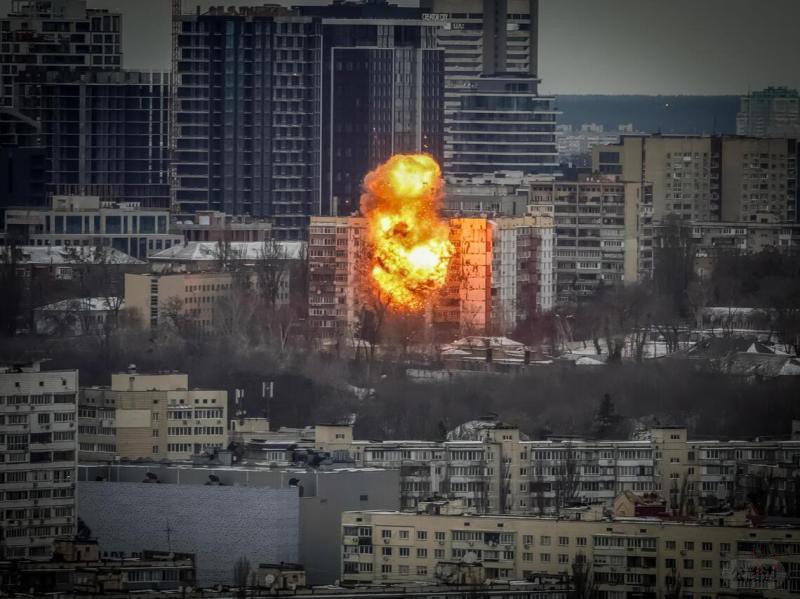
To strengthen its bargaining position, Russia has maintained intense firepower on the battlefield. In the early hours of Saturday, Russian troops continued to launch large-scale missile and drone attacks on multiple regions of Ukraine, including the capital Kyiv. Loud explosions were heard across Kyiv, with power outages in some areas and air raid alerts lasting approximately four hours. At least eight people were injured in the attacks.
Ukraine activated its air defense systems and deployed missiles in response. The Ukrainian Air Force also posted a warning on social media stating that Russian MiG-31 fighter jets were approaching, and the entire country was under the threat of missile attacks.
Following Ukraine’s air strikes, Polish fighter jets were scrambled, and two airports in southeastern Poland were temporarily closed as a precautionary measure.
|

 Fear of God ESSENTIALS Hoodie Review: Mi86 人气#fashion
 The Derby of San Francisco Style 300 Cha114 人气#fashion
 Why the Derby of San Francisco Classic S131 人气#fashion
 Romaoss Launches "Rebirth Plan," in Talk70 人气#tech



 WeChat
 douyin