Robots Racing Against Time: A Scramble for the Spring Festival Gala, Commercialization and IPO Windows
Times have changed, and even robots are vying for spots at the Spring Festival Gala.
Recently, a piece of news sent shockwaves through the embodied artificial intelligence industry: Zhiyuan Robotics and Unitree Technology have both offered bids in the tens of millions of yuan to compete for the title of top sponsor of the 2026 Year of the Horse CCTV Spring Festival Gala.
The news broke on the very day that CCTV unveiled the theme and official logo for the 2026 Spring Festival Gala. According to 36Kr, insiders revealed that the Gala has become a key strategic high ground for the embodied AI sector, with numerous robotics firms joining the sponsorship bidding. Among them, Zhiyuan Robotics and Unitree Technology are locked in a high-stakes contest. Zhiyuan took the lead with a bid of 60 million yuan, while Unitree immediately raised the stakes to 100 million yuan.
By the time of publication, Zhiyuan Robotics had denied the reports, stating "the news is untrue", while Unitree Technology had yet to respond.
To date, the official list of Gala sponsors has not been released. However, LatePost reported that Volcengine will serve as the exclusive AI cloud partner for the 2026 CCTV Spring Festival Gala, and Doubao, the intelligent assistant under ByteDance, will launch a variety of interactive features in conjunction with the event.
Debates continue over how robotics companies will ultimately be featured on the Gala stage.
After all, Unitree's robots already made an appearance at the 2025 Year of the Snake Spring Festival Gala, garnering widespread public attention.
What appears to be a bidding war for brand marketing is actually a reflection of widespread concern about the future of the entire robotics industry: the concept validation phase is drawing to a close, and the sector is entering an entirely new era of commercial implementation.
As the Spring Festival Gala has become a key consideration for robotics enterprises, the nature of competition has fundamentally shifted. Years of gradual technological iteration have come to an end, and market competition has taken center stage. Moving forward, every link—from media exposure and orders to financing and IPOs—has become a crucial battleground for robotics companies.
Vying for the Spring Festival Gala: Robotics Firms Crave More Attention This Year
Is spending over 100 million yuan to sponsor a single gala financially viable?
Sponsoring the Spring Festival Gala has never been cheap. Beyond the sponsorship fee itself, hidden costs—such as on-site technical support teams, backup plans, operational coordination, repeated rehearsals, and supporting promotional campaigns—often double a company's actual investment compared to the initial bid.
Yet for today's robotics enterprises, investing in the Gala is indeed worthwhile. Even securing a performance slot, rather than a sponsorship package, would be a valuable achievement.
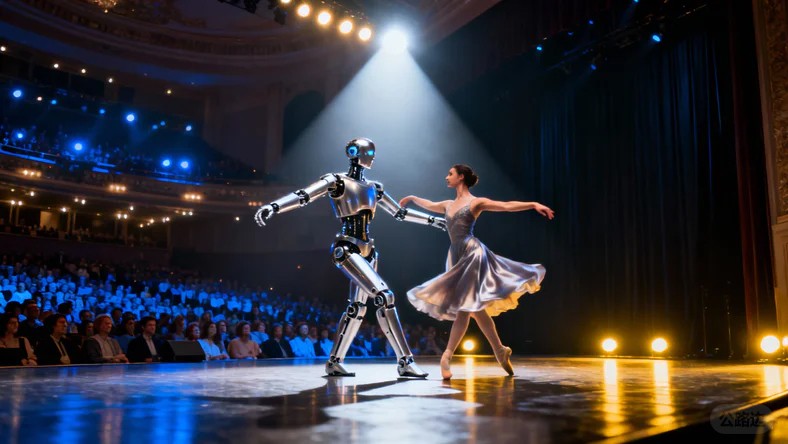
At the 2025 Year of the Snake Spring Festival Gala, 16 H1 humanoid robots from Unitree Technology performed the dance "Rice Seedling BOT" alongside 16 human dancers. Dressed in traditional Northeast Chinese cotton-padded jackets, the robots skillfully twirled handkerchiefs and collaborated seamlessly with the dancers. This performance transformed Unitree from a well-known player in the tech circle into a nationally recognized representative of China's technological strength.
Data from CCTV.com shows that the 2025 Gala reached a cumulative audience of 16.8 billion across all media platforms, with its live broadcast capturing a 78.88% viewership share—setting a new high in the past 12 years.
Beyond the traffic boost, appearing at the Gala also serves as powerful brand endorsement. This official recognition has given Unitree an edge in securing cooperation with local governments, winning orders from large state-owned enterprises, and accessing policy support.
The economic benefits of the Gala appearance were first felt by downstream businesses.
Media reports indicated that after Unitree's Gala debut, government agencies and enterprises seeking robot rentals made the company their top choice. One owner of a downstream robot rental firm earned over 100,000 yuan within just over a month by leasing Unitree's robots.
The connection between robots and the Spring Festival Gala in 2025 was no coincidence.
Firstly, there was strong policy backing. During the Two Sessions in March 2025, embodied artificial intelligence was included in the government work report for the first time, signaling clear support at the national strategic level.
Secondly, technological development has matured significantly. According to a report from iResearch, the autonomy of embodied AI has reached a transitional stage comparable to Level 2 to Level 3 autonomous driving, and a critical turning point for qualitative change is imminent. It is highly likely that model capabilities will achieve breakthrough advancements within the next two to three years.
Behind robotics companies' focus on the Gala lies an urgent practical logic: in the process of commercialization, if enterprises cannot establish absolute technological advantages, the first to gain consumer awareness will take the lead in financing, talent recruitment, and ecosystem development.
Undoubtedly, at this crucial juncture, the exposure from the Gala serves both as a confidence signal to the capital market and a clarion call to potential customers.
Embodied AI Enterprises: How Are Mass Production and Commercialization Progressing?
The race for the Gala is just a microcosm. In 2025, the real battlefield for the robotics industry lies in mass production and commercialization. The progress of leading enterprises will be highly representative, as their production capacity and commercial strategies will largely shape the future direction of the entire sector.
Wang Xingxing, founder of Unitree Technology, publicly stated that the company's revenue exceeded 1 billion yuan in 2024 and had maintained profitability for five consecutive years. Data from the High-Tech Robotics Industry Research Institute shows that Unitree sold 23,700 quadruped robots in 2024, accounting for approximately 69.75% of the global market share, while its delivery volume of humanoid robots exceeded 1,500 units.
Zhiyuan Robotics revealed that as of early December 2025, it had rolled out a total of 5,000 general-purpose embodied robots across three product lines: 1,846 units from the Lingxi X1/X2 series, 1,742 units from the Yuanzheng A1/A2 series, and 1,412 units from the Jingling G1/G2 series.
These two leading enterprises each have their own strengths in terms of production capacity and growth rate.
Founded in 2016, Unitree is a relatively established player in the robotics industry with profound expertise in hardware development. Industry insiders attribute its profitability to its sophisticated hardware control capabilities. Instead of simply stacking high-end components, Unitree optimizes its commercialized robots for cost-effectiveness and performance across multiple production stages.
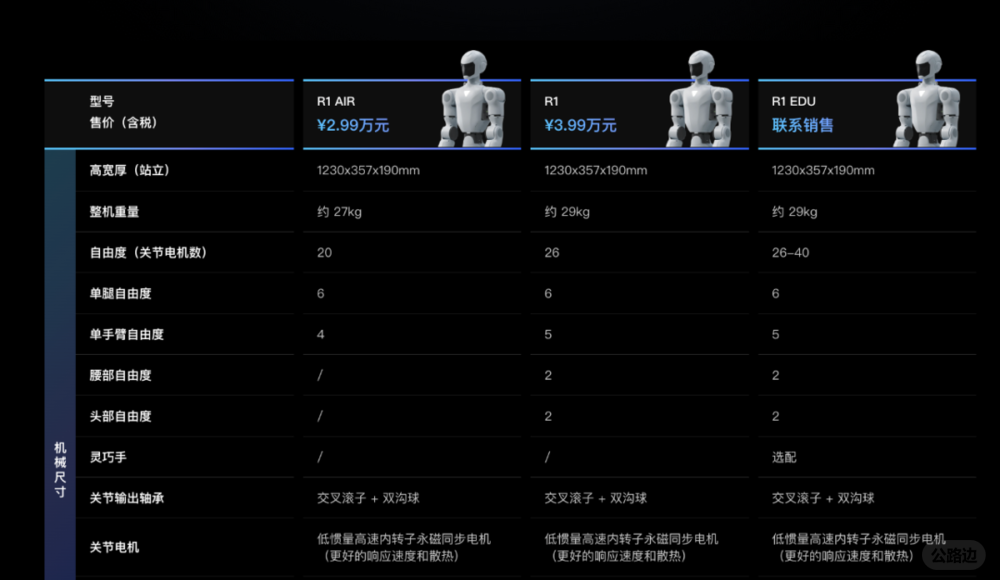
For reference, the AIR version of Unitree's new humanoid robot R1 is priced starting at just 29,900 yuan. Although the company currently generates most of its revenue from quadruped robots, the reduced cost of its humanoid models opens up new possibilities for expanded application scenarios and large-scale production.
Established in 2023, Zhiyuan Robotics has achieved rapid product implementation despite its short history, backed by strong capital support. Its founder, Peng Zhihui, is widely known in the industry as "Zhihui Jun", a former member of Huawei's "Genius Youth Program". Public records show that Zhiyuan completed 11 rounds of financing totaling over 5 billion yuan within two years, reaching a valuation of 15 billion yuan.
According to Caijing magazine, Zhiyuan is quickly shifting its focus from research and development to commercialization. Several core R&D personnel have left the company, and its R&D department has been split into independent business units, each with dedicated R&D teams for specific product lines. Through an internal competition mechanism, the company aims to accelerate product iteration, achieve mass production, and seize market share.
In 2025, robots have seen increasing adoption across various application scenarios, with a surge of industrial and commercial orders flowing to leading domestic manufacturers. In July, Zhiyuan and Unitree jointly won a 124 million yuan contract from China Mobile (Hangzhou) for humanoid biped robot OEM services. In September, Ubtech announced that it had secured a 250 million yuan contract for humanoid robot products and solutions.
Public data shows that the total value of public orders received by domestic robotics enterprises has exceeded 4.6 billion yuan, with the number of units exceeding 20,000.
These figures reflect strong market expectations for the robotics sector. However, the industry has raised doubts about many of these "100 million yuan-level orders".
A Morgan Stanley report pointed out that a significant portion of the large orders publicly announced by manufacturers are either framework agreements or letters of intent, with low certainty of actual execution.
A November survey by Goldman Sachs of nine Chinese companies in the humanoid robot supply chain found that while suppliers have planned annual production capacities ranging from 100,000 to 1 million units, none have confirmed receiving large-scale orders or established clear production schedules.
Perhaps the real bottleneck for robot commercialization lies in application scenarios.
According to iResearch's "2025 Commercial Embodied AI White Paper", the commercial breakthrough of embodied AI requires meeting threshold standards in five key areas: battery life, latency, execution capability, reliability, and economic efficiency. Currently, only industrial manufacturing and logistics warehousing scenarios come close to meeting these criteria.
Although wheeled robots can meet the requirements of most factory environments in terms of battery life, stability, and navigation accuracy, they struggle to adapt to more complex settings.
Compared to industrial scenarios, home care and elderly care environments are less structured, with less repetitive tasks and harder-to-calculate return on investment. Humanoid robots designed for these scenarios still face numerous technical challenges.
Wang Xingxing once admitted that basic tasks such as opening doors and mopping floors remain too complex for current humanoid robots, making it impractical to deploy them directly for household chores.
Technical bottlenecks for humanoid robots remain prominent. For example, the robot's hands, as core components, must be compact while maintaining dexterity and reliability—a so-called "triple dilemma". Without overcoming this challenge, precise operations in home environments will remain unachievable.
A more fundamental issue is economic feasibility. Industry estimates suggest that a fully mature humanoid robot will cost between 300,000 and 500,000 yuan. For such an investment to be cost-effective, the robot must be capable of performing at least ten different types of tasks in a single scenario.
Currently, humanoid robots are primarily used for performances and scientific research. Statistics from the Humanoid Robot Application Alliance show that as of the first half of 2025, purchases by educational and research institutions accounted for 75% of total humanoid robot orders.
Seizing IPO Opportunities Amidst the "Concept Boom"
Despite unresolved commercialization paths, capital markets have shown immense enthusiasm for the robotics sector.
According to China Core Capital, the total financing in the embodied AI primary market exceeded 30 billion yuan in the first seven months of 2025, compared to just 7.5 billion yuan in the first half of 2024.
Data from IT Orange indicates that there were 557 investment and financing events related to China's robotics industry chain in the first 11 months of 2025, with a total financing volume exceeding 83.9 billion yuan.
Among the top 20 AI startups with the highest financing in 2025, nine operate in the field of embodied AI.
The secondary market has also witnessed a boom. A late-September report by the Securities Times showed that 110 humanoid robot concept stocks listed on the A-share market rose by an average of 67.63% year-to-date, with 18 stocks doubling in price compared to the end of the previous year.
As hot money pours into the sector, robotics companies have launched a wave of IPO applications.
Revisions to Hong Kong Exchanges and Clearing's Rule 18C have opened up listing channels for robotics enterprises by lowering the market value threshold to HK$4 billion, offering new opportunities for early-stage companies. Public records show that in addition to the already listed Yuejiang Technology, firms including Seer Robotics, Standard Robotics, ForwardX Robotics, and Mobile Industrial Robots have submitted listing applications.
Unitree Technology completed its domestic IPO counseling in November 2025 and is expected to file for listing on the main board of the A-share market by the end of the year. After its Series C financing, the company's valuation reached 12 billion yuan. Meanwhile, Yueju Robotics completed its shareholding system reform in September and secured nearly 1.5 billion yuan in pre-IPO financing the following month.
In contrast, Zhiyuan has adopted a more indirect approach to going public.
In October 2025, Zhiyuan Robotics successfully acquired Shangwei New Materials, a listed company on the Science and Technology Innovation Board, through its subsidiary Zhiyuan Hengyue, obtaining a 63.62% stake in the company. Despite Zhiyuan's repeated denials of "backdoor listing", the move was widely regarded by the market as a "backdoor listing" maneuver.
Why are leading enterprises rushing to go public?
Firstly, there is an urgent need for capital. The IPO wave comes amid a shrinking financing space in the primary market. Industry insiders note that while total financing volume and frequency continue to rise, the valuation gap between enterprises is widening. As a capital-intensive industry, robotics requires sustained investment in R&D, production capacity expansion, and market development. With the increasing difficulty of securing high-valuation financing in the primary market, the secondary market has become a more realistic option.
Secondly, the timing window is critical. Despite discussions about a potential industry bubble, investors remain interested in the story of embodied AI. Strong policy support further reinforces this momentum—the 15th Five-Year Plan explicitly aims to develop embodied AI into a new economic growth driver, and cities such as Beijing, Shanghai, and Shenzhen have introduced targeted support policies.
While the embodied AI concept is currently popular, its popularity is not guaranteed to last. If the market loses patience with the narrative, valuation pressures will quickly spread. Therefore, robotics companies must seize the current window of opportunity.
On November 27, 2025, Li Chao, deputy director of the Policy Research Office of the National Development and Reform Commission, publicly stated that the technical routes, business models, and application scenarios for humanoid robots are not yet fully mature, urging risk prevention in the sector.
In March 2025, Zhu Xiaohu, managing partner at GSR Ventures, announced that his firm was "exiting multiple humanoid robot companies on a large scale", citing unclear commercialization paths in the industry. Some investment professionals also warned of a significant bubble in the robotics sector, predicting that 80% of existing humanoid robot companies may be eliminated in the future.
Startups also face intense pressure from cross-industry giants.
Major hardware manufacturers such as Huawei, Xiaomi, Xpeng Motors, and Chery have entered the robotics field. Meanwhile, internet conglomerates including Meituan, Alibaba, and JD.com have made substantial investments in robotics firms, providing not only capital but also access to application scenarios and data. On November 5, Xpeng Motors launched its humanoid robot "IRON", with plans for mass production by the end of 2026.
The competitive landscape is evolving rapidly. The accelerated entry of large enterprises has further squeezed the market space for startups.
Against this backdrop, going public to secure capital and enhance brand influence has become a strategic choice for startups. However, listing is not an end but the beginning of a new phase. The secondary market imposes stricter performance requirements, and maintaining sustainable growth after listing will present an even greater challenge.
The race for Gala exposure, orders, commercialization, and IPO opportunities reflects robotics enterprises' anxiety about time. While technical routes and commercial models are still being explored, the capital boom is pushing these companies to accelerate forward. Those that can firmly establish themselves in niche scenarios and develop viable business models will be the first to achieve self-sustaining growth and survive based on real value.
Regardless of which company ultimately appears at the Spring Festival Gala, once the fireworks fade, the true endgame of this competition will be figuring out how to move robots from the stage into bustling factories and countless ordinary households.
|
 Fear of God ESSENTIALS Hoodie Review: Mi86 人气#fashion
 The Derby of San Francisco Style 300 Cha112 人气#fashion
 Why the Derby of San Francisco Classic S130 人气#fashion
 Romaoss Launches "Rebirth Plan," in Talk70 人气#tech



 WeChat
 douyin