It all began with his curiosity: Why, despite steady GDP growth and an average unemployment rate below 5%, do so many Americans feel increasingly strapped? Through research, he discovered this discrepancy stems from how the U.S. calculates its poverty line. The U.S. government still uses a formula established in 1963 by economist Mollie Orshansky, which defines the poverty threshold as three times the minimum food expenditure. According to this standard, in 2024, a typical American family of four is considered impoverished only if their annual income falls below $31,200—meaning just 11% of households are officially classified as poor.
The author argues that today’s families face dramatically higher non-discretionary expenses—childcare, housing, healthcare, transportation—while food now accounts for only 5–7% of household budgets, down from 33% in the 1960s. Applying Orshansky’s original logic (i.e., if food was one-third of spending then, it should be one-sixteenth now), the real poverty line should be set at 16 times the minimum food cost—roughly $136,500 annually for a family to meet basic needs. By this measure, about 60% of U.S. households fall below the actual survival threshold. Living on the razor’s edge of financial balance, any unexpected shock—illness, job loss—can plunge them into bankruptcy.
He further criticizes economists who assume bankrupt families can simply save their way back to stability—a notion utterly detached from reality. Once bankrupt, Americans are often excluded from credit systems, denied access to quality rental housing, and barred from certain employment opportunities. In this self-reinforcing cycle of decline, survival itself is at stake. Thus, today’s official poverty line functions not as a measure of basic subsistence but as a literal line between life and death.
In conclusion, he writes that America has betrayed the promise made at its founding. When Jefferson replaced “property” with “the pursuit of happiness” as a fundamental human right, he made a deliberate choice: prioritizing human potential over static wealth accumulation. This enshrined laborers over rentiers, builders over occupiers. Yet over the past four decades, U.S. policy has moved in the opposite direction: shifting tax burdens from corporations onto workers, failing to curb corporate overreach until monopolies gained pricing power, and allowing industries to relocate to China—not due to coercion, but because U.S. firms actively sought labor arbitrage. These corporations promised that opening China’s vast market would enrich Americans, yet in chasing excess profits, they hollowed out the American working class.
This article is an original translation and compilation by Wenhua Zongheng New Media, adapted from the author’s Substack series. Edited for length and clarity. Represents the author’s views only; readers are encouraged to reflect critically.
Wenhua Zongheng New Media · International Observer
Issue No. 58, 2025 | Total Issue No. 278
▍As an American, My Life Has Been a Lie
How a Broken Poverty Line Is Quietly Destroying America
Published: November 23, 2025
I’m Chief Strategist at an asset management firm and a University of Pennsylvania graduate. But today I don’t want to discuss market trends—even though credit stress is intensifying, especially in tech (notably AI).
I believe public anxiety about inflation—the missing indicator in market assessments—will once again paralyze the Federal Reserve. Policymakers will find themselves in zugzwang: every move leads to trouble.
And it all ties back to America’s poverty line. Many on the left might say, “We’ve talked about poverty for years!” True—you’ve recognized it, but you’ve focused on emotional, surface-level data (like living wages) rather than hard numbers.
The Poverty Line: How a Failed Benchmark Is Quietly Collapsing America
Throughout my career, I’ve distrusted the obvious. Markets, liquidity, factor models—they’ve never seemed self-evident to me. I see markets as equations for clearing prices, and equations have parameters that distort outcomes. That’s how I invest: find the parameters, expose the distortions, seize the opportunity. But there was one number I never questioned—like a baby accepting gravity without thought. I silently accepted it.
The poverty line.
It appears politically neutral—a technical figure meticulously calculated by government experts based on facts. Decades ago, someone drew this line to define who is “poor,” who is “middle class,” and who qualifies for aid. In other words, it’s the baseline for America’s social safety net—invisible, unquestioned, yet immensely consequential.
This week, while reviewing GDP data, I grew puzzled: If U.S. GDP is healthy and unemployment is among the lowest in the G7, why does the middle class feel poorer each year?
Then I found a sentence in a research paper:
“The U.S. poverty line equals 1963’s minimum food expenditure multiplied by three.”
I read it again. Minimum food cost times three.
I felt sick.
A Failed Calculation
In 1963, Social Security Administration economist Mollie Orshansky proposed this formula. She observed that families spent roughly one-third of income on food. Since data on other essentials (like housing) was scarce, she simplified: use the minimum food cost needed for survival and multiply by three to estimate total basic needs.
Orshansky was cautious about this simplification. In a 1965 article, she clarified that the poverty line measured “insufficient income,” not “adequate income.” She wrote: “If we cannot clearly state ‘how much is enough,’ we can confidently say, on average, how much is not enough.”
In other words, she set a crisis threshold—a point below which families clearly struggle.
For 1963, this made sense. Housing was affordable; a single income could rent or buy a decent home. Employer-provided health insurance was cheap (e.g., Blue Cross at $10/month). Childcare wasn’t commercialized—mothers stayed home, and neighbors helped. Cars were affordable, and local vocational students could fix most issues. College tuition could be covered by summer jobs. Retirement meant pensions—not self-funded 401(k)s (which shift investment risk, inflation erosion, and penalties onto workers).
Orshansky’s “food × 3” rule, though crude, worked as a crisis benchmark: 1/3 for food, 2/3 for everything else. Below it, families collapsed; above it, they had a foothold.
But everything changed between 1963 and 2024.
Housing costs exploded. Healthcare became the largest expense for many, with employer coverage shrinking and deductibles soaring. Childcare turned into a luxury-priced service. College tuition shifted from summer-job affordability to decades of student debt. Public transit decayed, raising transportation costs.
Now, a dual income is needed just to reach the standard once achievable by one earner—and dual income means paying for childcare, which requires two cars. Some suggest living with parents to save costs, but that’s not feasible for most.
Today, a typical family spends:
Housing: 35–45%
Healthcare: 15–25%
Childcare (with young kids): 20–40%
Food: only 5–7%
Applying Orshansky’s logic—if food was 1/3 then, and is 1/16 now—the multiplier should be 16, not 3. Thus, the real poverty line for a U.S. family is 130,000–150,000.
Remember: Orshansky defined “insufficiency”—a crisis threshold. At $140,000, a family barely avoids collapse.
So what does the official $31,200 mean?
It measures hunger—not poverty.
As Plutarch wrote: “The imbalance between rich and poor is the oldest and most fatal ailment of all republics.”
Real Survival Costs in America
In 2024, the U.S. sets the poverty line for a family of four at 31,200.Medianhouseholdincomeis80,000. We’re implicitly told that $80k is comfortable—well above poverty, solidly middle class.
But by Orshansky’s updated logic, that $80k household is deeply impoverished.
Let’s ignore official stats and look at reality. I calculated a “basic needs budget” for a dual-income family with two kids in 2024—excluding vacations, Netflix, or any “luxuries,” covering only essentials to work and raise children. All figures are conservative national averages:
Childcare: $32,773
Housing: $23,267
Food: $14,717
Transportation: $14,828
Health insurance: $10,567
Other essentials: $21,857
Required net income: $118,009
Add ~18,500infederal,state,andFICAtaxes→??totalrequiredincome:136,500**.
This is America’s real poverty line—the bare minimum for survival.
The largest expense isn’t housing—it’s childcare: $32,773.
That’s the trap. To reach the median $80k income, most families need two earners—but earning requires childcare.
At 100kincome,daycarealonecosts32k.
If one parent stays home, income drops to 40k–50k—far below survival needs.
Dual-earner households aren’t pursuing comfort—they’re surviving. After paying for childcare, they earn only 1,000–2,000 more per month than single-earner families.
It’s a brutal loop.
Is Housing Cost a Lie?
Critics will say $136,500 reflects San Francisco or Manhattan, not “real America.”
Let’s check “real America.”
My housing estimate: 23,267/year(1,938/month). Economists claim this is reasonable.
But in Caldwell, New Jersey—a town where a truck driver could once afford a home with one income—the cheapest rental now starts at $2,715/month.
That’s a 777/monthgapvs.myestimate—9,300/year after tax. To cover it, you’d need 12,000–13,000 more in gross income.
So my $140k poverty line is already conservative. You must live near job hubs to earn average wages—but pay far above-average rent.
And that $2,715 isn’t ownership—it’s a “subscription fee” just to survive, not build generational wealth.
The Hedonism Lie: A Phone Costs 200,Not58
Economists seeing $140k expenses will cry “hedonic adjustment”—claiming I’ve ignored quality improvements.
I’d argue it’s not about quality—it’s the cost of social participation.
Yes, cars now have airbags, homes have AC, phones rival supercomputers. Tech has lowered luxury prices.
But the cost of participating in society—holding a job, contacting doctors, fulfilling civic duties—has soared.
In 1955, a landline (5/month)sufficed.Adjustedforinflation,that’s58 today.
But in 2024, 58won’tcutit.Tofunction,youneedsmartphonesandbroadband(200/month) for work emails, school portals, bank verifications—everything’s digital.
Social participation now costs 3× inflation.
Same for other essentials:
Healthcare: 1955 Blue Cross = 10/month( 115 today); now averages $1,600/month—14× inflation.
FICA taxes: 1955 = 2% on first 4,200(84/year ≈ 960today);now6,100/year on $80k income—6× inflation.
Childcare: 1955 = 0(single?earnernorm);now32,000—infinitely higher.
Only food aligns with official CPI.
We can’t choose 1955’s 25-inch CRT over today’s 65-inch 4K TV—but we never had a choice. These “upgrades” are now mandatory for survival.
Death Valley and the Kill Zone: Why $100k Income Is Dangerous
With $136,500 as the true break-even point, escaping poverty is nearly impossible.
Our safety net helps the very poor but punishes anyone trying to climb out. As income rises from 40kto100k, benefits vanish faster than wages grow.
Take New Jersey:
$35k income (“officially poor”)
Qualifies for Medicaid (free healthcare), SNAP (food stamps), and heavy childcare subsidies.
**45kincome(“healthcarecliff”)??LosesMedicaid.Mustpaypremiums+deductibles.+10k income → +$10,567 expenses → worse off. Effective tax rate >100%.
**65kincome(“childcarecliff”)??Needsfull?timework(maybemultiplejobs)butlosesallsubsidies.Paysfullmarketdaycare(28k).
+20kincome→+28k expenses → collapse.
That’s why many 100khouseholdsareworseoffmonthlythan40k ones.
At 40k,yougetalifeline.At100k, you’re deemed “rich” and left to drown.
From an options-trading view: the government sells call options to the poor but manipulates gamma. As you approach self-sufficiency (“at-the-money”), delta crashes—every dollar earned triggers 0.70–1.00 in lost benefits.
No rational trader accepts this deal.
Irreversible “Phase Change”
“Mean reversion” is economics’ most dangerous lie. Experts think families can save their way back from bankruptcy.
They confuse volatility with destruction.
Falling below the threshold isn’t like cooling water—it’s a phase change to ice.
Bankruptcy means:
Exclusion from credit (7–10 years)
Rejection from quality rentals
Disqualification from sensitive jobs
In physics, melting ice requires massive “latent heat.” Recovering from bankruptcy demands far more energy than just paying bills.
140kincomeprovidesabufferagainstthisphasechange.Afamilyearning80k with $79k in expenses is like supercooled water—stable until a shock (car repair, broken arm) freezes it instantly.
Empirical Proof: U.S. Households During the Pandemic
Need evidence? Look at 2020.
In April 2020, U.S. personal savings hit a record 33%. Economists credited stimulus checks—but the real reason was cost elimination.
Lockdowns temporarily filled “Death Valley”:
Childcare ($32k): paused (kids home)
Commuting ($15k): paused
Work lunches/attire ($5k): paused
For median-income families, economic participation cost ~50k/year.Whenpaused,their“leak”stopped—making80k feel like abundance. Unemployed people saw income rise (via $600/week unemployment boosts) while expenses fell.
This was the American Dream’s brief “hangover.” Now, as costs return—20% higher—people rage against “inflation.” But their anger isn’t about price changes; it’s about broken promises. The system says “work hard, succeed,” but at $136k as the true poverty line, hard work brings only risk, exhaustion, and debt.
America’s structure offers only two paths:
Be poor enough for aid
Be rich enough to absorb costs
Everyone in between gets devoured. The wealthy know this—they’re exiting public spaces, becoming invisible.
The Illusion of Prosperity
Economists love charts “proving” prosperity. One shows shrinking middle class and growing $150k+ households:
1967: 5% of households earned >$150k (inflation-adjusted)
Today: 34%
They cheer: “Neoliberal policies worked! Productivity rose, GDP grew—we’re richer!”
But if 140kisthesurvivalthreshold,thattop34Theso?called“middleclass”(50k–$149k, 45% of households) are the “working poor”: too rich for aid, too poor for basics.
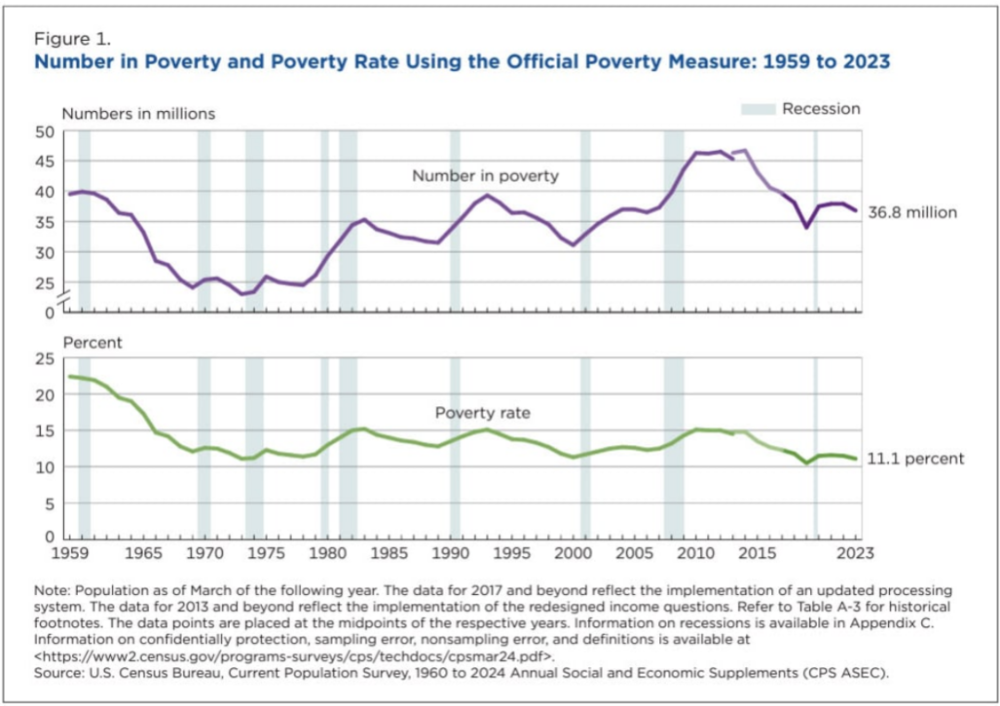
Another chart claims poverty fell to 11%—“Policy success!”
But remember Orshansky’s formula: it measures 3× food costs (now just 5–7% of spending).
It tracks hunger—not poverty.
These charts use a broken ruler to measure a collapsing house. Add housing, healthcare, childcare, transport—poverty jumps to 130k–140k.
Some readers exceed this line. I’m lucky—smart, well-educated, supported by parents, with citizenship. But most aren’t. And the system punishes upward mobility: earning 100kafter40k means losing more in benefits than you gain.
Work harder, get poorer.
Economists say, “Don’t worry—your 401(k) and home equity are growing!”
Next week, I’ll explain why that’s another lie.
Your “wealth”—retirement accounts, home equity—is as fake as the poverty line. But the people behind it are real—and powerful.
▍The Door Is Open
The Conversation About Reality Has Begun. It’s Time.
Published: December 1, 2025
Last week, my article drew attention from The Free Press, Fox News, CNN, Twitter, and YouTube. I received support—and fierce criticism.
That likely means I’m right.
Critics question the $140k figure, but as I stated, the number isn’t the point—it’s the “Death Valley” concept.
It explains voter anger, especially from the “working poor” (officially “middle class”) toward the truly poor and immigrants.
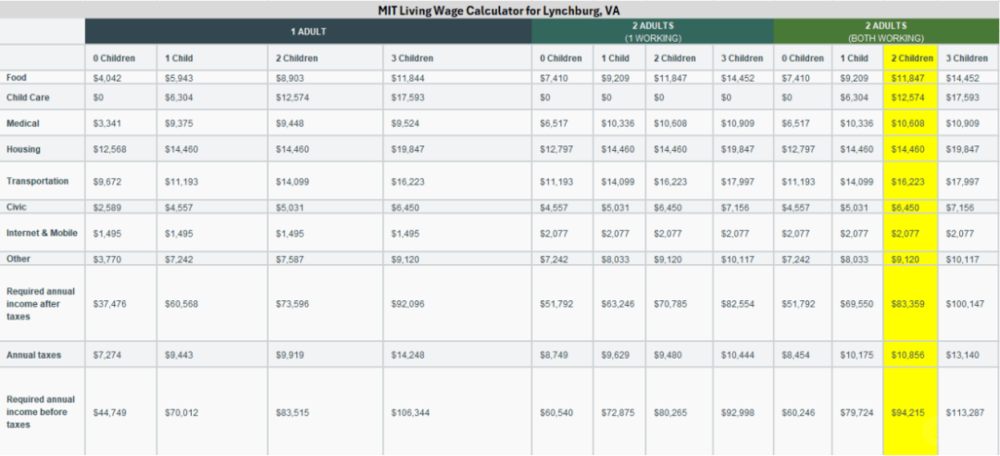
My data comes from MIT’s Living Wage Calculator—I disclosed sources openly.
But the establishment’s response was telling. AEI deployed Scott Winship and Kevin Corinth; Cato sent Jeremy Horpedahl (who lobbies for Walmart’s Arkansas tax policies); George Mason’s Alex Tabarrok and Noah Smith also jumped in.
Let me address key points:
**The 140kbenchmark??:EveninLynchburg,VA—oftencitedas“averageAmerica”—therealpovertylineis94,215 (3× official).
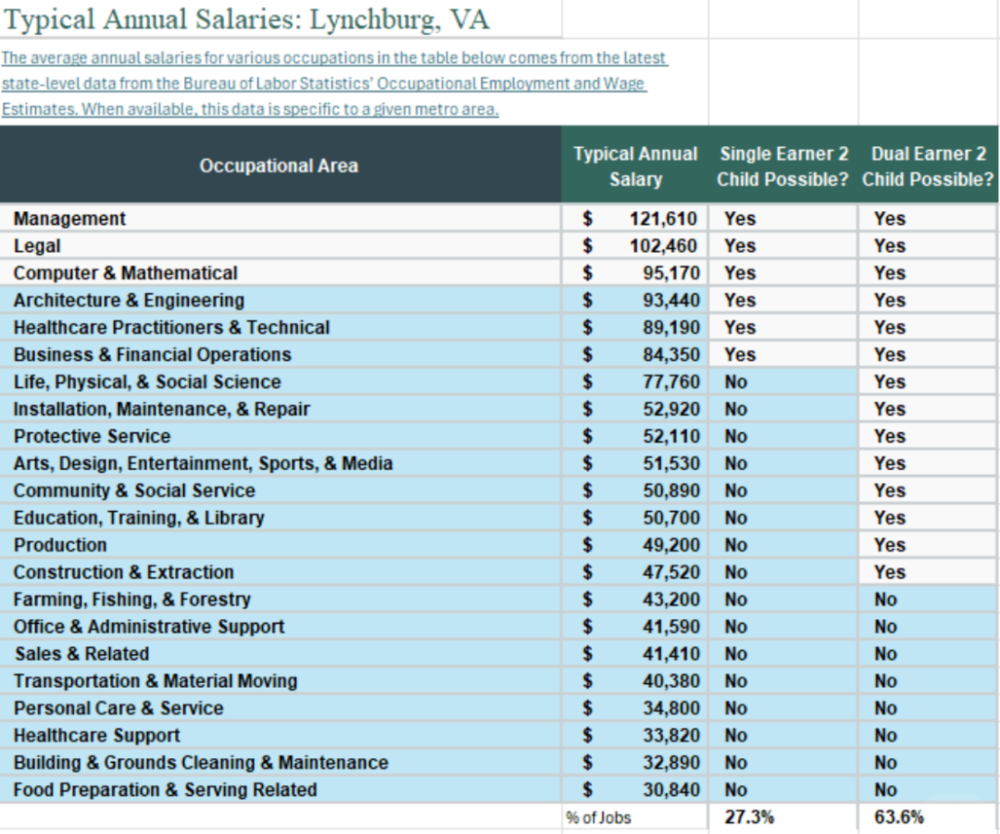
Income instability: Only 27% of jobs in “average” cities support dual-earner families with kids.
“Ghost families”: Data shows two-child households have higher median incomes—not because kids boost earnings, but because low-income people can’t afford children.
This is policy failure: “Death Valley” systematically excludes low-wage workers. Climbing the ladder means losing benefits and falling deeper into permanent hardship.
“Death Valley” now engulfs the lower-middle class. Cash savings are negative—and 401(k) deductions worsen cash flow by 6%+. Saving for retirement loses to feeding your family.
The debate isn’t about numbers—it’s about structure. Ironically, mainstream media now attack “Death Valley,” proving they know it’s real—which is why they must ridicule it.
I won’t conflate elite critiques with public sentiment. Common pushback: “Every generation struggles.” True—but past struggles rewarded effort: one income built families, college led to advancement, dual incomes created surplus. Now, non-discretionary costs outpace wages, and benefit cliffs make the “American Dream” unattainable.
I’m not discovering new truths. Oren Cass’s Cost of Thriving Index (COTI) confirms this:
1985: 30.1 weeks of median male earnings to afford basics
2000: 41.8 weeks
2010: 50.2 weeks
2024: 62.7 weeks
To AEI’s Winship, who claims poverty is exaggerated and blames falling homeownership on declining marriage rates—I say: Ivory Tower elites miss the point.
Ironically, today’s “libertarian” think tanks no longer champion markets or individual freedom—they serve capital and their funders. Left and right elites agree here.
Their traditional metrics—adding SNAP and Medicaid value to income—yield absurd claims like “only 1.6% are deeply poor.”
Asset Appreciation: Another Wealth Lie
With cash flow visibly collapsing, elites pivot to balance sheets:
“Don’t worry your wage won’t cover bills—look at your house! You’re rich!”
This is a more dangerous lie: conflating inflation with wealth.
You haven’t gained purchasing power—you’ve experienced cost revaluation.
If you sell your $600k house to “unlock wealth,” you must buy another equally expensive home. Your “gain” vanishes.
Options to access home equity:
Die
Downgrade (sacrificing income/opportunities)
Borrow against it (turning equity into debt)
All involve utility loss or new debt.
For the middle class, rising home prices aren’t wealth—they’re capitalized future rents. We mistake higher entry barriers for “net worth.”
When I note young people are broke, economists cite “$78 trillion intergenerational wealth transfer.”
This is the biggest lie.
That wealth won’t go to you—it’ll go to healthcare.
In 1955, elder care was non-market labor: Grandma lived in a spare room (cost: space + food).
In 2025, it’s financialized:
Assisted living: 5,500–8,000/month
Nursing home: 9,000–12,000/month
Memory care: $10,000+/month
A 800khousemayyield600k–700kincarecosts(nationalmedian:657,915).
Your inheritance isn’t wealth—it’s a hospice bill.
The wealthy play this game well: trusts, Medicaid look-back periods. For ordinary Americans, home equity is an emergency fund waiting for a health crisis to drain it.
Wealth doesn’t transfer—it flows to private-equity-owned healthcare REITs.
▍The American Pursuit of Happiness
When Did It All Go Wrong?
Published: December 8, 2025 (Revised December 23)
“The true justice of a nation lies in its faithful adherence to its creed.”
—Alexander Hamilton, Report on Public Credit, 1790
In 1776, Jefferson sat in Philadelphia’s heat, pondering Locke’s Two Treatises. Locke’s natural rights: life, liberty, property.
For landed aristocrats, this was gospel. But Jefferson struck “property” and wrote “the pursuit of happiness.”
This wasn’t poetic flourish or property theft. It reflected Jefferson’s distrust of aristocracy and finance—and reshaped America’s institutional DNA.
Scholars debate intent, but the effect is clear: he prioritized human potential over static wealth.
Societies build what they revere.
“Property” is a noun—static.
“Pursuit” is a verb—dynamic.
“Happiness,” in Aristotle’s eudaimonia, means flourishing, capability, realized potential.
Jefferson chose potential over accumulation, laborers over rentiers, builders over occupiers.
Yet for 40 years, America’s economy has inverted this. We’ve favored “property” over “pursuit”: taxing wages heavily while subsidizing capital gains; protecting incumbents with regulatory barriers; letting prior generations’ assets devour the next’s potential.
We’re in crisis—and we know it. When people can’t afford basics, there’s no “fake news.” Economic collapse isn’t measured by GDP—it’s measured by lost trust. That’s our core ailment: we no longer believe leaders can improve lives.
So what went wrong?
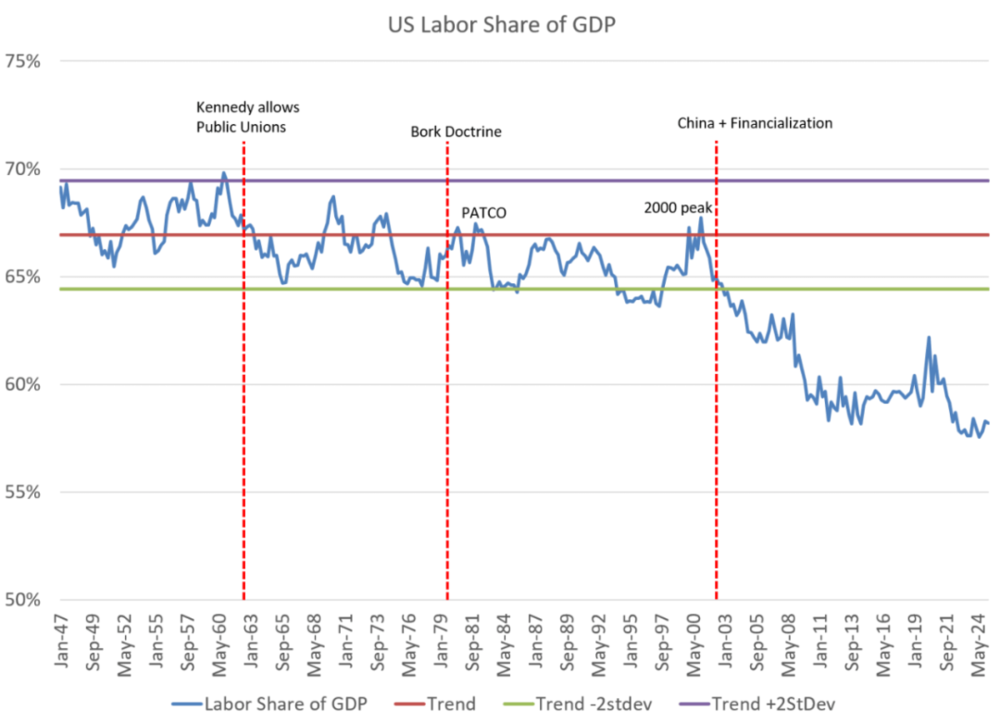
The most important chart: the collapse of labor’s share of GDP. All authoritative measures (BEA, BLS, OECD) show the same decline—not error, but structural reality.
Phase 1: Three Structural Breaks
Labor share plummeted three times—each tied to “reasonable” policies.
The Government Union Paradox (1962)
JFK’s Executive Order 10988 let federal workers unionize.
Logic: If private workers can unionize, why not public?
Result: “Soft budget constraints.” Private unions face bankruptcy discipline; public unions force cost hikes via taxes—breaking the feedback loop between taxes and services.
The Antitrust Paradox (1982)
Robert Bork’s 1978 book redefined antitrust: only “consumer welfare” (i.e., low prices) matters. Mergers that boost efficiency—even if monopolistic—were allowed.
Result: Incumbents crushed innovators. When demand rebounded, monopolies raised prices and shifted risks to consumers.
The China Market Paradox (2001)
China joined WTO. We believed free trade enriched all via comparative advantage.
Reality: U.S. firms didn’t just sell in China—they moved production there for labor arbitrage.
Result: Historic worker betrayal. Capital profited; labor was hollowed out.
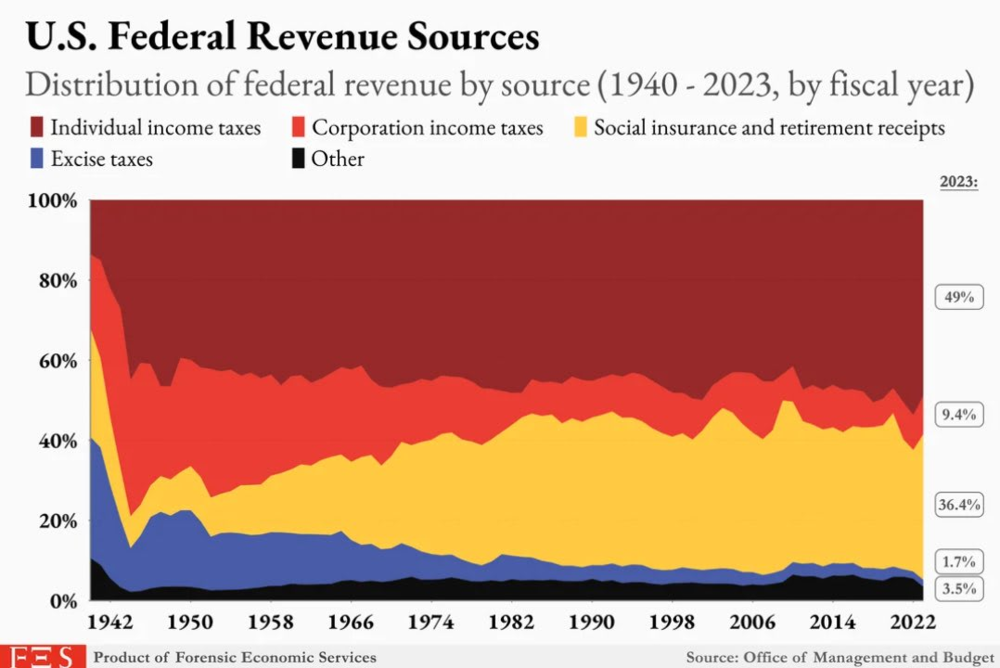
Phase 2: Tax Shift
Simultaneously, we rewired fiscal policy—not as redistribution, but “supply-side stimulus.”
The Great Reversal (1955 vs. 2024):
1955: Corporate taxes = 28% of federal revenue; payroll taxes = 8%
2024: Corporate taxes = 10% of revenue (despite soaring profits); payroll taxes = 36%
Trickle-down failed. Capital concentrated at the top. The top 1% owns 87% of corporate equity but pays minimal taxes; workers bear the burden.
Phase 3: Average Inflation, Hidden Divergence
Technocrats claim you’re better off, citing average inflation matching wage growth.
But they’ve merely averaged suffering.
Take milk:
Rich drink organic milk—prices falling (deflation)
Poor buy conventional milk—prices up 5% (inflation)
CPI masks worker pain. Even with “matching” raises, the poor accumulate deficits.
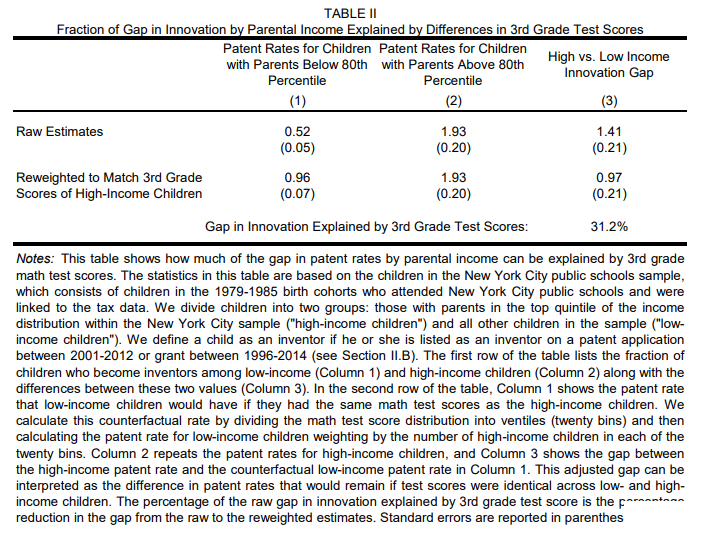
Phase 4: Lost Einsteins
Defenders claim inequality fuels innovation—that America rewards talent unlike high-welfare states.
But research shows extreme inequality kills innovation. Kids from top 1% families are 10× more likely to become inventors than those from below-median households—not due to IQ, but access.
We’ve built a system that hoards opportunity. Without parental funding, tomorrow’s geniuses are locked out. We protect incumbents’ heirs, not future inventors.
My Judgment
A generation of policy experts built this broken machine. Advising presidents of both parties, they enabled minority extraction from the majority. Their motives weren’t evil—they:
Allowed monopolies (prioritizing efficiency over competition)
Accepted labor arbitration (believing it created win-wins)
Shifted taxes (expecting trickle-down)
Ignored cost-of-living (trusting averages)
For 40 years, we refused accurate diagnosis.
It’s time to change our measurements—and fix the distorted parameters.
|

 Fear of God ESSENTIALS Hoodie Review: Mi86 人气#fashion
 The Derby of San Francisco Style 300 Cha112 人气#fashion
 Why the Derby of San Francisco Classic S130 人气#fashion
 Romaoss Launches "Rebirth Plan," in Talk70 人气#tech






 WeChat
 douyin