The American programmer is going extinct.
This isn’t alarmist speculation—it’s happening right now.

AI-driven global layoffs hit a record high in 2025, with 1.17 million jobs cut—the highest since 2020.
Graduating computer science students in 2026 are stepping into a hellscape: they simply can’t find jobs.
According to the U.S. Bureau of Labor Statistics, employment for programmers in the U.S. has plummeted by 27.5%—nearly one-third wiped out.
What now? “These violent delights have violent ends.”
I. Are American Programmers Really Going Extinct?
Programmer employment in the U.S. has nosedived.
Official data shows a 27.5% drop.
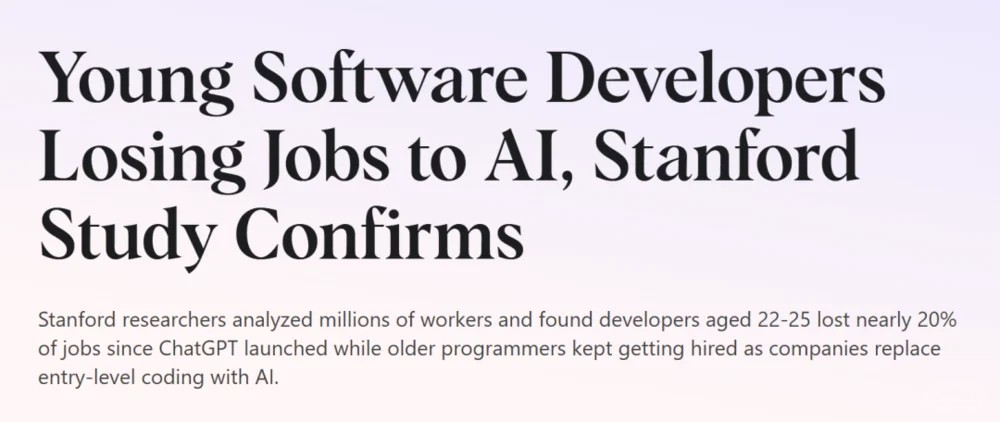
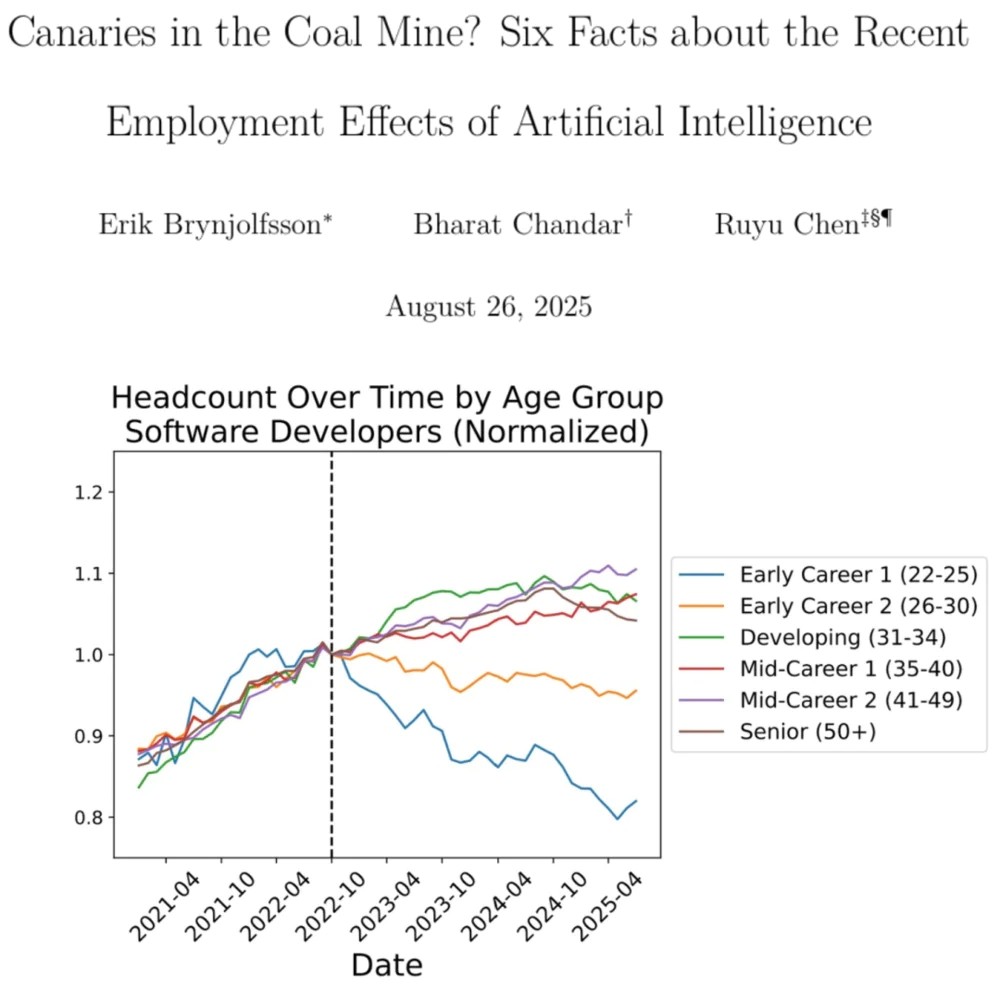
Stanford University research reveals that since the widespread adoption of AI tools in late 2022, employment among programmers aged 22–25 has fallen by nearly 20%.
(Paper: “Canaries in the Coal Mine?” https://digitaleconomy.stanford. ... s-in-the-coal-mine/)
Researchers analyzed payroll records from ADP—the largest U.S. payroll processor—tracking millions of employees across tens of thousands of companies from 2021 to July 2025.
Until late 2022, employment trends for young and senior developers were aligned. After that, they diverged: younger developers started losing jobs, while older ones did not.
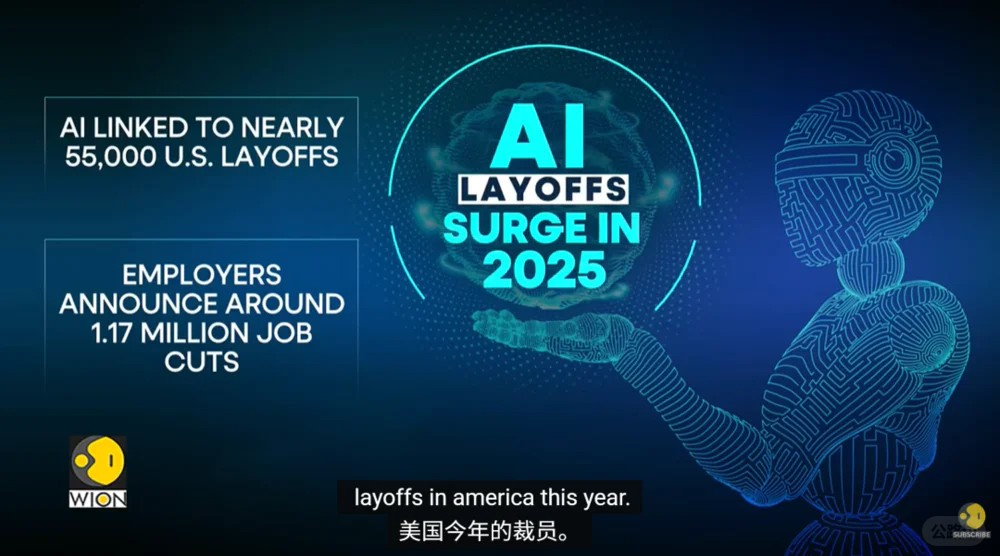
According to a U.S. consulting firm, AI-driven layoffs have inflicted damage on the American labor market second only to the pandemic this year.
Their report states that AI has directly or indirectly caused nearly 55,000 job losses in the U.S. alone.
A programmer wrote on their blog: “Why is everyone I know getting laid off?”
In today’s U.S. tech industry, stable employment is increasingly rare. Layoffs and AI loom over every coder like a dark cloud.
What should we call this disaster? The Dot-com Crash? The Great Recession? The Unicorn Slaughter? Or perhaps… CrashGPT?
The blogger continued: “Meta cuts thousands, Google freezes hiring—it’s the slow collapse of a collective illusion. The FAANG dream is rotting from within.”
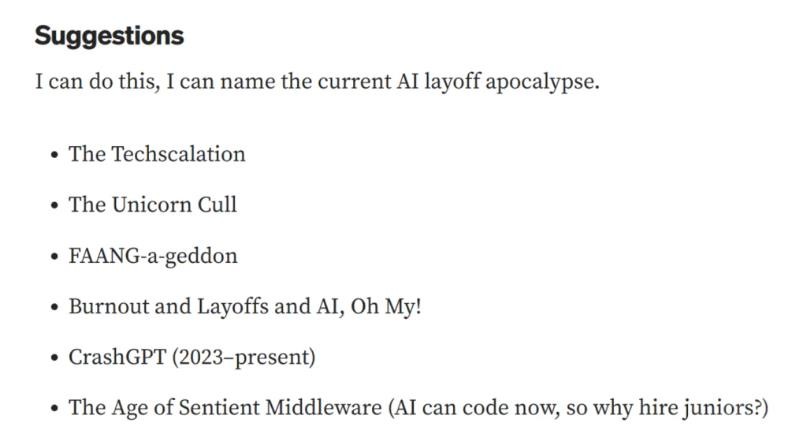
This isn’t just automation—it’s an AI-induced apocalypse.
AI is no longer just a productivity tool; it’s actively replacing programming roles.
II. Stanford and Toronto CS Grads Trapped in a Job Market Nightmare
AI hasn’t left any room for young CS graduates either.
Stanford CS grads now face a reality utterly unlike three years ago—and they’re furious.
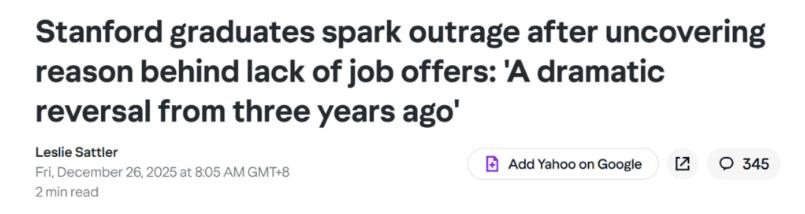
Back then, many had job offers before graduation. Now, many can’t even land interviews—forcing them to stay in school an extra year just to delay the reckoning.
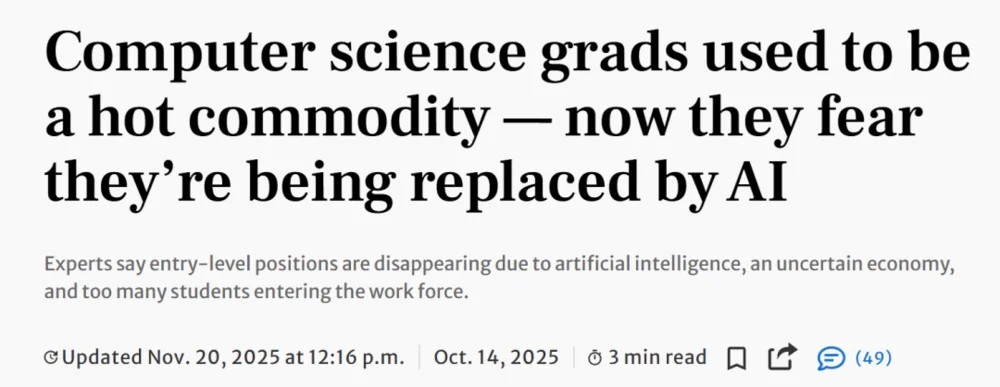
Azka Azmi graduated from the University of Toronto’s CS program this past spring—and still hasn’t found a job.
The more she applies, the more frustrated she gets: she rarely speaks to a human during the process.
Everywhere she turns, AI has replaced human recruiters. All she can do is adapt to a world where machines talk only to other machines.
Once, CS was the golden ticket—offering million-dollar salaries, great benefits, and fun work environments.
Now, due to AI, economic uncertainty, and an oversupply of graduates, those mythical roles have vanished overnight.
Azka says most students rely on internships or co-ops to land full-time roles—but now, only about 1 in 100 applicants gets a response.
Going to grad school makes it even harder
Elliot Chen earned his CS degree from the University of Toronto in spring 2024 and sent out hundreds of resumes.
He quickly realized entry-level opportunities were vanishingly scarce. Most roles demanded at least one year of non-internship experience—something few new grads have.
Many don’t even pass automated resume screens.
Frustrated, Elliot enrolled in a CS master’s program to stand out.
Halfway through, he discovered he was getting even fewer responses than during undergrad.
A CS PhD noted that undergrads are now experiencing severe anxiety—and even mental health crises—due to the job market.
“It’s incredibly competitive, and many environments have become hostile. These kids are doing everything—pushing beyond any previous generation’s limits. It’s brutal for everyone.”
Chrisee Zhu observes intense anxiety among peers.
During group projects, classmates are distracted, unable to contribute—they’re obsessively applying to jobs and grinding coding problems to prep for technical interviews.
III. Karpathy: Programmers Are Living Through a Magnitude-9 Earthquake
It’s not just juniors who fear AI—even the giants feel it.
Recently, former Tesla AI director and OpenAI co-founder Andrej Karpathy said he felt stunned by “powerful alien technology” handed to humanity.
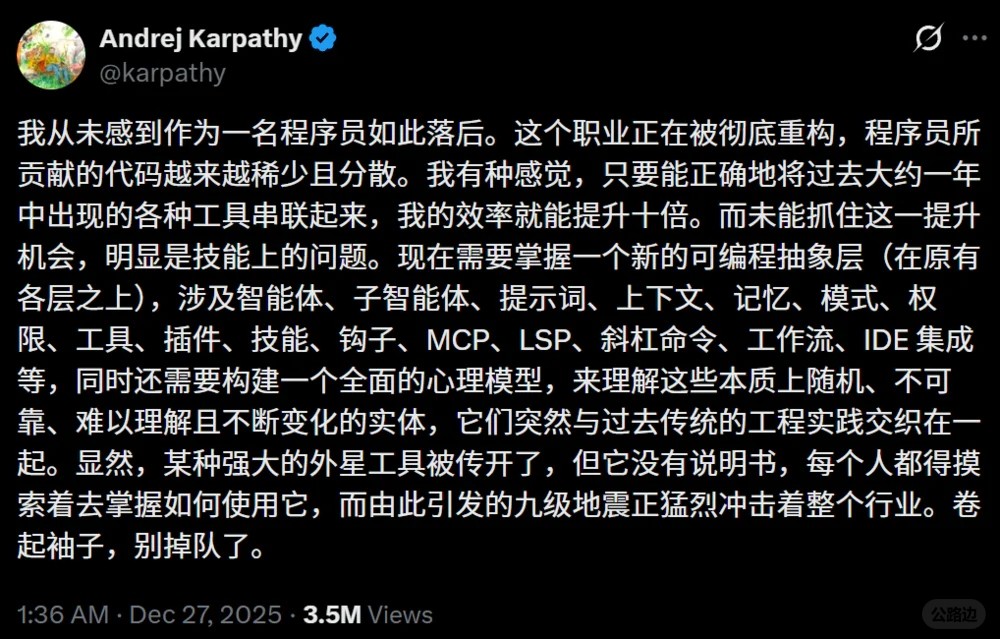
That “alien weapon”? AI.
He admitted plainly: “I’ve never felt so behind as a programmer.”
He senses a tectonic shift: as human-written code becomes sparser and more fragmented, the very nature of programming is transforming.
He lamented: if he’d properly integrated the new tools emerging over the past year, his capabilities could have multiplied tenfold. But failing to master this augmentation is now a critical skill gap.
Karpathy concluded:
“We now face an entirely new programming abstraction layer—stacked atop our existing tech stack—that involves agents, sub-agents, prompts, context, memory, patterns, permissions, tools, plugins, skills, hooks, model context protocols, language server protocols, slash commands, workflows, and IDE integrations…”
More urgently, we must build a mental model to understand the strengths, weaknesses, and pitfalls of these inherently stochastic, error-prone, elusive, and ever-evolving “intelligent entities”—now suddenly fused with traditional, rigorous software engineering.
His final warning:
“Clearly, a powerful ‘alien tool’ has been placed in our hands—with no instruction manual!
We each must figure out how to hold and operate it ourselves.”
In his words, this magnitude-9 earthquake is shaking the entire industry.
“Roll up your sleeves—you can’t afford to be left behind.”
Anthropic engineer Boris Cherny commented: “I feel this way every week now.”
Whenever he manually solves a problem, he later realizes: “Claude probably could’ve handled this.”
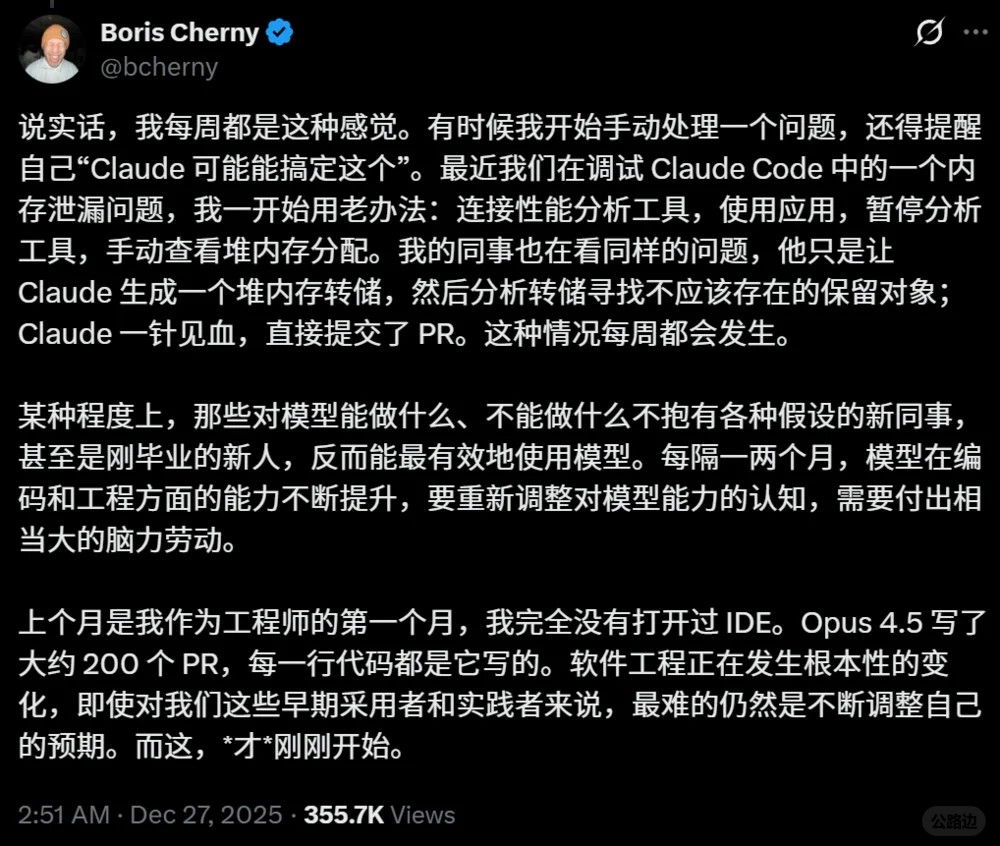
Karpathy echoed the sentiment:
“When you wave this weapon around, it might misfire—but if you hold it just right, a powerful laser beam shoots out and melts your problem instantly!”
IV. Surviving in the Rubble of AI-Generated Garbage Code
“AI won’t take your job—but someone using AI will.”
Since October 2023, this phrase has become NVIDIA CEO Jensen Huang’s signature mantra.
Over the past two years, it’s been repeated endlessly—a Sword of Damocles hanging over every developer.
Now, at the end of 2025, the prophecy is unfolding in confusing, contradictory ways.
On one hand, a Google-led industry survey found that 90% of tech roles now use AI tools—in 2024, that figure was just 14%.
On the other, giants like IBM and Amazon are slashing jobs, while survivors drown in a tsunami of AI-generated buggy, insecure, debt-laden code.
We may be facing not just a labor market reset—but a crisis in the very foundations of software engineering.
The Massacre in Progress: “Code Monkeys” Die, “Developers” Survive
As noted earlier, 2026 graduates face the toughest job market in decades.
According to NACE’s Job Outlook 2026, employer pessimism has hit its highest point since 2020.
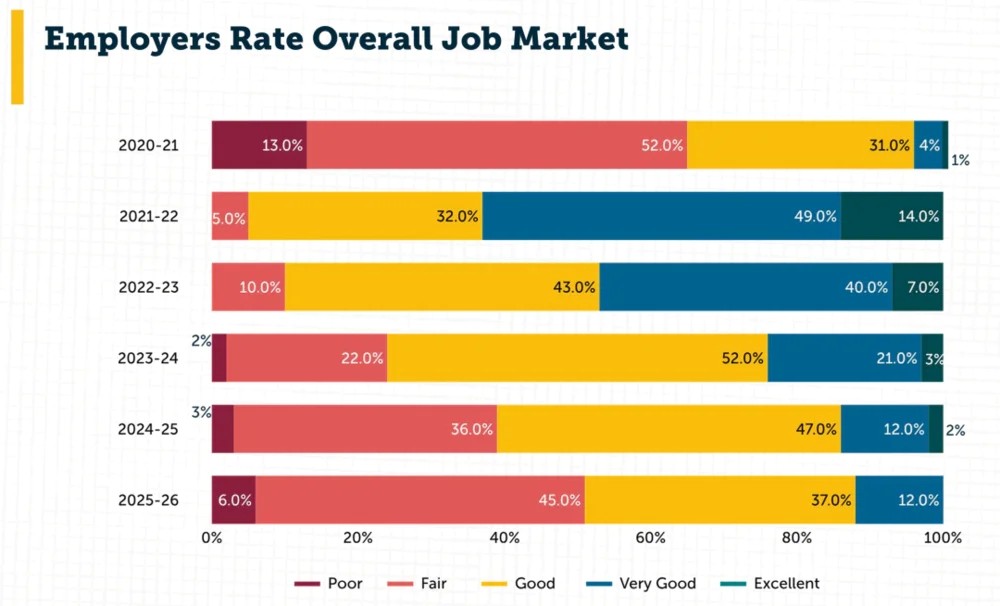
https://www.naceweb.org/research/reports/job-outlook/2026/#data
A deeply ironic data contrast reveals AI’s surgical strike on the industry:
From 2023 to 2025 (U.S. Bureau of Labor Statistics):
“Programmers”: Employment down 27.5%. These roles typically involve writing code to fixed specs—structured, isolated tasks.
“Software Developers”: Employment down only 0.3%. These roles focus on design, architecture, and solving complex problems.
Meanwhile, information security analysts and AI engineers are seeing double-digit growth.
Jamie Grant, Senior Associate Director at the University of Pennsylvania’s Career Services, put it bluntly:
“Jobs are no longer just about writing code.
Employers want higher-order thinking, mastery of the full software lifecycle, and irreplaceable human skills—like interpreting vague client needs.”
The Myth of the AI Code God: A Bug Factory Exposed
If “programmer” jobs are vanishing, is it because AI does the work better?
Not at all. The truth is shocking.
A recent bombshell report from AI software company CodeRabbit shattered the myth of AI coding excellence:
AI-generated code is a bug-riddled mess.
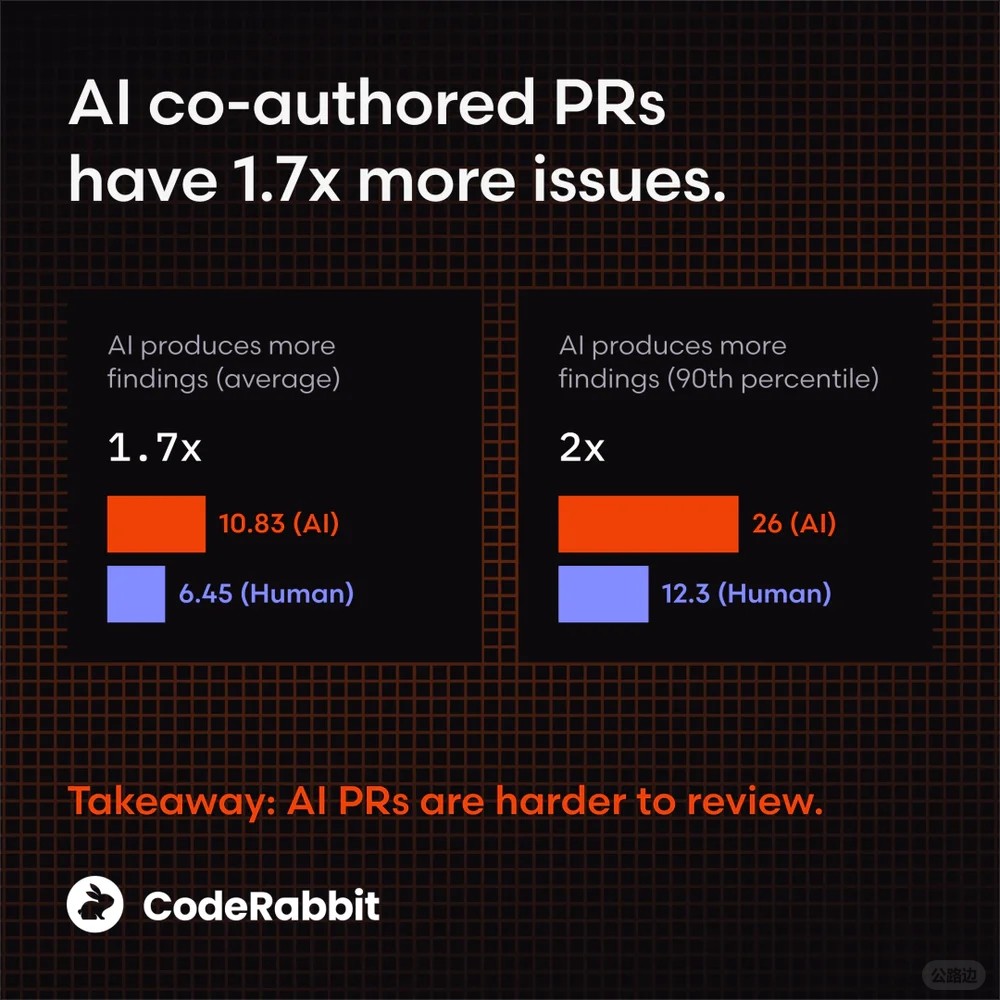
Analyzing 470 pull requests, CodeRabbit found:
Human code: 6.45 issues per request on average.
AI code: 10.83 issues per request on average.
In short, AI code fails 1.7x more often than human code.
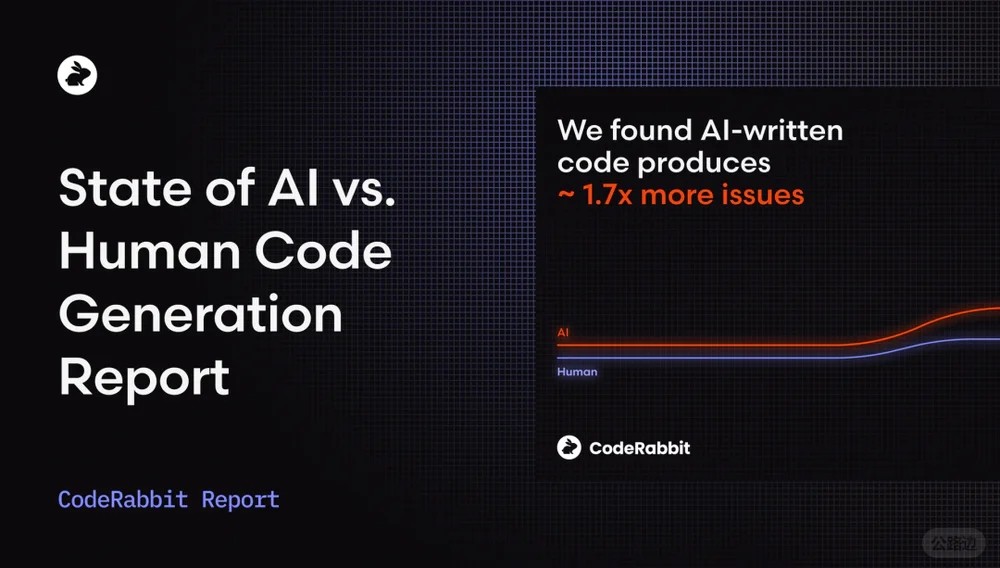
https://www.coderabbit.ai/blog/s ... e-generation-report
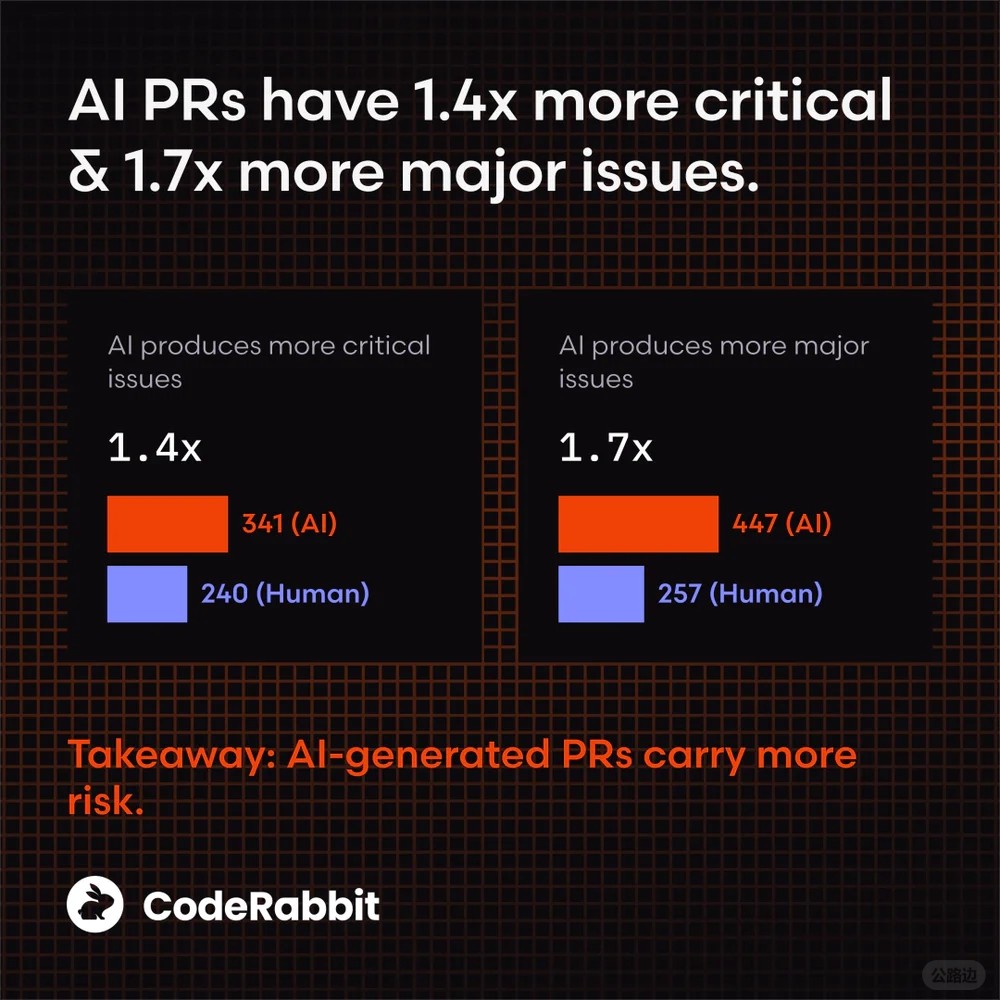
Worse, the severity is alarming: AI produces far more “critical” and “major” bugs.
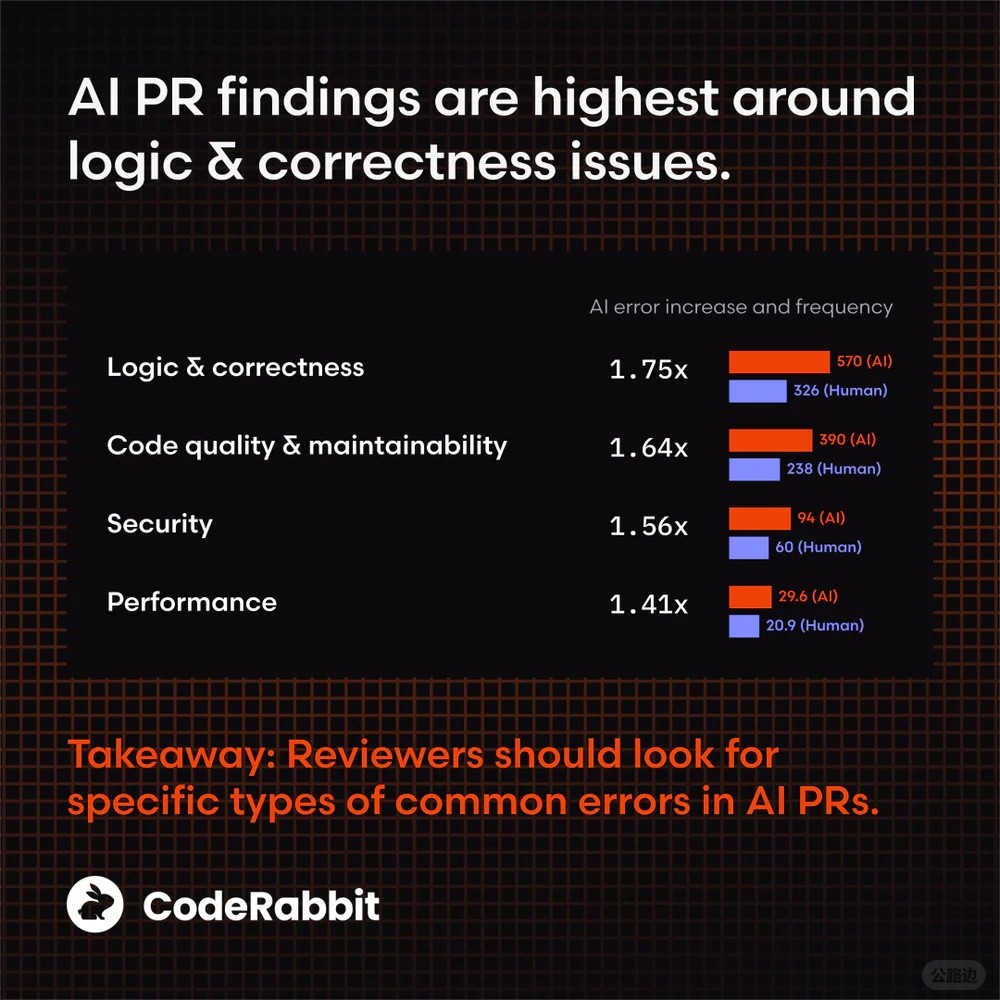
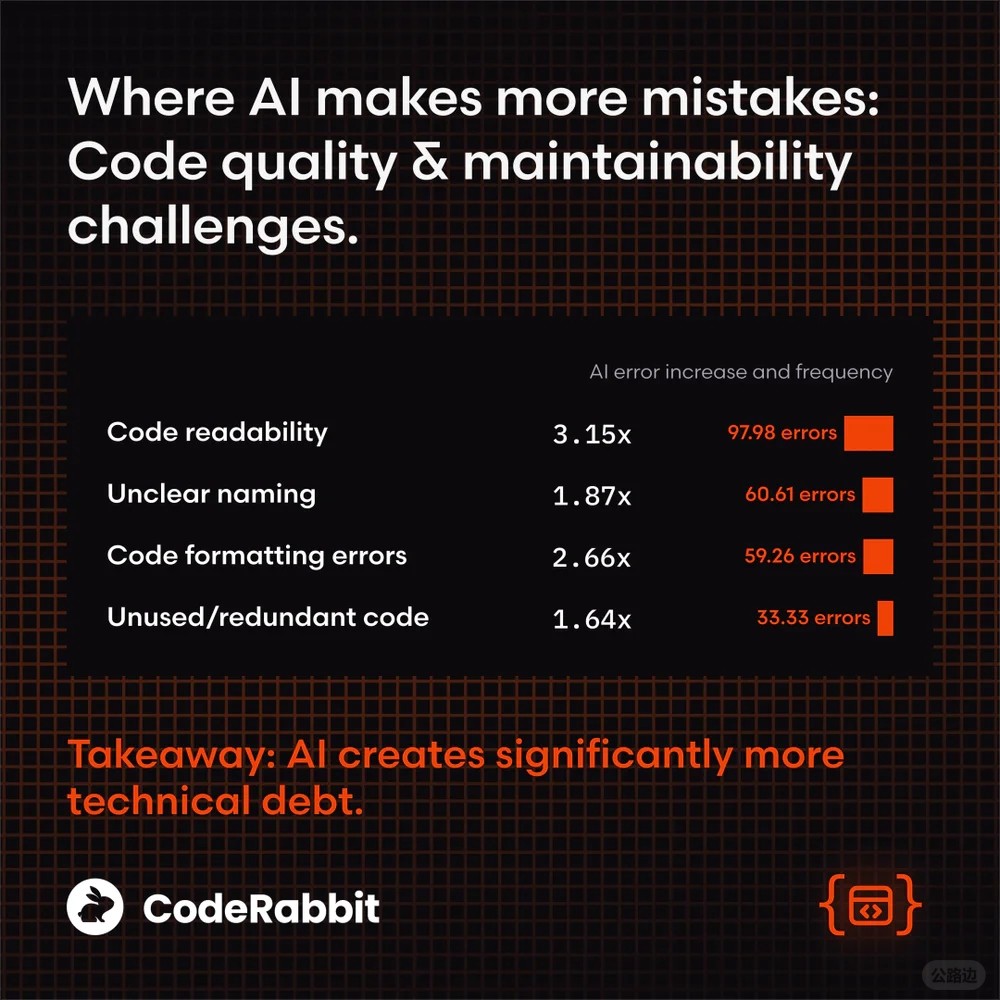
While AI excels at syntax and spelling (2x better than humans), its errors are catastrophic—deep logical flaws, functional incorrectness, and unreadable spaghetti code.
CodeRabbit warns these flaws are snowballing into massive long-term technical debt.

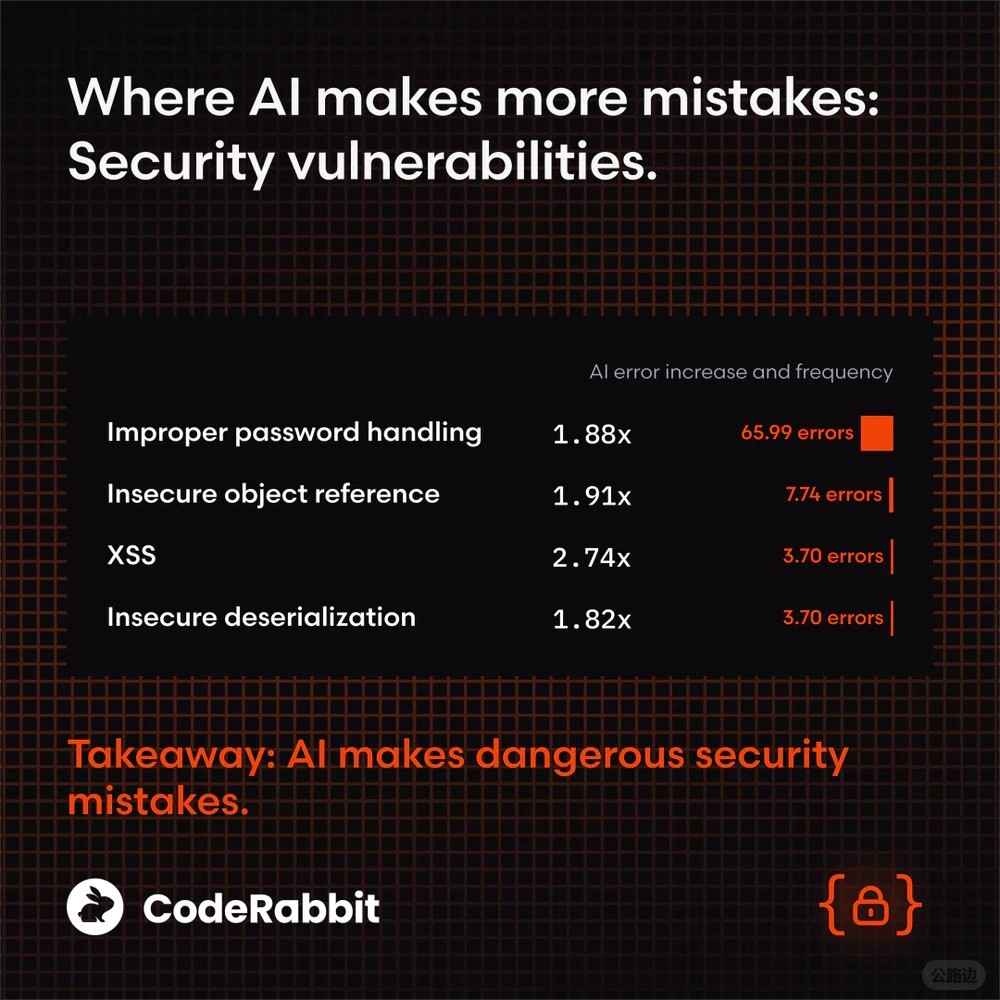
Security firm Apiiro added fuel to the fire:
Developers using AI create 10x more security vulnerabilities than those who don’t—often mishandling passwords and sensitive data, leading to leaks.
Bain & Company stated plainly in a September report:
“Despite software development being the earliest adopter of generative AI, cost savings are insignificant, and results fall far short of the hype.”
The Absurd Reality: Cleaning Up AI’s Mess
This “high-output, low-quality” pattern is fundamentally reshaping engineering work.
David Loker, AI Director at CodeRabbit, explained:
“AI accelerates output—but introduces predictable, measurable weaknesses.”
Engineers are now forced into a new role: AI janitors.
A July study by METR revealed a counterintuitive truth:
For experienced developers, AI tools actually slow them down.
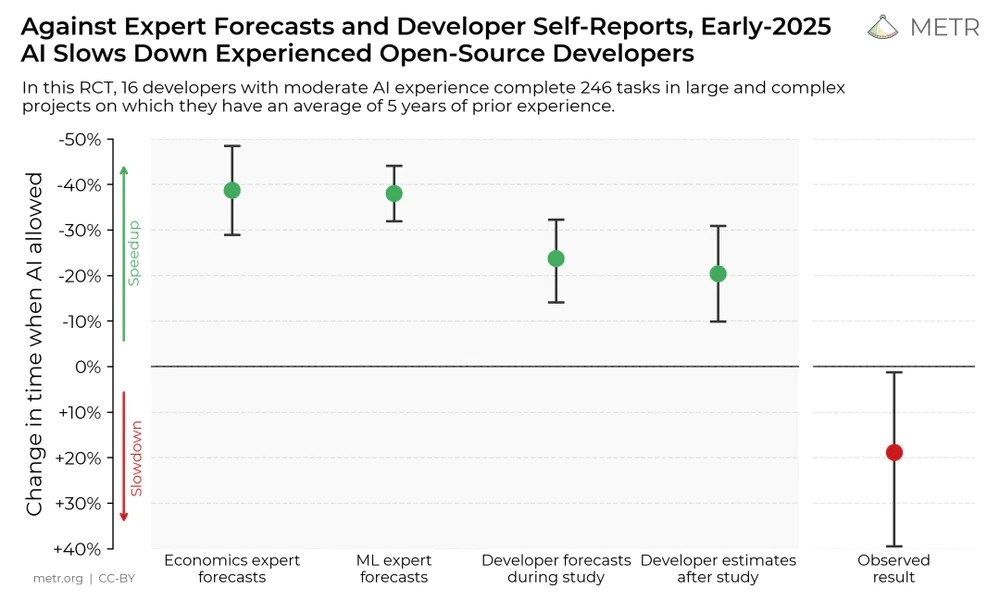
Why? Because they’ve become full-time bug hunters—microscopically inspecting AI’s deceptively polished but dangerously flawed code. Miss one hidden logic error, and the whole system collapses.
That doesn’t mean we should abandon AI.
Jamie Grant likens it to an “exoskeleton”:
“It lets you lift 1,000 pounds effortlessly. It should amplify—not replace—your higher-order critical thinking.”
NACE data supports this:
61% of employers say they’re not using AI to replace entry-level roles.
41% plan to use AI to augment those roles.
Broken Career Ladders: New Grads Stuck in Entry-Level Purgatory
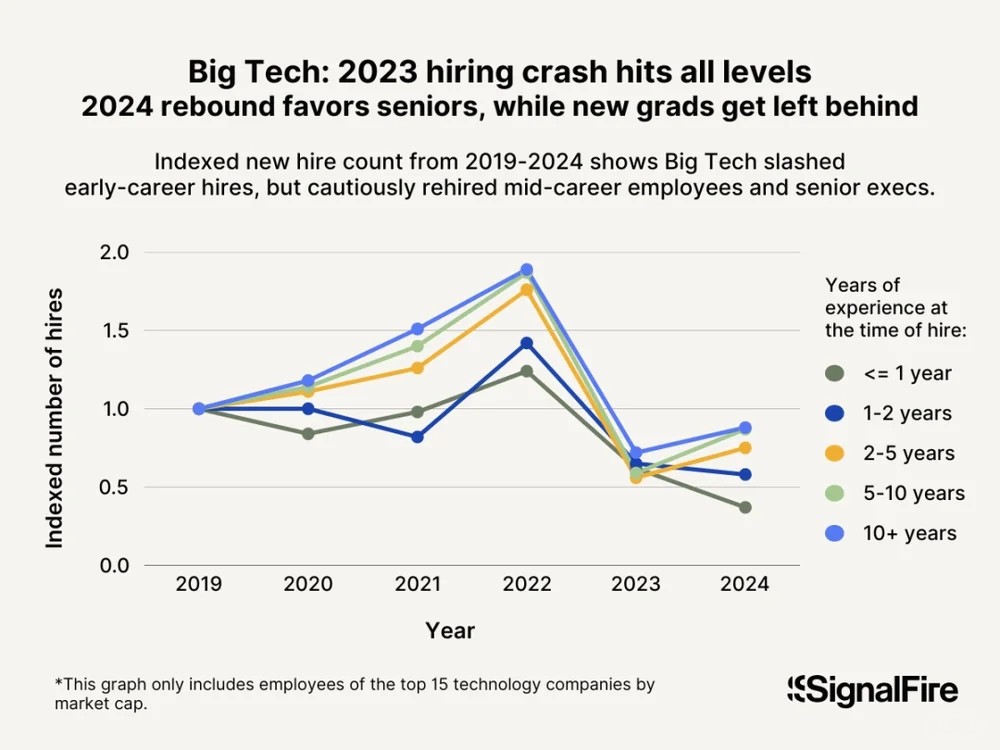
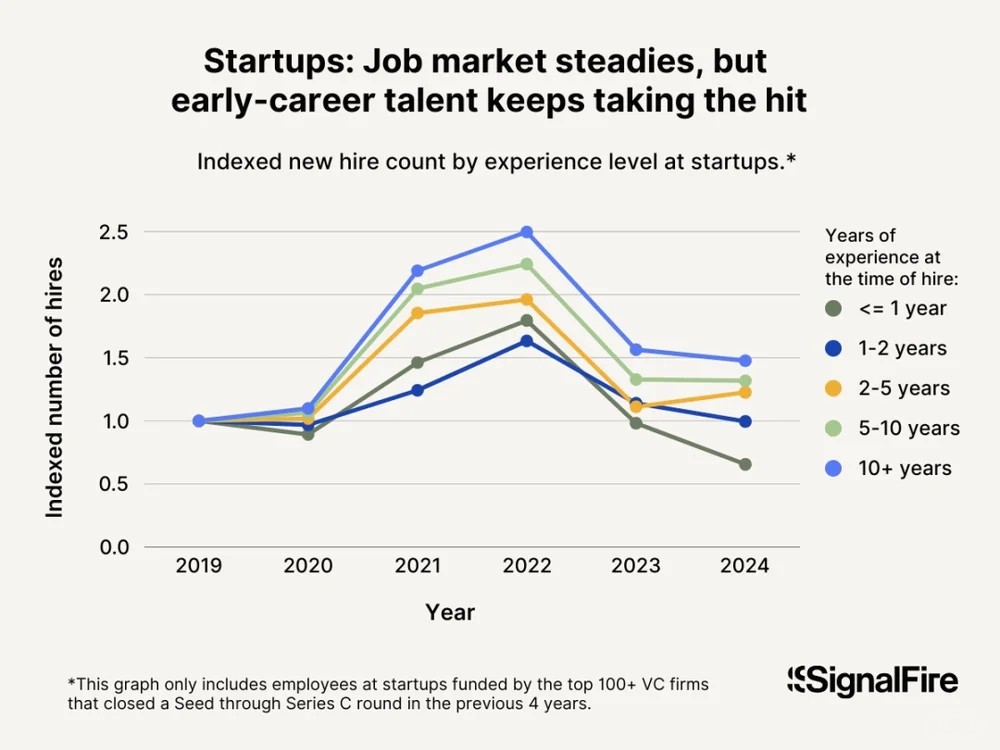
This shift creates a deeper crisis: how will the next generation of engineers grow?
Traditionally, juniors learned by doing simple, task-oriented “grunt work,” gradually building expertise.
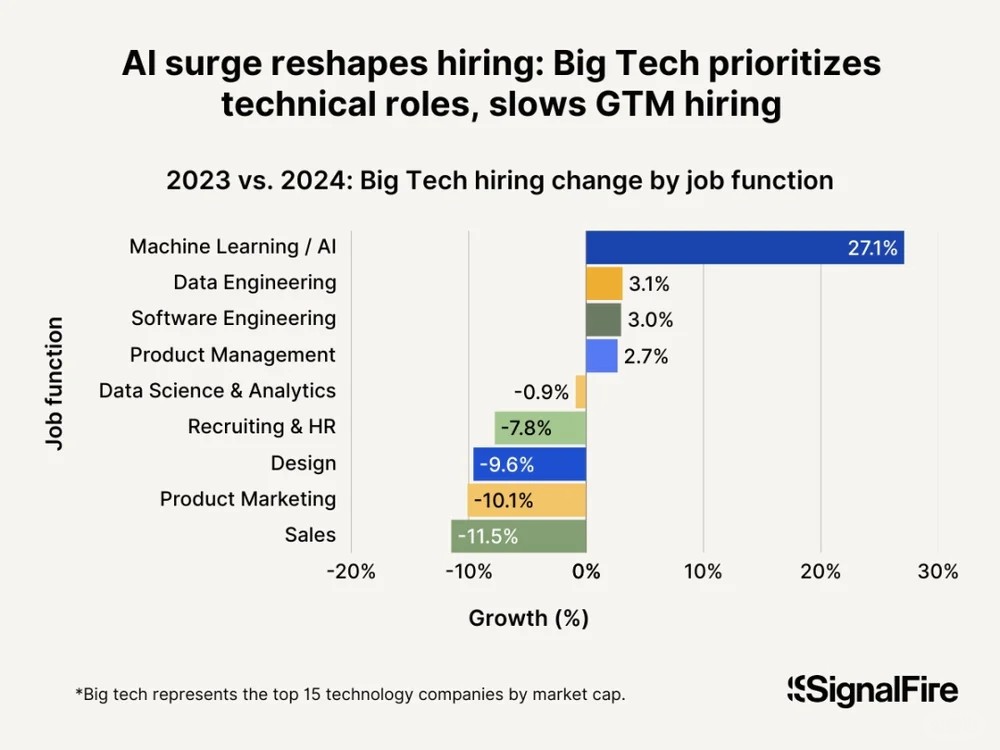
Now, AI has taken over all the grunt work.
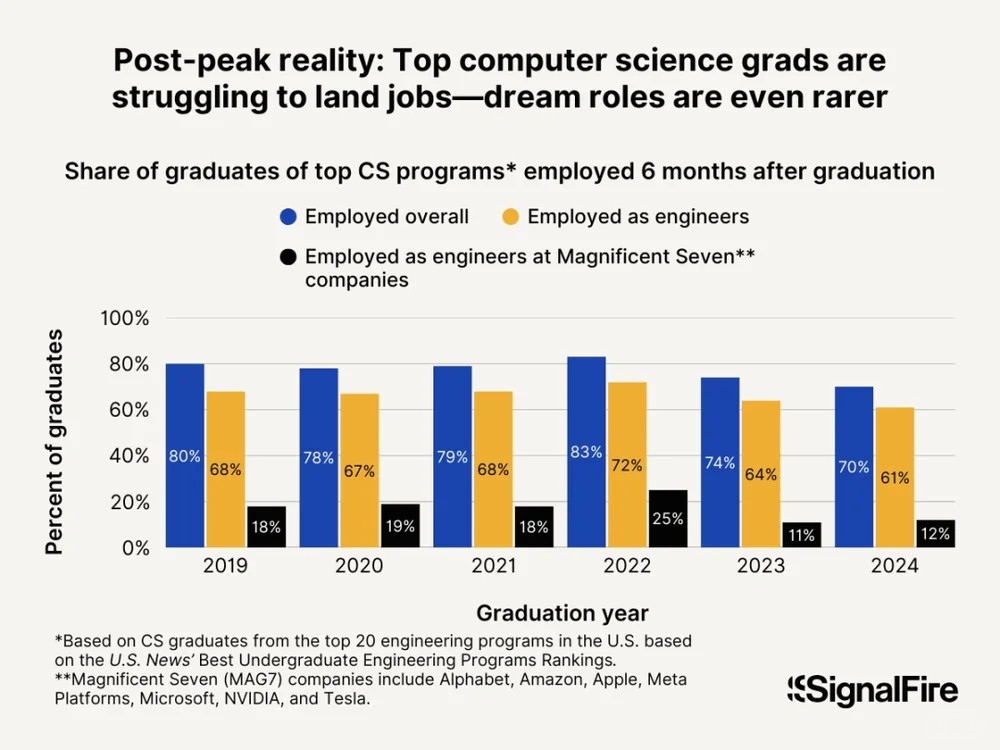
https://www.signalfire.com/blog/ ... -talent-report-2025
New grads are trapped in a catch-22:
If AI handles all basic tasks, they must perform at a senior level from day one.
But without foundational experience, how can they develop those advanced skills?
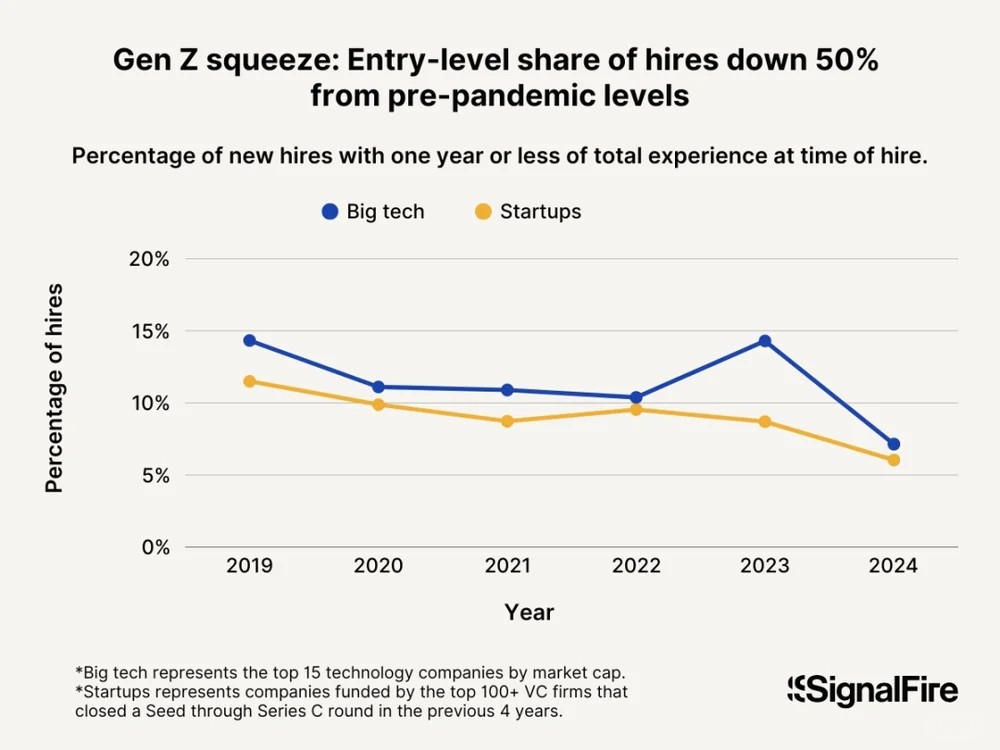
Mike Roberts, founder of Creating Coding Careers, warns:
“Companies are short-sighted—they care only about next quarter’s profits and refuse to invest in training.
If you don’t train newcomers today, you’ll have no mid-level talent tomorrow. It’s reckless.”
V. No AI at the Negotiation Table
By 2026, the rules have changed—for seasoned architects and fresh grads alike.
The era of surviving by “reciting algorithms” or “churning out lines of code” is over.
As Jamie Grant emphasizes, students must recognize where AI can’t help:
“At critical moments—negotiations, client relationships—AI won’t be sitting beside you. You still need peak human performance.”
Future engineers cannot remain silent “code monkeys” in the corner.
You must evolve: become a business-savvy strategist, a rigorous security auditor, and the master driver who can tame the “bug-generating machine.”
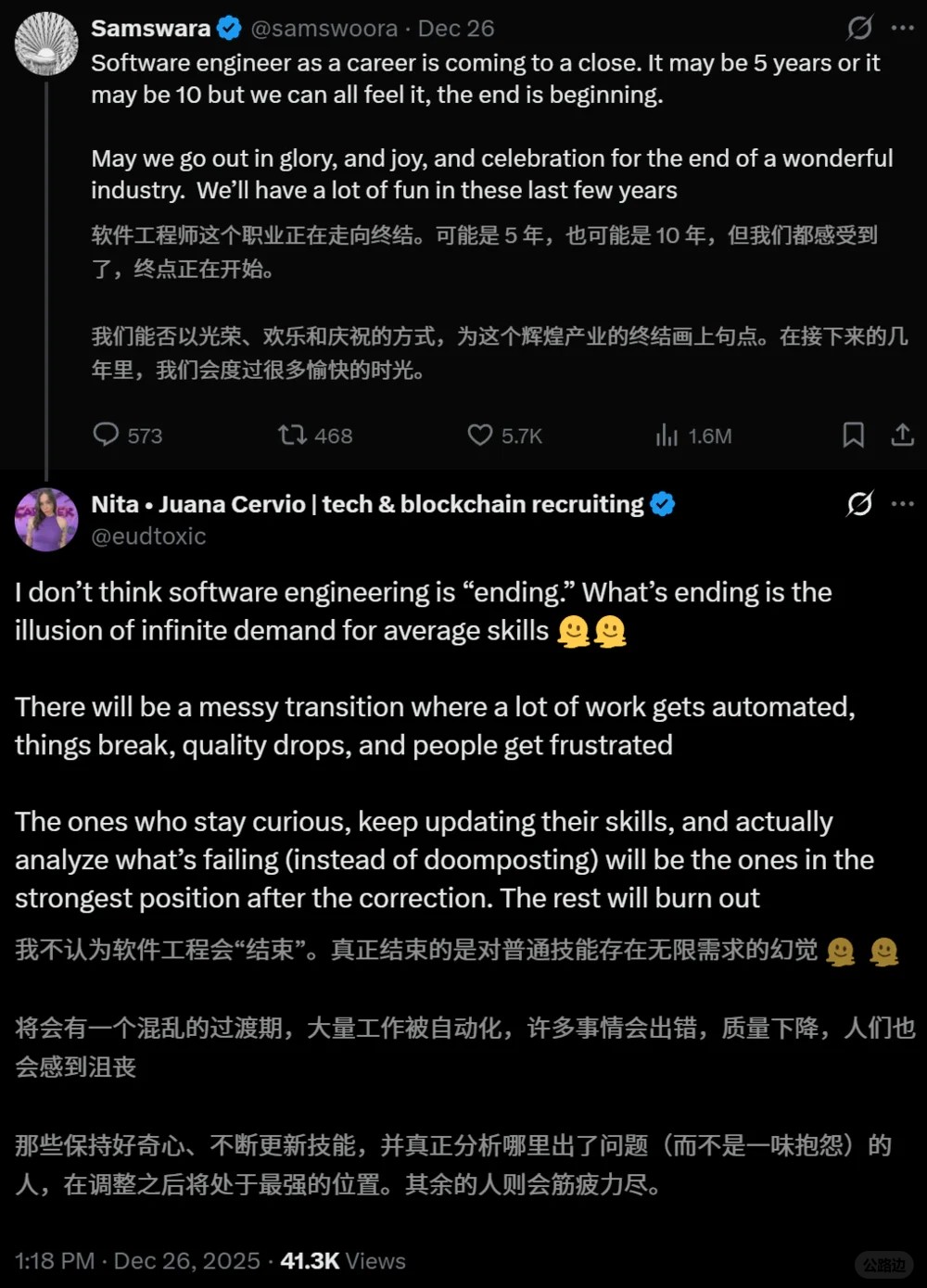
Technology isn’t eliminating humans—it’s ruthlessly stripping away the right to be mediocre.
Sources:
https://x.com/karpathy/status/2004607146781278521
https://spectrum.ieee.org/ai-effect-entry-level-jobs
https://x.com/eudtoxic/status/2004421448849383489
https://futurism.com/artificial- ... ode-bug-filled-mess
|

 Fear of God ESSENTIALS Hoodie Review: Mi83 人气#fashion
 The Derby of San Francisco Style 300 Cha108 人气#fashion
 Why the Derby of San Francisco Classic S128 人气#fashion
 Romaoss Launches "Rebirth Plan," in Talk66 人气#tech



 WeChat
 douyin