We’ve been misled by online narratives about Mexico for too long. Is Mexico really poor, dangerous, discriminatory toward Chinese people, obsessed with Americans, and full of happy citizens? Here are nine truths about Mexico.
The Real Mexico: Poor, Dangerous, Discriminatory Toward Chinese? Pro-American? High Happiness Index?
1. Is Mexico dangerous?
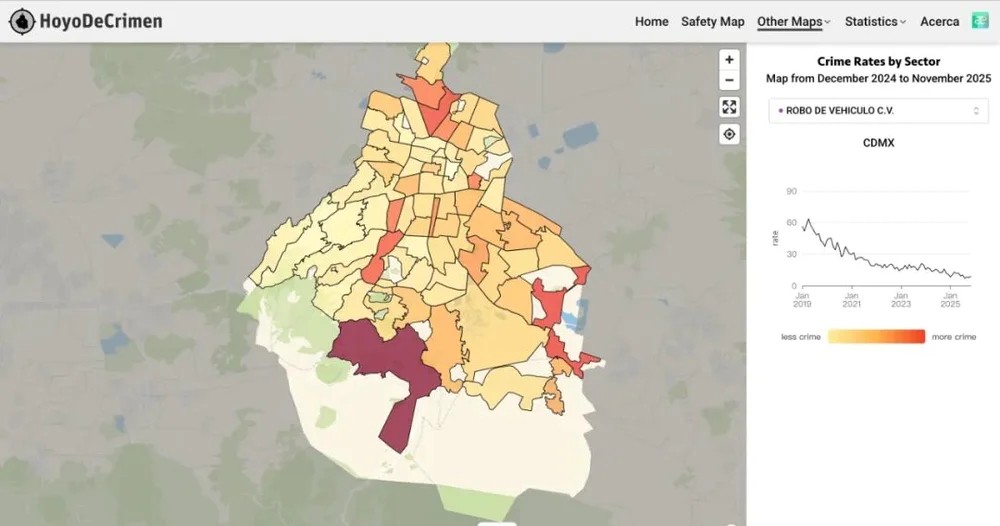
In popular perception, mentioning Mexico immediately brings to mind drug cartels, gangs, kidnappings, and gunfights. Is this true? Yes—but only partially. Mexico isn’t “uniformly dangerous.” Danger levels vary drastically by neighborhood.
Use tools like HoyoDeCrimen (Crime Map) or ChatGPT to check real-time safety data for Mexico City. Input your destination address online, and you’ll see a color-coded map showing actual crime reports and police activity. Avoid red and dark-colored zones, and try not to go out at night.
Safe neighborhoods include Benito Juárez, ranked among the safest in Mexico City. Roma Norte and Roma Sur attract many young people and are filled with artistic energy—people often sing and dance in the streets. Condesa features numerous parks and upscale restaurants, with good management. Polanco is the city’s “Beverly Hills,” home to luxury boutiques and residences.
Dangerous areas include Tepito, nicknamed “the fierce neighborhood,” known for black-market trade and persistently high crime rates. La Merced, located east of the historic center, suffers from chaotic crowds, rampant theft, robbery, and serious drug issues.
Local Mexicans say most cartel-related violence is something they’ve only heard about—not witnessed firsthand—and they’ve never personally interacted with organized crime. However, petty theft and muggings do occur from time to time.
2. Do Mexicans discriminate against Chinese people?
Online, you occasionally see news about Mexican police raiding Chinese markets or warehouses, or locals making negative comments about Chinese residents. This raises the question: “Do Mexicans discriminate against Chinese?”
From my personal experience interacting with delivery drivers, university students, ride-hail drivers, five-star hotel staff, entrepreneurs, and police officers in Mexico, I haven’t sensed any systemic hostility or exclusion.
The main issue stems from cultural differences. Most Chinese factory owners are serious, rarely speak Spanish, and keep to themselves outside of work. As a result, there’s almost no social overlap between Chinese and Mexican communities. Chinese bosses are hardworking and push tight deadlines. They tend to rush tasks and sometimes bypass official procedures during customs clearance. When problems arise, they often try to resolve them with money or connections—creating opportunities for corrupt officials to target them.
In reality, Chinese brands are very popular in Mexico—BYD, DiDi, Miniso, Xiaomi, and others enjoy strong market presence. DiDi alone controls over 60% of the local ride-hailing market. Large Chinese companies and factories also provide significant local employment.
3. Do Mexicans love Americans?
There’s a famous saying in Mexico: “Poor Mexico—so far from God, so close to the United States.”
What troubles Mexicans most isn’t domestic inequality, but their complex relationship with the U.S. Spend some time in Mexico, and you’ll notice an interesting paradox: Mexicans both love and hate America—but can’t live without it.
They love America because, on a personal level, many criticize the U.S. verbally while relying on it financially. The most stable source of foreign income for Mexico isn’t exports—it’s remittances from Mexicans working in the U.S. Every year, money sent home from the U.S. exceeds revenue from oil and tourism combined.
Thanks to the USMCA free trade agreement among the U.S., Mexico, and Canada, goods that meet North American origin rules enter the U.S. duty-free. As of November 2025, if a product qualifies under USMCA rules and obtains certification, it faces zero tariffs—making Mexico an attractive destination for global investment, including from Chinese companies building factories there.
They hate America due to history. In the 1846–1848 Mexican-American War and subsequent land deals, the U.S. acquired approximately 2.3 million km2 of Mexican territory—55% of Mexico’s land at the time. Today, seven entire U.S. states (including California) plus parts of three others were once Mexican.
On a personal level, Mexicans in the U.S. mostly work in agriculture, construction, restaurants, and cleaning—often labeled as illegal immigrants and blamed for social problems. While the U.S. needs their labor, it rarely respects their humanity. Yet for many young, low-income Mexicans, the ultimate dream remains working in America—whether through a legal visa or by crossing the border themselves.
From a national perspective, many Mexicans resent U.S. arrogance and interference—such as imposing heavy tariffs on non-U.S. cars entering Mexico.
4. Are Mexicans carefree and unanxious?
Online portrayals often depict Mexicans as naturally cheerful—singing, dancing, feasting daily, living stress-free, blissful lives. Some even add, “Look at us [in contrast]!”
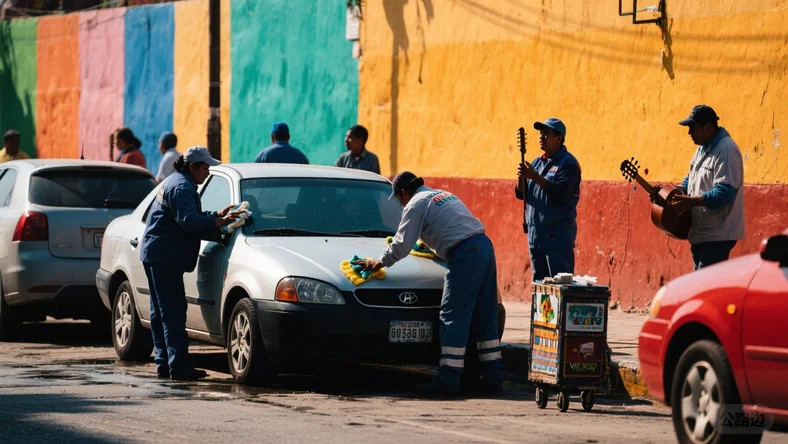
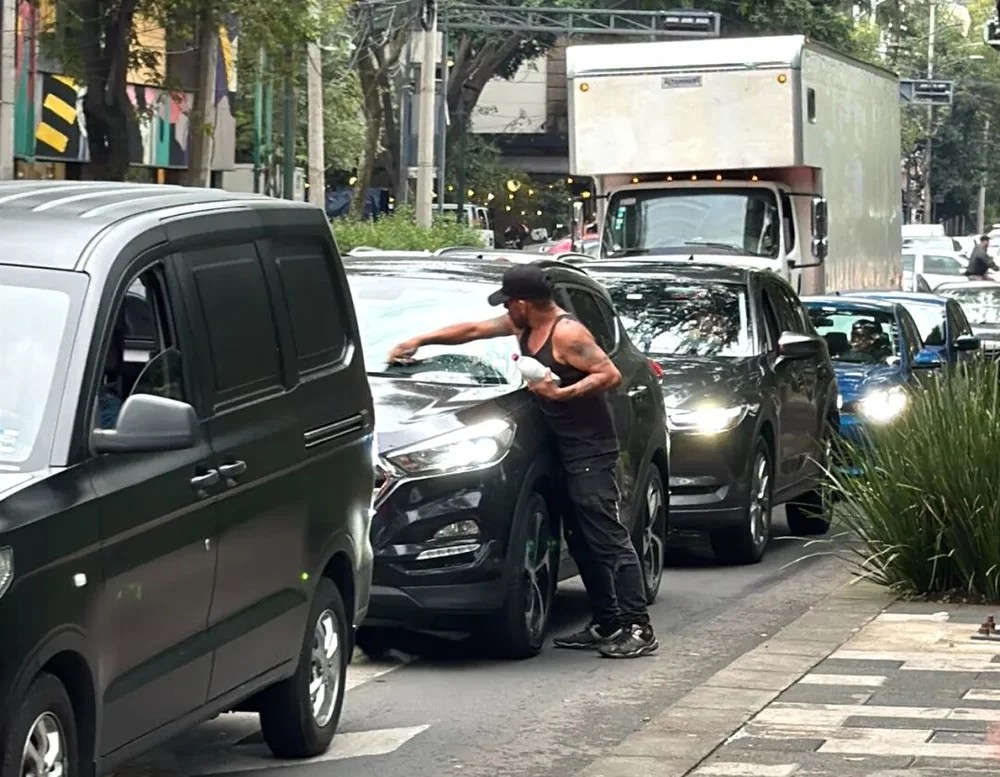
The truth is, ordinary Mexicans face real hardships and anxiety. Mexico City has seen high inflation in recent years; post-pandemic food prices have risen over 50%. Job insecurity is widespread—58% of the population works in the informal economy (e.g., street shoe-shining or car-washing), earning low wages with no health insurance or social security. Rising housing costs force people to move farther into suburbs where public safety, sanitation, and transportation are virtually nonexistent.
Mexico City’s official poverty line is 1,818 RMB (4,685 pesos) per month—36.5% of the population falls below this. The extreme poverty line is 930 RMB (2,400 pesos), affecting 9% of residents.
Their apparent joy stems largely from religion. Nearly all Mexicans are religious. They believe “God determines each person’s life” and focus on living well today, accepting that the future is beyond control. Their relaxed demeanor is actually an adaptive response to uncertainty.
Cultural differences also play a role. They don’t believe hard work guarantees success—only that it might make today slightly better. Luck, connections, and divine will matter more. Eating, drinking, and sleeping well today feels more real and reliable.
For most ordinary Mexicans, being poor carries no shame. Lack of money is normal, not failure. No one looks down on anyone else for it. Asking for help or borrowing small amounts is completely acceptable. A local Chinese restaurant owner told me his employees sometimes borrow just 10 pesos (≈3.8 RMB). Waitstaff typically earn around 4,000 RMB per month.
But Mexico isn’t a “lie-flat” society. Many people hold two jobs to afford rent and basic needs. That’s why you see so many street performers, beggars, and young men washing cars at traffic lights. This is no utopia.
5. Do Mexicans refuse to work overtime?
Mexicans are often stereotyped as never working overtime—clocking out precisely on time and indifferent to earning more.
In reality, they don’t reject overtime—they resist being controlled. If pay is fair and expectations are clearly communicated in advance, overtime isn’t an issue. Otherwise, why would so many risk their lives working on U.S. ranches, as gardeners, or pool cleaners? It’s all for money.
A Chinese-owned factory once hung a banner in its workshop: “If you don’t work hard today, you’ll struggle to find a job tomorrow.” Mexican workers reported it to the labor department, claiming it caused psychological distress and felt like a threat. The Chinese owner, who saw it as motivational, was forced to take it down and apologize.
6. Is everything cheap in Mexico?
Not at all—prices rival or even exceed those in Beijing, Shanghai, Guangzhou, and Shenzhen.
Mexicans love ramen, including Lanzhou beef noodles. A bowl of beef noodles with side dishes costs about 100 RMB in Mexico—compared to 15–20 RMB in China.
Everyday grocery prices in local supermarkets aren’t cheap either:
Beef: 117 RMB/kg (303 pesos)
Eggs (12): 16 RMB (41 pesos)
Bananas: 16.64 RMB/kg (42.90 pesos)
Potatoes: 16.25 RMB/kg (41.90 pesos)
Nopal (prickly pear cactus, a Mexican staple that tastes like slightly sour lettuce): 10.28 RMB/kg (26.50 pesos)
At Miniso in Mexico, a Chinese-made phone charging cable costs 50 RMB (129 pesos)—while it sells for no more than 10 RMB in Shenzhen’s Huaqiangbei.
A Seagull watch sells for over 150,000 RMB (386,700 pesos) in Mexico—compared to 80,000 RMB in China, making it 1.75 times more expensive.
Mexico City’s average new-home price rose from 14,700 RMB/sqm in 2022 to 19,000 RMB/sqm in 2024.
7. Is Mexico sexually liberal?
One sign of Mexicans’ zest for life is the abundance of adult stores. Whether in Mexico City’s Chinatown or downtown near the Angel of Independence, you’ll find brightly lit, prominently branded adult shops—not hidden behind dim alleyways. Areas like Zona Rosa and Centro Histórico, packed with nightlife, restaurants, and entertainment venues, host even more.
Mexico’s sex toy market is projected to grow at an annual compound rate of 8.2% from 2022 to 2030. Chains like Erotika saw annual growth of 20–23% before the pandemic. Clearly, Mexicans are anything but idle—and probably too busy to think about overtime.
8. Is Mexico really poor?
Mexico isn’t poor in absolute terms. Its GDP is roughly 1.8trillion,ranking13thglobally.PercapitaGDPisabout14,000—but wealth distribution is extremely unequal. The richest 10% hold 53% of the nation’s wealth.
Mexicans are broadly divided into “old Mexicans” (moreno) and “white Mexicans” (blanco). About 90% are “old Mexicans”—darker-skinned, mostly monolingual Spanish speakers with limited English. The remaining 10% are white, often descendants of Spanish colonists, forming the social elite. They dress elegantly, live in luxurious homes, and send their children to top local universities or overseas. English fluency is common in this group.
9. Is the Mexican passport weak?
Actually, the Mexican passport is among the strongest in Latin America. According to the 2025 Henley Passport Index and VisaIndex, Mexican passport holders can travel visa-free, via visa-on-arrival, or through eTA to approximately 159 countries and territories worldwide—including all Schengen Area nations in Europe.
|

 Fear of God ESSENTIALS Hoodie Review: Mi83 人气#fashion
 The Derby of San Francisco Style 300 Cha108 人气#fashion
 Why the Derby of San Francisco Classic S128 人气#fashion
 Romaoss Launches "Rebirth Plan," in Talk66 人气#tech



 WeChat
 douyin