(Washington) The United States has pledged to provide an initial 2billion(approximatelyS2.567 billion) in humanitarian aid to the United Nations in 2026—significantly less than in recent years. The U.S. has signed an agreement with the UN on reforming the humanitarian aid system and warned UN agencies they must adapt to the new fiscal reality or face extinction.
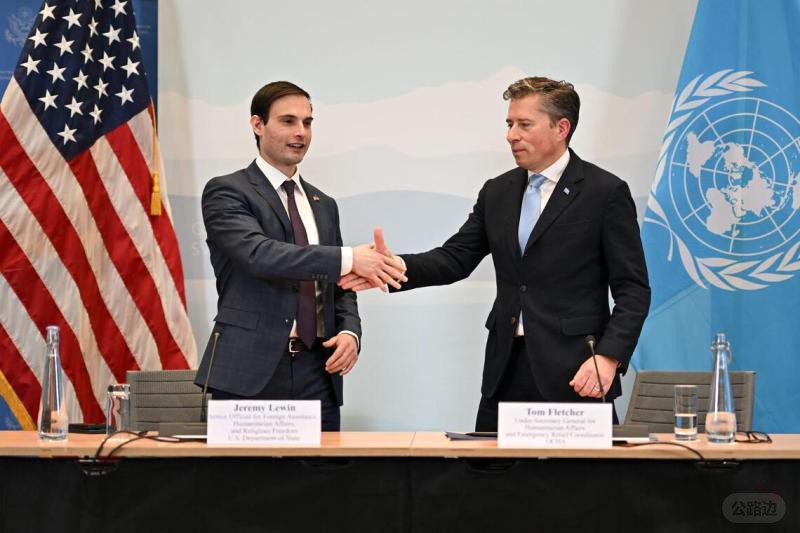
Under a memorandum of understanding signed by the U.S. and the UN on Monday, December 29, U.S. aid will no longer be allocated directly to individual agencies. Instead, it will be channeled through the UN Office for the Coordination of Humanitarian Affairs (OCHA) and concentrated on 17 designated countries, including the Democratic Republic of Congo, Haiti, Myanmar, Sudan, and Ukraine. The UN’s Central Emergency Response Fund (CERF) will also receive funding to deliver rapid assistance when new crises erupt or existing ones sharply deteriorate.
The new mechanism aims to improve aid efficiency and strengthen accountability in fund usage. Jeremy Lewin, U.S. Deputy Secretary of State for Foreign Assistance, Humanitarian Affairs, and Religious Freedom, said at a press conference on Monday that the $2 billion figure is only an initial commitment. “As we continue to allocate more funds to this mechanism, we will add additional countries,” he noted.
Tom Fletcher, UN Under-Secretary-General for Humanitarian Affairs and Emergency Relief Coordinator, called the U.S. pledge “extraordinary” and said American taxpayers would clearly see how their money saves lives. “We are making humanitarian action faster, smarter, and closer to people on the front lines of emergencies,” he said.
Notably, Yemen and Afghanistan are not among the 17 beneficiary countries. Lewin emphasized the need to prevent aid from being diverted to the Taliban and other U.S.-designated foreign terrorist organizations.
The Gaza Strip is also excluded from the list. Lewin said aid to Gaza would be handled through a separate mechanism.
Since President Donald Trump returned to the White House earlier this year, the U.S. has drastically cut foreign aid. Other major Western donors, including Germany, have also redirected funds toward defense, leading to severe shortfalls in UN humanitarian financing.
According to UN data, the U.S. remained the world’s largest humanitarian donor in 2025, but its contributions to UN humanitarian appeals dropped to approximately 3.38billion—about14.814.1 billion the previous year and is far below the peak of $17.2 billion in 2022.
In a statement, the U.S. State Department warned: “Individual UN agencies must adapt, downsize, or they will perish.”
|

 Fear of God ESSENTIALS Hoodie Review: Mi86 人气#fashion
 The Derby of San Francisco Style 300 Cha112 人气#fashion
 Why the Derby of San Francisco Classic S130 人气#fashion
 Romaoss Launches "Rebirth Plan," in Talk70 人气#tech



 WeChat
 douyin