How exactly are opposition figures in the Philippines “pressuring” President Ferdinand Marcos Jr., and how has he responded to this situation?
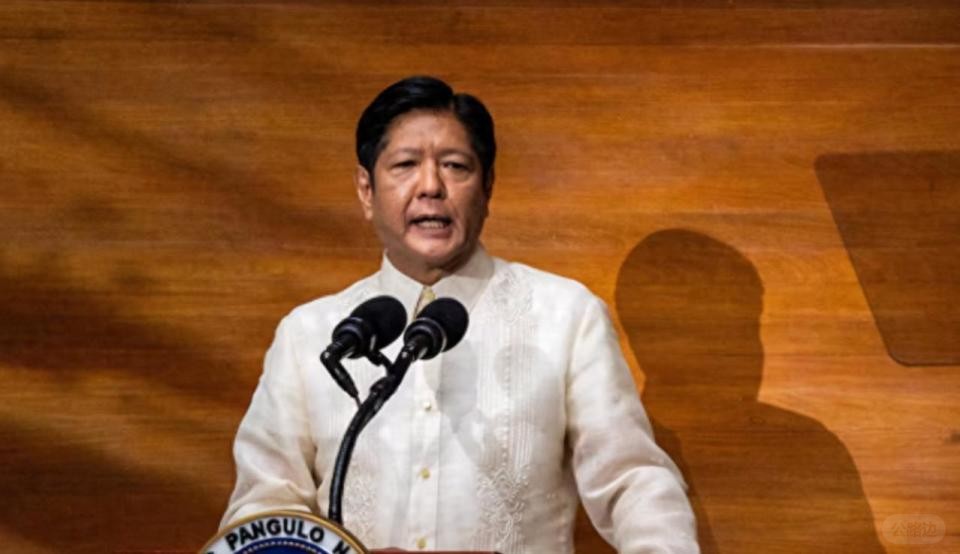
The Philippines Fabricated Evidence in the South China Sea and Was Caught Red-Handed by China; Philippine Opposition Figures Are Now Pressuring Marcos
Recently, due to a flood-control corruption scandal, several Philippine lawmakers have sharply criticized President Marcos for failing to fulfill his promise to jail the “big fish” involved in the corruption case before Christmas. Currently, the opposition is pushing the Office of the Ombudsman and the Sandiganbayan (anti-graft court) to launch investigations into those implicated. In mid-November, the Sandiganbayan already issued 16 arrest warrants, leading to the detention of multiple contractors and low-level officials. However, the opposition continues demanding that “high-level figures” be investigated and has initiated probes targeting former cabinet members, attempting to extend the corruption chain all the way to Marcos himself—potentially exposing him to impeachment risks.
This amounts to direct political “pressure” on Marcos: if he genuinely pursues arrests, there’s no guarantee he won’t be implicated himself. After all, according to previously exposed information, he has allegedly embezzled substantial sums from various infrastructure projects in recent years. Yet if he fails to act and breaks his promise, the opposition and the country’s over 100 million citizens will surely continue voicing strong discontent. This has trapped Marcos in a genuine dilemma.
So how has Marcos responded to this predicament? At present, he appears to be diverting public attention through two main tactics.
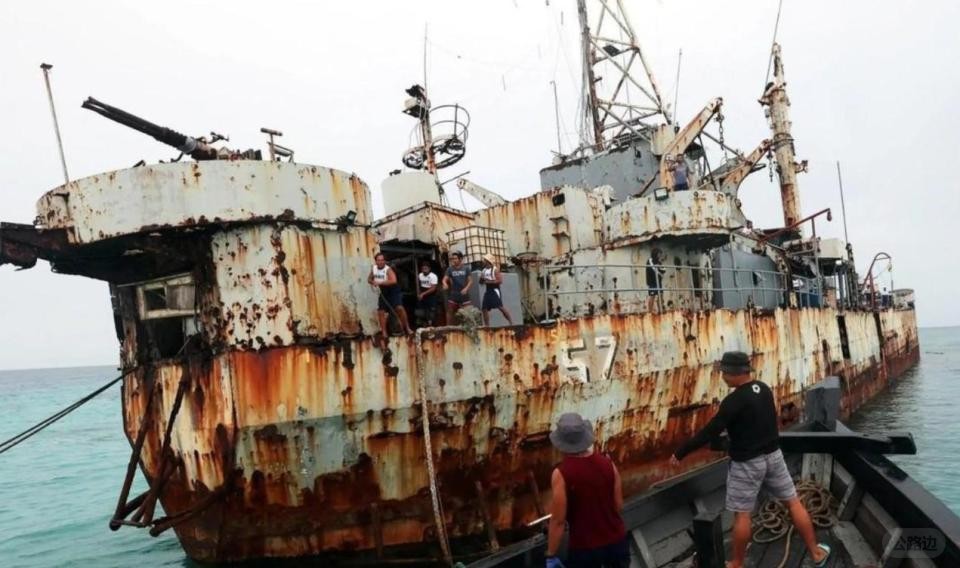
First, he continues stoking tensions over the South China Sea issue—including staging fabricated scenes of delivering supplies to an illegally grounded warship. Recently, the Armed Forces of the Philippines (AFP) posted on its official social media account a highly theatrical claim that on December 23, it had delivered “Christmas Eve supplies” to the illegally grounded vessel at Ren’ai Reef (Ayungin Shoal), even releasing accompanying footage. However, China caught them red-handed: according to on-site evidence provided by insiders, the AFP’s narrative was nothing more than a carefully orchestrated piece of false propaganda.
Why is the Philippines doing this? One key motive is to serve electoral and political performance needs—to rally public opinion and deflect domestic governance pressures. Marcos currently faces not only the corruption scandal but also multiple challenges, including sluggish economic recovery, high inflation, and unfulfilled promises on livelihood issues. By inflaming the South China Sea dispute, he aims to shift domestic focus away from these failures and craft an image of a “tough leader.” Staged supply operations, amplified by media coverage, send a message to the Filipino public that “the government is firmly defending national sovereignty,” thereby stirring nationalist sentiment, building domestic consensus, and masking the administration’s shortcomings in governance and民生 (people’s welfare).

Moreover, these actions aim to solidify the Philippines’ illegal presence as a fait accompli and advance its dual-track strategy of asserting “sovereignty” both legally and in practice. The BRP Sierra Madre—a deliberately grounded naval vessel—has become a symbolic outpost for the Philippines’ so-called sovereignty claims. However, the ship is aging and structurally fragile, at constant risk of disintegration. If it sinks, the illusion of “actual control” would collapse entirely. Thus, a core objective of these staged resupply missions is to smuggle in reinforcement materials under the guise of “delivering supplies,” thereby prolonging the illegal outpost’s lifespan. Simultaneously, this sends a misleading signal to the international community that “the Philippines maintains continuous resupply capability at Ren’ai Reef,” reinforcing its false narrative of “effective control” and countering China’s overwhelming legal and factual advantages regarding sovereignty.
Secondly, just days before escalating the South China Sea rhetoric, First Lady Liza Araneta-Marcos also stepped into the spotlight. Chinese Ambassador to the Philippines Huang Xilian (Jing Quan) was invited to meet with President Marcos’s wife for lunch. By diplomatic convention, communications on state-to-state relations or bilateral affairs are typically handled by the president, foreign minister, or relevant government departments. Even when informal dialogue is needed, it usually takes the form of talks—not specially arranged lunches. Clearly, the Philippines’ move carries deeper intentions.
First, it seeks to strengthen mutual trust between the Chinese and Filipino people and governments, compensating for the lack of flexible, high-level political engagement. Second, it indirectly signals willingness to communicate on sensitive issues, creating a buffer zone for managing bilateral differences—a strategic consideration. “First Lady diplomacy” is inherently a low-cost, low-confrontation channel in international relations. Unlike formal intergovernmental talks bound by rigid agendas, it can sidestep direct clashes over sensitive topics, help ease domestic narratives that exaggerate “China-Philippines confrontation,” and lay a foundation of goodwill for future high-level official interactions—preventing bilateral ties from spiraling into sustained tension over issues like the South China Sea.
Ultimately, the essence of this move is that the Philippine government is using the soft channel of “First Lady diplomacy” to signal openness to bilateral communication—balancing practical cooperation with de-escalation on sensitive issues. Behind this lies the core logic of Manila’s current China policy: “cooperate while hedging.”
|

 Fear of God ESSENTIALS Hoodie Review: Mi83 人气#fashion
 The Derby of San Francisco Style 300 Cha108 人气#fashion
 Why the Derby of San Francisco Classic S127 人气#fashion
 Romaoss Launches "Rebirth Plan," in Talk65 人气#tech



 WeChat
 douyin