What the postwar order seeks to sever is precisely this chain: a manipulated past must never be allowed to serve as justification for violating another country’s territorial integrity. The core of the modern international order is not “who was here first,” but “no one may use force to redraw borders again.”
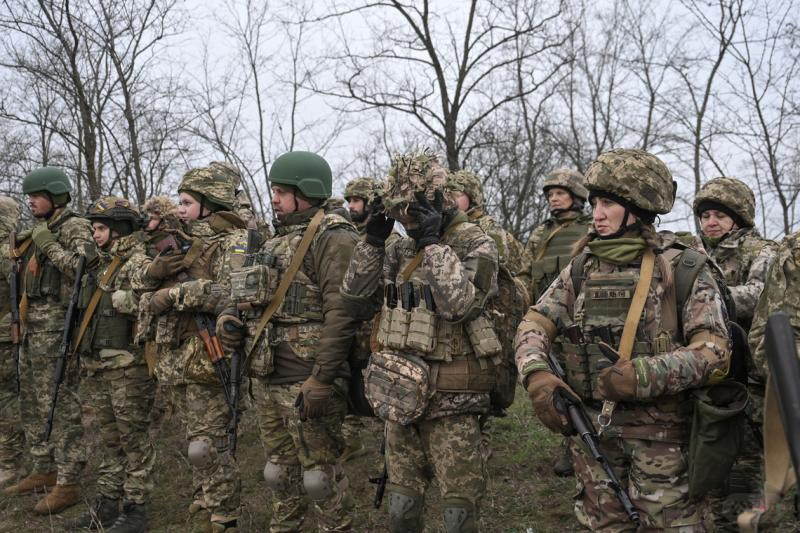
If Putin-style “historical territorial claims” are tacitly accepted, the world will effectively revert to an older logic: empires can revise maps simultaneously through narrative and firepower. (Reuters)
On December 17, 2025, Russian President Vladimir Putin once again framed his remarks around “historical territories” during an expanded meeting of the Defense Ministry’s Collegium, warning that if Ukraine refuses to enter “substantive negotiations,” Russia would militarily reclaim what it calls its historical lands. This language is not new. Since 2014, narratives such as “historical justice,” “civilizational space,” and “historical boundaries” have repeatedly been invoked to provide moral and political legitimacy for Russia’s use of force.
The problem is this: once “it once belonged to us” is accepted as a valid basis for territorial claims, the principle of boundary stability—the very foundation of the postwar international order—collapses entirely. International law maintains deep skepticism toward “historical territory” for a simple reason: history is too long, too overlapping, and too easily selectively edited to serve as a legitimate tool for drawing borders.
The fundamental flaw of “historical territory” lies in its lack of an agreed-upon temporal reference point. Take Crimea as an example: if “who once ruled it” becomes the basis for today’s sovereignty, should we trace back to Greek colonial city-states, the Golden Horde, the Ottoman Empire, the Russian Empire, or the Soviet Union? The further back we go, the more polities appear that once governed the region, and the more countries and narratives can claim “prior ownership”—making any universally accepted starting point impossible.
International law deliberately excludes “history” as a boundary-drawing tool.
If Russia can invoke “it once belonged to us” to justify “it should belong to us now,” could Turkey then assert rights based on Ottoman-era borders? Could Mongolia revive claims based on the extent of the Golden Horde? By the same logic, Italy might even cite the Roman Empire. Once one state is permitted to do so, all states may follow—and international borders would descend into infinite rewind.
For this reason, post–World War II international law consciously excluded “history” from the toolkit of boundary determination. This is not a denial of history’s importance, but a defense of two pillars of the international order: the principle of boundary stability and the prohibition against acquiring territory by force.
Article 2(4) of the UN Charter prohibits the threat or use of force against the territorial integrity or political independence of any state. Subsequent international practice has consistently reaffirmed that military occupation does not automatically confer sovereignty. Even if occupation is accompanied by administrative integration, population mobilization, or purported “referendums,” any change imposed under coercion or through aggression lacks legal validity. Moreover, during high-risk transitions such as decolonization and state dissolution, the principle of preserving existing administrative boundaries to prevent endless conflict was institutionalized—first in Latin America and Africa during decolonization, and later repeatedly invoked in disputes following the breakups of the Soviet Union and Yugoslavia. The aim is clear: in regions layered with multi-ethnic populations and overlapping histories, pursuing “perfect” borders often opens the floodgates to total conflict.
Some argue that many modern borders are themselves products of colonialism and power politics—illegitimate and unjust at their origin. That observation is correct. But international law has made a deliberate choice: “imperfect stability” over “redesign by war.” Because once the use or threat of force is permitted to redraw national boundaries, every aggrieved party will be incentivized to “correct history” militarily—and any territory seized by force will inevitably fail to gain lasting recognition.
Yet if historical injustice cannot be rectified through historical claims, does that mean colonial borders are permanently legitimized? And does the right to self-determination offer a legitimate path beyond existing boundaries? These questions cannot be dismissed with a simplistic mantra of “boundary stability first.”
Japan once used historical narratives to justify its invasion of Northeast China.
Of course, borders can change—international law does not freeze the status quo eternally—but change must occur peacefully: through treaty negotiations, arbitration or judicial settlement, or political arrangements free from coercion, not through invasion, occupation, or war-driven ultimatums. As for self-determination, international practice does recognize peoples’ right to political choice in specific contexts—but self-determination does not permit external military intervention, nor does it allow any territory to be “re-chosen” at gunpoint. Once self-determination is tied to military threats, it ceases to be a right and becomes a tool of power.
Thus, international law rejects history as the core basis for territorial claims—not because history is unimportant, but because history always has multiple versions. It cannot provide clear, stable, or universally acceptable boundaries, nor can it prevent conflict. On the contrary, it is often the most flammable fuel for conflict.
Before World War II, Japan used historical and archaeological arguments to fabricate the notion of a “special Manchurian-Mongolian status,” detaching Northeast China from Chinese history and recasting it as part of Japan’s own historical narrative. In hindsight, this discourse appears absurd and dangerous—but at the time, it supplied the ideological justification for Japan’s invasion of China.
Today, if Putin-style “historical territorial claims” are tolerated, the world will effectively return to an archaic logic: empires may revise maps simultaneously through narrative and firepower. What the postwar order seeks to sever is precisely this chain: a manipulated past must never become a legitimate reason to violate another nation’s territorial integrity. The core of the modern international order is not “who was here first,” but “no one may use force to redraw borders again.”
Putin’s “historical territorial theory” is dangerous precisely because it violates the most fundamental rule of the postwar system: history alone cannot constitute sovereignty; force cannot create legitimate territory; and borders require stability and predictability—not arbitrary rewriting by powerful states through war and storytelling.
The international order today relies on existing boundaries, the binding force of treaties, and mechanisms for peaceful dispute resolution—not on thousand-year-old legends or imperial nostalgia. If history alone determines borders, all nations will ultimately lose theirs. When history is weaponized, it is not just Ukraine that is challenged—it is the final bulwark preventing the entire postwar world from sliding back into an era where borders are decided by war.
|

 Fear of God ESSENTIALS Hoodie Review: Mi86 人气#fashion
 The Derby of San Francisco Style 300 Cha113 人气#fashion
 Why the Derby of San Francisco Classic S130 人气#fashion
 Romaoss Launches "Rebirth Plan," in Talk70 人气#tech



 WeChat
 douyin