From Silicon Valley’s surgical robots precisely implanting flexible electrodes to China’s labs achieving breakthroughs with the “Beijing Brain II” algorithm capable of decoding signals from thousands of channels—from enabling paralyzed individuals to play video games and post on social media using only their thoughts, to non-invasively modulating brain activity and emotions via ultrasound—brain-computer interfaces (BCIs) are no longer confined to science fiction. They are now driving a new wave of technological innovation in healthcare.
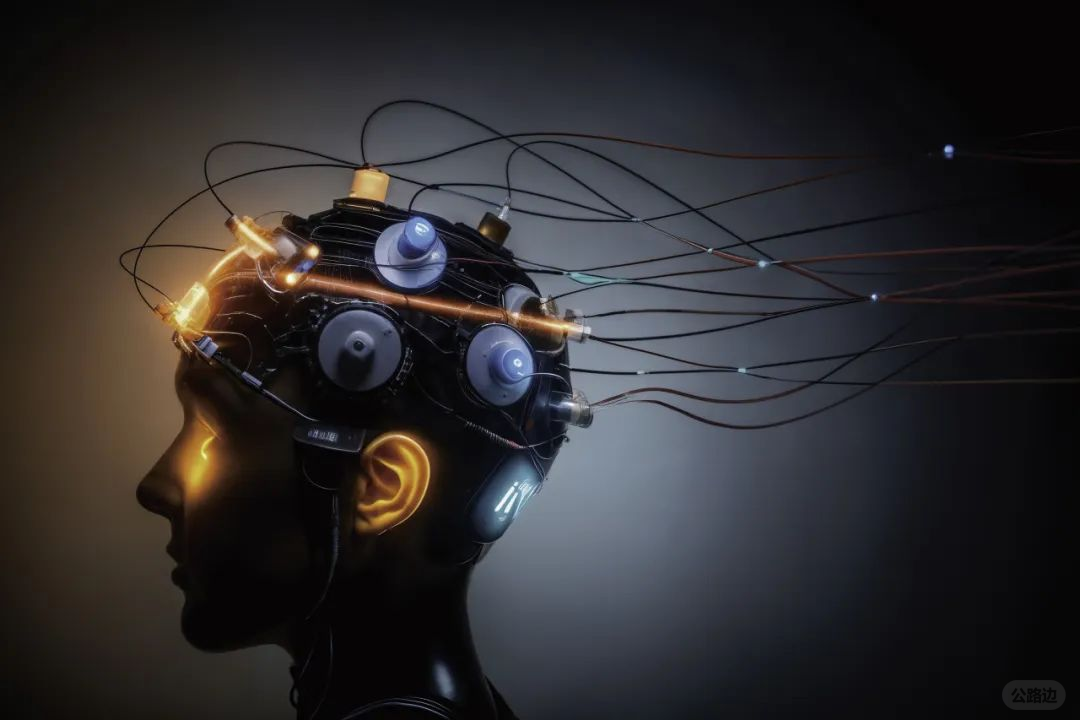
Brain-Computer Interfaces Accelerate: Musk Launches Mass Production as Chinese Players Rush to "Plug Into the Brain"
At the start of 2026, tech billionaire Elon Musk announced on social media that his BCI company Neuralink will begin “high-volume production” this year and transition to a more streamlined, fully automated surgical procedure.
Meanwhile, Chinese BCI companies are also accelerating clinical translation, pursuing multiple technical pathways in parallel. A collective race to “plug into the brain” has entered its final sprint.
Diverse Technical Approaches Emerge Globally and Domestically
At Huashan Hospital affiliated with Fudan University, the BCI team led by Director Mao Ying completed China’s first clinical trial of a fully implanted brain-computer interface over the past year. The patient, Xiao Dong (Dong Hui), suffered spinal cord injuries in a car accident that left him quadriplegic. Mao told Yicai Global that just nine days after surgery, Dong could slightly lift a ball with his right hand. He later lifted dumbbells and drank water using his left hand; after six months of training, he regained the ability to hold a pen and write with his right hand.
The BCI implant not only partially restored Dong’s motor functions but also significantly rebuilt his confidence in life. Unexpectedly, doctors observed that even without wearing external devices, Dong’s hand function showed signs of gradual spontaneous recovery after BCI training—opening a new avenue for research into BCI-facilitated neural plasticity.
A similar “miracle” occurred with Jian De. The 28-year-old had been bedridden for eight years following a car crash, completely paralyzed below the shoulders. After receiving a BCI implant, he can now play video games—and even defeat other players—using only his thoughts.
Looking ahead, beyond restoring mobility for those with motor impairments, global BCI companies—including Musk’s Neuralink—share a common vision: “giving voice to the mute” and “sight to the blind.”
Neuralink represents the current global standard in invasive BCI technology. According to the company, its device inserts electrode threads directly beneath the dura mater without cutting it open—minimizing trauma.
Neuralink’s brain implants primarily target patients with neurological conditions such as spinal cord injuries. As of September 2025, 12 severely paralyzed patients worldwide have received Neuralink implants. These patients can now play games, post on social media, and control computer cursors using their thoughts.
Musk’s long-term vision is to achieve a “whole-brain interface” by 2028—fully integrating the human brain with AI to enable consciousness-level connectivity. To that end, he has unveiled a multi-year product roadmap covering motor decoding (for spinal cord injury, ALS, and other motor disorders), visual encoding (for the visually impaired), and a future ultimate device called “Deep.” This device, expected to feature up to 10,000 electrode channels by 2028, would access any brain region to treat psychiatric disorders, chronic pain, and other neurological conditions.
In China, a cohort of BCI startups has emerged to rival Neuralink’s approach. Companies such as StepVR Medical, BroadReach, Xinzhida, and BrainCo are already in clinical validation phases, with the number of implanted patients set to rise significantly in 2026.
“This year (2026) is extremely busy for us,” Luo Minmin, Director of the Beijing Institute for Brain and Intelligence, told Yicai Global. “‘Beijing Brain I’ is entering registered clinical trials, with plans to implant dozens of patients. ‘Beijing Brain II’ will launch investigator-initiated trials (IIT).”
The “Beijing Brain I” intelligent BCI system has already been implanted in several spinal cord injury patients. The upgraded “Beijing Brain II,” entering clinical validation in 2026, features high-throughput flexible microwire electrodes, a high-speed neural signal acquisition system with thousands of channels, and a generative neural decoding algorithm based on feedforward control—primarily targeting motor-impaired patients.
Tao Hu, Founder and Chief Scientist of BrainCo, recently told Yicai Global that the company will complete regulatory registration for formal clinical trials of its BCI device in 2026, accelerating commercialization. By the end of 2025, BrainCo had already performed 54 human BCI implantations.
Liu Bing, Associate Researcher at the Chinese Academy of Sciences’ Institute of Automation, noted that StepVR Medical and BroadReach currently lead China’s BCI clinical race. However, he cautioned that speed alone isn’t enough—technical merit and patient benefit must be prioritized.
Nonetheless, China still lags behind Neuralink in key areas. Neuralink’s 1,024-channel flexible electrode array, paired with its proprietary robotic implantation system, represents the global pinnacle in integration density, channel count, and surgical precision. Most Chinese invasive BCI products operate at the 256-channel level—a gap of roughly two to three years.
At the same time, non-invasive BCIs offer broad application potential. On January 1, 2026, Gestalt (Chengdu) Technology Co., Ltd.—co-founded by Peng Lei (former CEO and co-founder of BrainCo), Chen Tianqiao of Shanda Group, and the Tianqiao and Chrissy Chen Institute—officially launched, marking China’s entry into a new BCI pathway based on ultrasound technology.
Ultrasound, using phased arrays, can precisely modulate specific brain regions without craniotomy—enabling non-invasive, multi-target neuromodulation of brain circuits for innovative treatment and novel therapeutic target discovery.
In neurorehabilitation, non-invasive BCIs have become essential tools, applied in sleep disorder intervention, post-stroke cognitive and motor recovery, and more. Market research shows non-invasive products currently account for 82% of the global BCI market and will likely remain dominant in the near term. Their advantages include clearer regulatory pathways and flexible deployment in hospital rehab departments, community centers, or even homes—enabling early and frequent interventions.
Policy Support Ignites Investor Enthusiasm
In 2025, seven Chinese ministries, including the Ministry of Industry and Information Technology, jointly issued the “Guiding Opinions on Promoting Innovation and Development of the Brain-Computer Interface Industry”—the first comprehensive policy framework outlining development pathways, key tasks, and safeguards, formally establishing BCIs as a strategic emerging industry.
The guidelines aim for accelerated BCI adoption in industrial manufacturing, healthcare, and consumer applications by 2027, and a significant boost in industrial innovation and a secure, reliable ecosystem by 2030. China’s upcoming 15th Five-Year Plan (2026–2030) also explicitly designates BCIs as a future-oriented industry for forward-looking investment.
This policy tailwind has ignited capital markets. According to ITJuzi, as of November 2025, the BCI sector had seen 16 funding rounds totaling nearly RMB 1 billion—far exceeding the RMB 200 million raised in all of 2024. StepVR Medical’s RMB 350 million Series B round marked the largest single investment in China’s invasive BCI sector in 2025.
As BCI companies enter clinical stages, capital demands intensify, setting the stage for a new funding war. “Clinical costs depend on many factors—the complexity of surgery, product cost, and sample size,” said the founder of a BCI startup planning a new round. Current clinical programs typically involve dozens of patients.
However, top-tier BCI valuations are already out of reach for many investors. “Valuations for leading BCI companies are too high, while second-tier players lack sufficient technological differentiation,” said a healthcare investment director at a Shanghai-based state-owned fund.
Yicai Global learned that China’s top BCI firms now command valuations up to USD 1–2 billion, with others in the first tier around RMB 2 billion. Still, this pales in comparison to the U.S.: Neuralink is valued at USD 12 billion, while Chinese firms on similar technical paths average only about USD 300 million—a gap of tens of times.
“The U.S. market is more willing to pay ultra-high premiums for disruptive technologies, whereas China currently prioritizes certainty in technological implementation,” Liu Bing explained.
According to the “2025 China Brain-Computer Interface Industry Blue Book” by Qianzhan Industry Research Institute, healthcare accounts for 56% of downstream BCI applications. The report estimates the global serious medical BCI market could reach USD 85 billion, with an additional USD 60 billion potential in consumer health (e.g., wellness monitoring, cognitive enhancement).
Restoring motor function remains the clearest and most urgent clinical value of BCI technology—and the area of deepest integration between medicine and engineering. Other key research focuses include spinal cord injury, disorders of consciousness (vegetative state), drug-resistant epilepsy, and severe depression.
Data from China’s Clinical Trial Registry show that in 2025, over 90% of newly registered BCI trials were interventional studies aimed at treating or improving diseases, with more than 60% focused on post-stroke motor rehabilitation.
The Rocky Road to Commercialization
Hard-tech entrepreneurship is often described as “navigating in the dark.” As a highly interdisciplinary field, BCI requires deep collaboration across neuroscience, materials science, chip design, AI, and clinical medicine. Its commercialization demands a long validation period.
In Liu Bing’s view, BCI commercialization must overcome three major hurdles: the “evidence barrier,” the “trust barrier,” and the “payment barrier.” Due to the high technical threshold of invasive BCI development, validation takes 5–10 years, requiring massive capital and exceptional integration of top-tier clinical resources.
Zhang Suyang, Managing Partner at Volcanics Venture Capital, began engaging with Chinese BCI teams a decade ago. He ultimately invested in a neurostimulation medical company as his entry point into BCI. “BCI has shown clear promise in treating Parkinson’s and epilepsy—conditions with relatively well-understood mechanisms and the highest likelihood of commercial success,” he told Yicai Global.
Zhang believes current BCI applications are still narrowly focused on clinical problems, far from a true inflection point. “Even after more than ten years of development, we’re still in a very early stage. This path won’t be quick to traverse,” he said.
Tom Oxley, founder of Synchron—Neuralink’s U.S. competitor—also estimates that medical BCI approvals will take another 3–5 years, with consumer-grade implants requiring at least 15–20 years.
Current consumer BCI products are often bulky, unsuitable for prolonged daily use, functionally non-essential, suffer from low user retention, and lack ecosystem support.
Liu Bing argues that for BCIs to break through in the consumer market and produce a “hit” product, they must cross a critical threshold: becoming invisible, addressing genuine needs, and offering affordable pricing—transitioning from “interesting” to “useful.”
Beyond technical and market challenges, the rapid advancement of BCI raises profound ethical and societal concerns: How can patient privacy and security be protected? Could “thoughts” be stolen or manipulated? Will cognitive enhancement exacerbate social inequality? Is humanity’s final frontier—its own mind—now under threat?
The industry has begun establishing legal frameworks and standards to ensure responsible innovation before large-scale deployment.
Huang Wenhong, Deputy Director of the Software Industry Research Office at China Center for Information Industry Development, recently wrote: “BCIs collect neural signals, implicating data privacy, informed consent, and usage boundaries. From the outset, projects must integrate data compliance, ethical review, and risk contingency plans into institutional protocols and operational workflows.”
|

 Fear of God ESSENTIALS Hoodie Review: Mi90 人气#fashion
 The Derby of San Francisco Style 300 Cha116 人气#fashion
 Why the Derby of San Francisco Classic S133 人气#fashion
 Romaoss Launches "Rebirth Plan," in Talk73 人气#tech



 WeChat
 douyin