White House Releases National Security Strategy Report Late on the 4th: Prioritizing the Western Hemisphere, Sharpening Criticism of Europe, and Striving for a "Balance" Between External Commitments and Internal Capacity
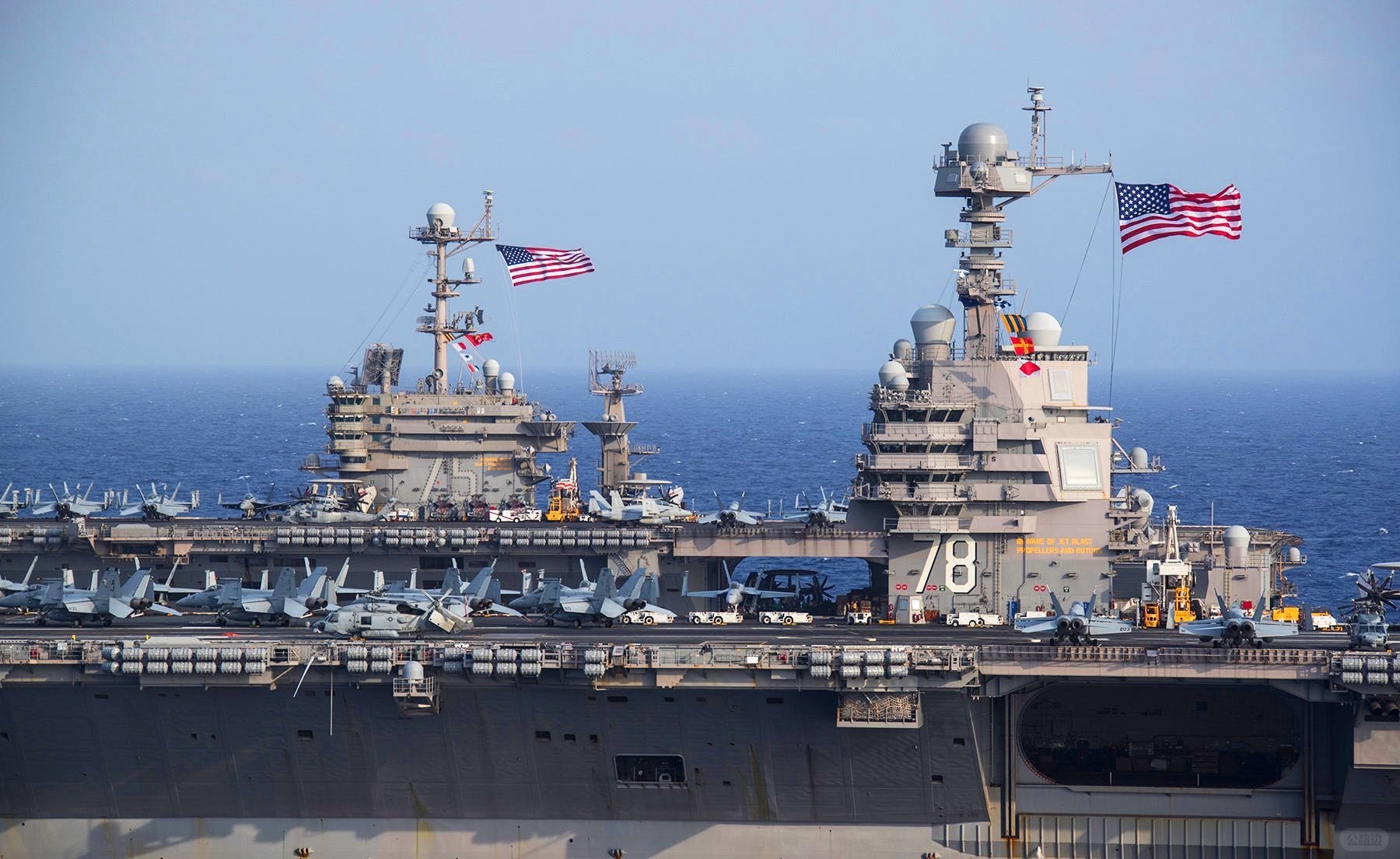
Released by the White House late on the 4th, the U.S. National Security Strategy Report focuses on America’s "core national interests", emphasizes the primacy of the Western Hemisphere, levels sharp criticism at Europe, downplays the threat of terrorism, seeks to maintain high-intensity yet manageable great-power competition in the Asia-Pacific region, and aims to rebalance its external commitments and internal capabilities.
What new strategies are outlined in this 33-page report? How will the U.S. adjust its global military presence? And what kind of security and world views do these measures reflect of the Trump administration?
Asserting the "Right to Intervene" in Latin America
In 1823, U.S. President James Monroe put forward the Monroe Doctrine, warning European powers against intervening in American affairs. For the first time, this updated National Security Strategy Report introduces the "Trump Corollary" to the Monroe Doctrine, stating that the U.S. will "advocate and enforce the Trump Corollary as a new-era version of the Monroe Doctrine" to cement America’s preeminent position in the Western Hemisphere.

The report describes the Western Hemisphere as the "frontline" for U.S. border security, critical supply chains, and geopolitical competition. The objectives of the Trump Corollary include: preventing and deterring mass migration waves; targeting drug cartels "with lethal force when necessary"; blocking "foreign adversaries" from seizing control of critical assets in the Western Hemisphere; "ensuring sustained U.S. access to key strategic locations"; enhancing military deployments in Latin America; establishing or expanding access routes at strategically significant sites; and linking aid and trade to the state of bilateral relations with Latin American nations.
Analysts argue that this will drive the U.S. to allocate more resources to the Western Hemisphere across intelligence, military, law enforcement, and economic strategies, effectively declaring its right to intervene in Latin America in an arrogant and assertive manner. While the report claims the U.S. "favors non-interventionism", over the past year, the Trump administration has notably ramped up economic pressure and political interference against Latin American countries.
Against the backdrop of the currently tense U.S.-Venezuela standoff, experts from the U.S. think tank Atlantic Council note that the report sends two key signals: the U.S. military deployment in the Caribbean—the largest in over three decades—is no temporary measure; and Washington’s ultimate goal in Venezuela is to overthrow the Maduro government and install a pro-U.S. regime.
Adjusting Global Military Presence
While emphasizing the primacy of the Western Hemisphere, the report states that it will accordingly "readjust U.S. global military posture" and reduce the deployment of military resources to regions "where the relative importance to U.S. national security has declined".
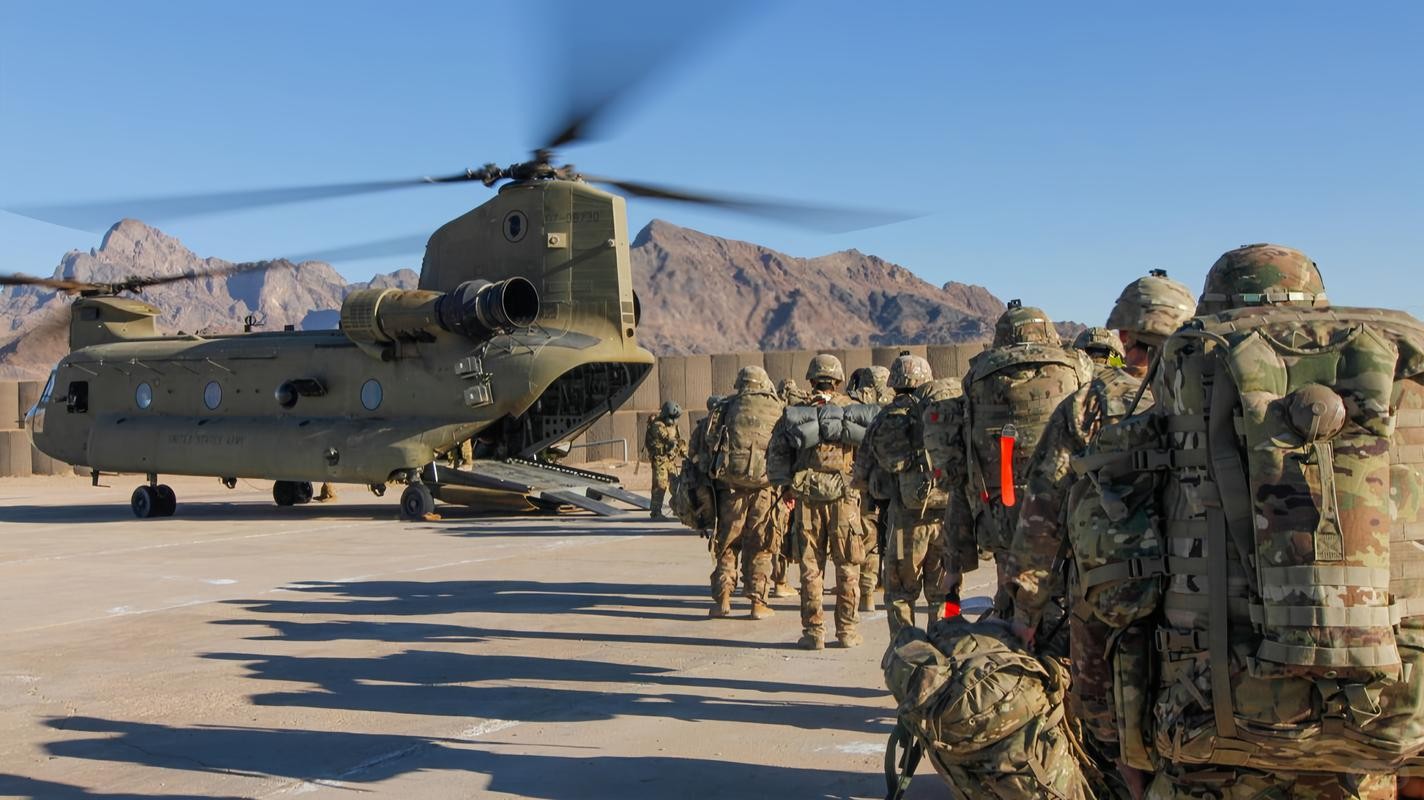
The report does not explicitly name these regions, but experts interpret that Europe, the Middle East, and Africa have all seen their priority rankings drop in U.S. foreign and security policy, based on the document’s contents.
The Trump administration’s approach to adjusting global military presence can be summarized as follows:
Seeking to Alleviate the Global Security Burden
First, it stresses that allies and partners must end their "free-riding" practices and take primary responsibility for their regional defense. Second, it emphasizes that the U.S. must avoid being trapped in costly "perpetual wars" and prevent regional conflicts from escalating into intercontinental or global wars. Third, it generally downplays the threat posed by terrorism.
Pursuing "Strategic Stability with Russia"
The report states that a core U.S. interest is to bring the Ukraine crisis to a swift conclusion, accusing Europe of obstructing U.S. efforts to end the conflict. It also notes that the U.S. will halt the continuous expansion of NATO and questions the reliability of the transatlantic alliance in the future.
Promoting U.S. Reindustrialization and "Rebuilding the Defense Industrial Base"
The report regards economic security as the foundation of national security, pointing out that the U.S. must not only maintain dominance in cutting-edge fields such as artificial intelligence, quantum computing, and supercomputing, but also build a robust defense industry and manufacturing base. It calls for expanding U.S. access to critical minerals worldwide, stressing the need to avoid over-reliance on others in key supply chains and technological links. Additionally, it urges strengthening America’s "energy dominance" and "financial dominance" to preserve the long-term advantages of its economy, industrial foundation, and technological innovation capabilities.
The report declares that "the era when the Middle East dominated U.S. foreign policy planning and daily operations has come to an end". However, Jon Hoffman, a research fellow at the U.S. think tank Cato Institute, argues that the U.S. remains deeply entangled in Middle Eastern affairs, and "whether Trump has the political will to fundamentally alter the trajectory of U.S. Middle East policy remains to be seen". Emily Harding, a researcher at the Center for Strategic and International Studies (CSIS), notes that previous U.S. administrations have also sought to shift their diplomatic focus, but Middle Eastern issues "always find a way to pull the U.S. back in".
An Anti-Immigration, Anti-Globalization Vision
The report reflects the Trump administration’s vision of a global order anchored in the principle of "America First", characterized by anti-immigration and anti-globalization stances, promotion of Western identity, rejection of the "climate change" concept, downplaying of transnational cooperation issues, and accusations that certain international organizations are driven by "anti-Americanism" and "transnationalism". Under this vision, the U.S. no longer sees itself as the primary provider of the multilateral order, but rather participates selectively based on its own interests.
The report carries a strong anti-immigration tone, attributing many of the current predicaments in the U.S., Europe, and even the world to immigration. It claims that large-scale immigration is altering the cultures and economies of traditional global powers and eroding their dominant status. The report asserts that the U.S. labor market cannot be opened up "in the name of attracting global talent" if it harms the interests of American workers.
The report’s rhetoric targeting Europe is highly confrontational, echoing the remarks made by U.S. Vice President Vance at the Munich Security Conference earlier this year. It warns that Europe faces a "grim prospect of civilizational decline" due to factors such as its immigration policies, economic stagnation, regulation by transnational institutions like the EU, declining birth rates, and eroding confidence. The report adds that the U.S. will "help Europe correct its current trajectory" and "foster forces within European countries that resist this trajectory".
Natalie Tocci, Director of the Italian Institute of International Affairs, comments that this signals the Trump administration’s willingness to prioritize U.S.-Russia relations, leaving Europe "isolated and vulnerable" on the Ukraine crisis and continental security issues.
Rick Landgraf, Editorial Director of the U.S. website War on the Rocks, argues that the report reveals that the U.S. now views its own security in a more inward-looking and narrow-minded way than ever before.
Notably, while opposing the idea of the U.S. "bearing the burden alone" to uphold the world order, the report repeatedly emphasizes that "the United States cannot allow any country to become so powerful that it can threaten U.S. interests" and that "we must also prevent other countries from achieving global or regional dominance". The logic of power politics is laid bare throughout the document. The report not only reiterates the slogan of "peace through strength" but also states unequivocally: "It is an eternal truth of international relations that great powers, wealthy nations, and strong states wield outsized influence."
Foreign Policy magazine opines that the report "seeks to selectively impose the U.S. President’s world view on the globe". The Economist comments that the report "has descended into a blatant display of power".
|

 Fear of God ESSENTIALS Hoodie Review: Mi83 人气#fashion
 The Derby of San Francisco Style 300 Cha108 人气#fashion
 Why the Derby of San Francisco Classic S127 人气#fashion
 Romaoss Launches "Rebirth Plan," in Talk65 人气#tech



 WeChat
 douyin