On December 13, SpaceX publicly accused China’s space program of a dangerous close encounter in orbit, claiming a satellite launched by a Chinese rocket nearly collided with one of its Starlink satellites—coming within just 200 meters.
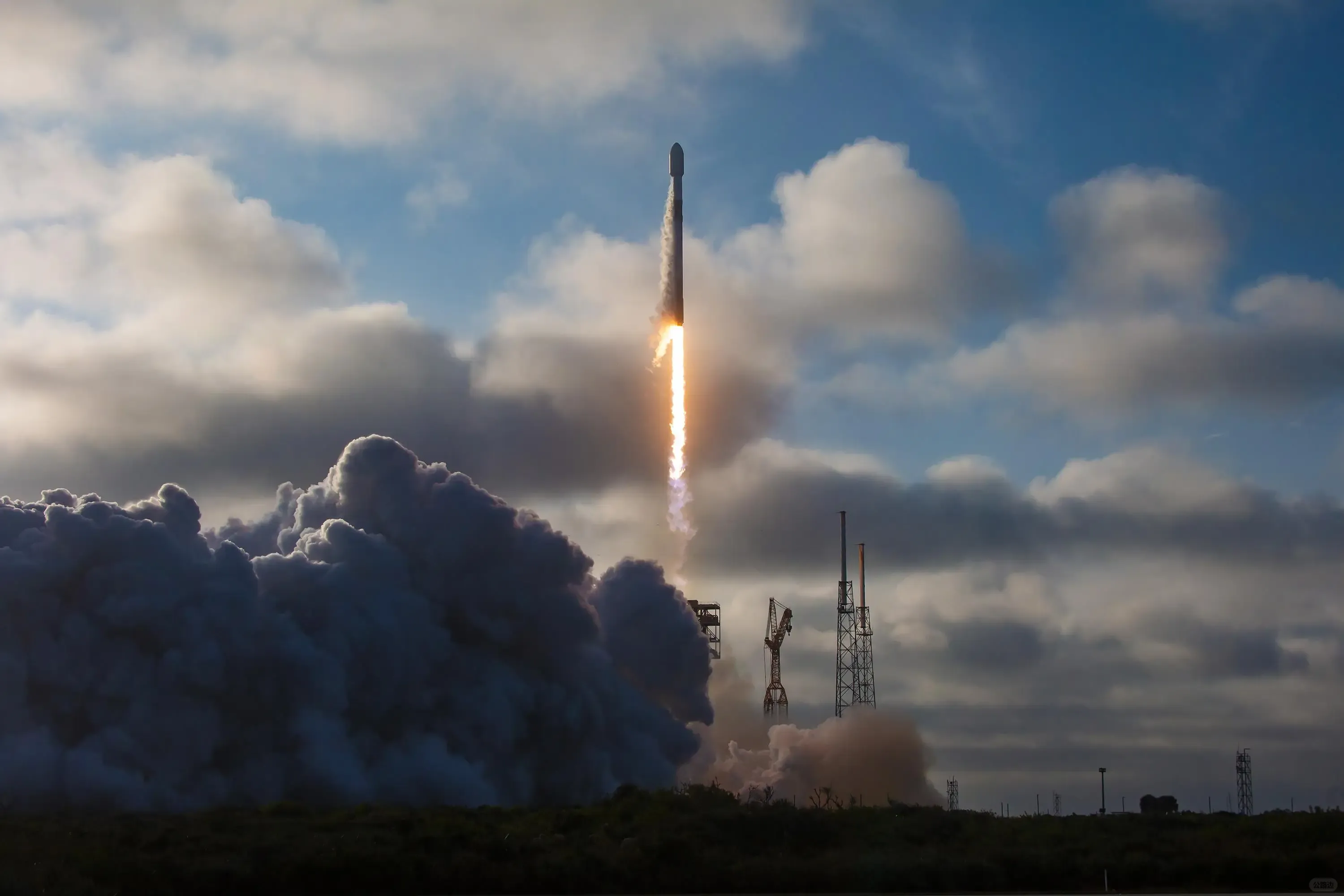
Did SpaceX Accuse a Chinese Satellite of “Cutting It Off” in Space? Behind the 200-Meter Near-Miss, Who’s Fueling the Orbital Crisis?
Michael Nicoll, SpaceX’s Vice President of Engineering, squarely placed blame on China for allegedly failing to coordinate in advance, sparking global attention across the aerospace community.
The controversy centers on the “Lijian-1” rocket launched from China’s Jiuquan Satellite Launch Center on December 9. The mission successfully deployed six new-generation Chinese communications satellites into a 550-kilometer sun-synchronous orbit, along with three international payloads—demonstrating the outstanding performance and reliability of China’s Long March 3B launch vehicle and marking the Long March rocket family as world-leading in capability.
However, two days later, one of those newly deployed satellites passed extremely close to SpaceX’s Starlink-6079 satellite over the eastern Pacific Ocean. A collision between the two would have released energy comparable to two bullets striking head-on; a 200-meter separation is roughly equivalent to two bullets flying past each other face-to-face.
Who Should Yield? A Blame Game in Orbit
In response to the accusation, Chinese operator CAS Space quickly rebutted, stating it had used ground-based space situational awareness systems to select a safe launch window that avoided known space objects.
Yet critics argue this defense shifts responsibility away from the launch provider for post-deployment orbital maneuvers occurring within 48 hours after satellite separation—effectively placing all accountability on the satellite operator. It’s akin to blaming a car manufacturer when an owner modifies their vehicle and causes an accident.
In fact, Starlink satellites have been involved in similar incidents before. In 2021, Starlink-1095 and Starlink-2305 approached China’s space station twice, forcing Chinese astronauts to perform emergency avoidance maneuvers. The European Space Agency has also altered its spacecraft trajectories to dodge Starlink satellites.
Orbital Gridlock: Starlink’s “Bottleneck” Dilemma
The root cause of these recurring near-misses lies in unprecedented congestion in low Earth orbit. Five years ago, there were only about 3,400 satellites in orbit; today, that number has surged to 13,000—with SpaceX alone operating 9,300 Starlink satellites. On average, each Starlink satellite performs four collision-avoidance maneuvers per month, totaling 145,000 such maneuvers in the first half of last year alone.
Even the best “traffic manager” cannot fully “disperse” this density, and even the strongest “regulations” can only address symptoms, not the underlying problem. It’s like turning a quiet country road into a packed highway and then flooding it with tens of thousands of vehicles—no matter how skilled the drivers, accidents become inevitable.
Compounding the issue, international space traffic rules remain full of gaps. There are no binding global standards on collision avoidance responsibilities or data sharing. While the Outer Space Treaty mandates astronaut safety, commercial constellations like Starlink often operate with opaque maneuvering strategies—and frequently fail to promptly notify others after orbital changes, exposing foreign spacecraft to unnecessary risk.
A Silent Crisis: The Kessler Syndrome Warning
The consequences of a satellite collision far exceed those of a terrestrial crash. A single impact could generate debris traveling at kilometers per second, triggering a cascading chain reaction—the so-called Kessler Syndrome—that might eventually encase Earth in a shell of wreckage, rendering space inaccessible for centuries.
Recognizing this, China has proactively shared its space station’s orbital data in recent years and advocated for international coordination mechanisms. Yet the U.S. Wolf Amendment strictly restricts Sino-American space cooperation, making even basic collision-alert communication between the two sides extremely difficult.
This 200-meter near-miss is not just a technical issue—it’s a test of global governance. As space transforms from a “blue ocean” into a congested “parking lot,” finger-pointing and deflection won’t solve anything. As CAS Space suggested, perhaps the real path forward lies not in excluding emerging players, but in rebuilding cooperative momentum from a place of mutual respect.
No matter how advanced our satellite technology becomes, it remains but a speck of dust in the vast cosmos—a tiny vessel adrift in an endless sea of stars.
|

 Fear of God ESSENTIALS Hoodie Review: Mi86 人气#fashion
 The Derby of San Francisco Style 300 Cha113 人气#fashion
 Why the Derby of San Francisco Classic S130 人气#fashion
 Romaoss Launches "Rebirth Plan," in Talk70 人气#tech



 WeChat
 douyin