One Year into the "Hundred-Glasses War": Tech Giants Including Alibaba and Li Auto Fail to Salvage the Market, Return Rate Surges to 30%, Investors Warn of Impending Bubble Burst Within Six Months
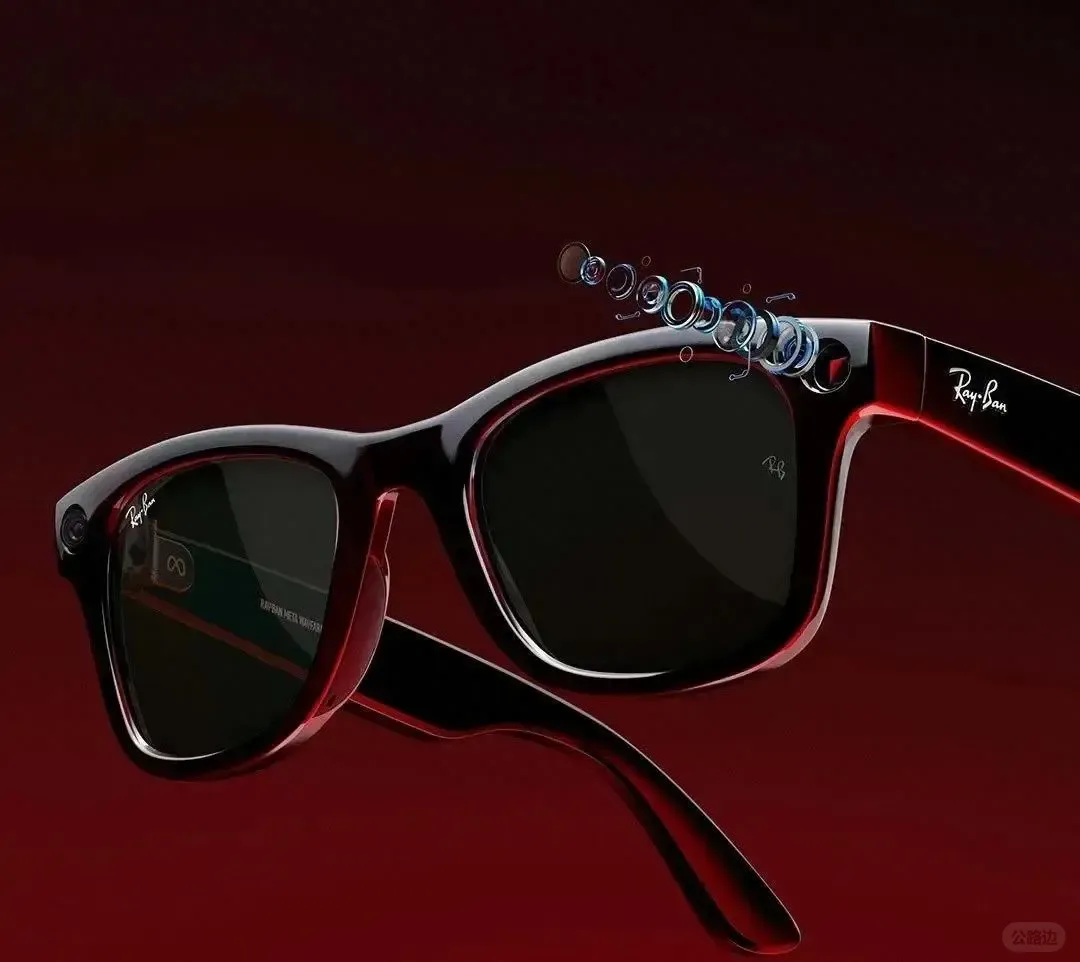
The entry of tech giants has officially ignited the fierce competition in the AI glasses market.
Since the second half of this year, a host of industry leaders including Xiaomi, Lenovo, Baidu, Alibaba, and Li Auto have poured into the AI glasses track, ushering the market into an intensive new product launch phase. This once-niche sector, primarily explored by startups such as Rokid and Thunderbird Innovation, has reached a fundamental turning point.
The "Hundred-Glasses War" predicted by Zhou Hongyi has become a reality, and the market is being rapidly "forced to mature". Data from Omdia shows that global AI glasses shipments are projected to skyrocket from less than 400,000 units in 2023 to 6.85 million units in 2025, representing a compound annual growth rate (CAGR) of 322.9%. According to IDC, the shipment growth rate of smart glasses in China is expected to hit an astonishing 121.1% this year.
However, beneath the seemingly booming market lies sky-high return rates and widespread user complaints about AI glasses. An industry insider told Sohu Tech that leading AI glasses companies are grappling with a comprehensive return rate ranging from 30% to 35%, while even the better-performing ones still face a rate of over 20%. In contrast, the typical return rate for 3C electronic products hovers below 15%, making AI glasses a significant outlier in the sector.
Opinions on this track are sharply divided. Optimistic entrepreneurs told Sohu Tech that current AI glasses are akin to feature phones and Xiaolingtong devices, with everyone chasing the "iPhone moment" that will revolutionize the industry. On the other hand, pessimistic investors in the XR field argue that the bubble surrounding this wave of AI glasses may burst within six months.
So, are AI glasses the next-generation computing platform representing the future, or just another short-lived capital-driven frenzy?
The Arrival of Tech Giants
"Over the past few years, we have been like 'lone warriors' blazing a trail in this industry," sighed Yang Longsheng, founder of Inmo Technology. "This year, several major tech companies suddenly launched products with similar positioning, all concentrated in the second half of the year, which really caught us off guard."
Smart glasses were originally a relatively niche segment, dominated by domestic startups. However, the runaway success of Ray-Ban Meta smart glasses quickly ignited the enthusiasm of tech giants, leading to an especially intense competitive landscape in the second half of this year.
Xiaomi's entry marked a crucial inflection point. Priced starting at 1,999 yuan, its AI glasses not only kicked off the intensive layout of major players in the track but also significantly boosted market attention, leveraging Xiaomi's inherent brand traffic.
Li Chuangqi, former head of Xiaomi's AI glasses project, told Sohu Tech that sales far exceeded initial expectations by several times, even though the company had "gritted its teeth" to stock up an inventory volume exceeding the annual output of more than half of the startups in the industry.
Subsequently, Lenovo, Baidu, Alibaba, and Li Auto successively rolled out their AI glasses, joining the increasingly fierce battle. On November 9, Lenovo AI Glasses V1 was officially launched with a starting price of 3,999 yuan. On November 13, Baidu unveiled its Xiaodu AI Glasses Pro, priced starting at 2,299 yuan.
On November 27, Alibaba's Quark AI Glasses made their debut, offering six models across two series, S1 and G1, covering the price range of 2,000 to 4,000 yuan. On December 3, Li Auto officially launched its first AI glasses product, Livis, with a starting price of 1,999 yuan, making it the first automaker to enter the AI glasses market.
More notably, Google, a former "pioneer" that failed in its exploration of this track, is planning a comeback and intends to launch AI glasses with a display screen next year. Apple is reportedly expected to release its AI glasses next year, which may feature a built-in camera and Siri voice interaction, among other functions.
Last year, when discussing the implementation of large AI models, Zhou Hongyi, founder of 360, predicted that in the future, every internet company would develop a pair of glasses, leading to a "Hundred-Glasses War". Now, his prediction has come true. The smart glasses track has evolved from a domain explored by a handful of startups into a vast battlefield contested by multiple powerful players.
"AI Glasses Boast Far Higher Return Rates Than Other 3C Devices"
The full-scale entry of tech giants is rapidly "forcing the maturity" of the once-niche smart glasses market across multiple key links.
Leveraging their advantages in capital, brand, and channels, these giants can drive the upstream supply chain system to mature quickly. Meanwhile, they are better positioned to launch products with more competitive pricing and features, lowering the threshold for consumers to experience AI glasses.
Undoubtedly, this has also posed significant challenges to the development of startups. As Yang Longsheng lamented, when Xiaomi first entered the market, e-commerce traffic for AI glasses tripled overnight. By the end of the year, when Alibaba joined the fray, traffic surged eightfold—a dramatic increase. "This forces us to benchmark ourselves against first-tier tech giants and deliver an even better user experience; otherwise, we won't survive."
Li Hongwei, founder and CEO of Thunderbird Innovation, also noted that competing with tech giants has become one of the top concerns for investors. An investor focusing on the AI track told Sohu Tech bluntly that there is little value in investing in AI glasses startups, adding that they are now more optimistic about established tech giants, as small companies are unlikely to succeed in this fiercely competitive landscape.
Nevertheless, both tech giants and startups are currently grappling with poor user experience feedback and high return rates.
A source from an AI glasses manufacturer told Sohu Tech that leading startups are facing a comprehensive return rate of 30% to 35%, whereas the normal rate for 3C products should be below 15%. Currently, AI glasses have a significantly higher return rate than standard 3C electronic devices.
Furthermore, statistics from XR Vision indicate that the return rate of AI glasses on e-commerce platforms such as JD.com and Tmall stands at approximately 30%, while on Douyin, the rate soars to an alarming 40% to 50%.
After testing an AI glasses product offline, a user told Sohu Tech that they already owned a pair of Meta AI glasses and originally planned to purchase a newly launched domestic AI glasses product online directly. However, they decided to abandon the purchase after the trial, as the product's features only seemed appealing for novelty value.
Fang Fan (a pseudonym), a user who bought a certain brand of AI glasses at launch, told Sohu Tech that many of the device's features are impractical, and the overall user experience is mediocre. First and foremost, there are flaws in the optical display—the waveguide area has a yellowish tint, and glare occurs frequently. As someone with sensitive eyes, Fang Fan found wearing the glasses uncomfortable.
"Additionally, the navigation function has many issues, with inaccurate positioning. When encountering incorrect routes, users can simply adjust their position on a smartphone, but this is not possible with glasses." Due to infrequent use, Fang Fan resold their AI glasses less than a month after purchasing them.
Moreover, some Xiaomi AI glasses users have complained that the temple arms are too thick, causing discomfort and sweating after prolonged wear. They also criticized the low accuracy of the gesture recognition function, mediocre smart interaction experience, and slow response speed of Xiao Ai Classmate, Xiaomi's voice assistant.
Both the sky-high return rates and user feedback regarding laggy interaction and uncomfortable wearing experience reflect that current AI glasses still have a long way to go before becoming truly "user-friendly".
Has a Consensus Been Reached?
Why do tech giants remain bullish on this track despite the poor user experience feedback?
An entrepreneur in the AI glasses field told Sohu Tech that the sector has gained unprecedented popularity this year, primarily driven by the implementation of powerful large AI models, which require a consumer-grade hardware product as a carrier. While current shipment figures are not encouraging, the overall trend is showing steady growth.
He believes that today's AI glasses are analogous to mobile phones before the iPhone's launch—feature phones and Xiaolingtong devices. Both investors and entrepreneurs are chasing the "iPhone moment" that will transform the industry.
However, the entrepreneur also admitted that the current functions of AI glasses are rather impractical, and companies are still refining various useful features. Although replacing smartphones in the short term is impossible, AI glasses can capture a significant portion of users' smartphone usage time.
"What I personally find most promising about AI glasses is that they break the limitations of traditional screens, delivering a more immersive user experience," an investor focusing on the AI glasses track told Sohu Tech. He drew a parallel to the early days of mobile phones, noting that when the first brick phones hit the market, people complained about their high price and bulky design. Back then, many believed that instant communication was not a necessity, as pagers were sufficient for their needs.
Nevertheless, not everyone shares the same optimism about the AI glasses market, with some arguing that the current prosperity is built on a bubble.
An angel investor in the XR field told Sohu Tech that while he is long-term bullish on Meta and Apple, the bubble surrounding this wave of AI glasses may burst as soon as within six months. "As Meta's sales peak, the market will enter a prolonged period of stagnation, with declining enthusiasm. Similar to the Quest VR headset, the sector will experience an initial boom followed by a long period of slowdown."
Xu Chi, founder of Xreal, stated bluntly that the "Hundred-Glasses War" is more of a carnival for capital and the media. "Such prosperity is illogical; it is a false boom built on a bubble, driven by the secondary market's superficial pursuit of AI concepts. Essentially, it's a case of capital taking advantage of retail investors."
A year ago, Li Nan, a former senior executive at Meizu, regarded AI glasses as a "new track with 100x growth potential in three years". However, his recent stance has shifted dramatically. Based on his company's latest research, Li Nan now argues that several core functions hyped in the AI glasses track—including navigation, payment, and even the seemingly cutting-edge muscle current wristband GUI control—are all "false demands".
Looking back at history, 2016 was once hailed as the "first year of VR". Tech giants such as Facebook, Samsung, Sony, and HTC invested heavily in the sector, leading to a peak in China's VR industry with 241 financing deals totaling 4.06 billion yuan. Despite many industry insiders comparing the future of VR to that of PCs and smartphones, the technology ultimately failed to gain widespread consumer adoption due to poor user experience.
Today, the AI glasses market is experiencing explosive growth, but sustaining this growth will not be easy. How to cultivate high-frequency, rigid daily usage demands among consumers remains a critical challenge for companies in the sector.
|
 Fear of God ESSENTIALS Hoodie Review: Mi83 人气#fashion
 The Derby of San Francisco Style 300 Cha108 人气#fashion
 Why the Derby of San Francisco Classic S128 人气#fashion
 Romaoss Launches "Rebirth Plan," in Talk66 人气#tech



 WeChat
 douyin