The situation is so surreal that I double-checked several times: is it really this outfit that’s being accused of being “vulgar” and “sexually suggestive”?
Let’s take a step back—even in the Qing Dynasty of 1825, there wasn’t a rule saying women couldn’t wear skirts and had to wear pants, was there?
In an era filled with cloud computing, AI, drones buzzing overhead, and robots performing Webster flips, is it really necessary for so many people to attack a skirt and demand pants? Isn’t that just performance art at this point?
Of course, it’s the same old recipe, the same old tactics, the same old accusations.
I quickly realized: here we go again—our old friend has returned.
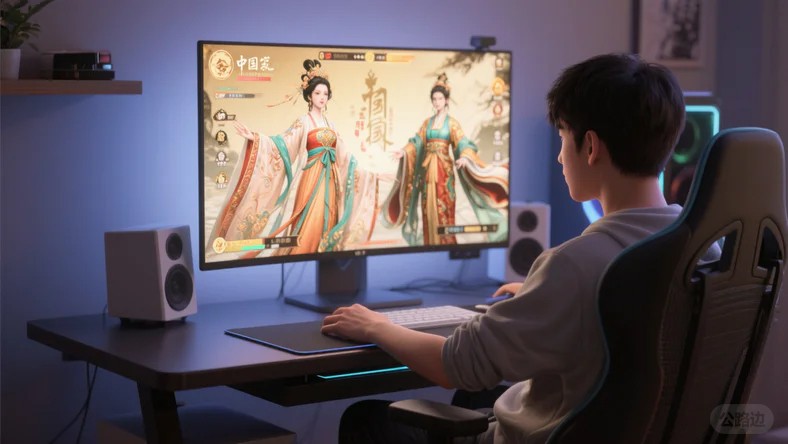
After Genshin Impact went global, after Black Myth: Wukong stormed international markets, now another game—Yanyun Shiliusheng (Sixteen Echoes of Yanyun)—has achieved massive overseas success, only to be hit with accusations of “discriminating against women.”
A few years ago, when Genshin Impact became a global phenomenon, critics immediately cried “sexualization of women,” claiming characters like Shenhe and Mona wore outfits too revealing and catered to male fans.
When Black Myth: Wukong swept the world, similar accusations erupted: among all those gods and demons, why were there so few female characters? Clearly, this was gender discrimination.
Now, with the international release of Yanyun Shiliusheng—which has surpassed 15 million global players, ranked #2 on Steam’s global top-sellers, and topped the App Store charts in 60 countries including the U.S., Japan, Germany, and France, becoming another landmark in China’s cultural export—the same script is playing out once more.
I went back and reviewed the criticisms from Genshin and Black Myth, and honestly, the rhetoric hasn’t changed at all.
For example: skip the actual issue and immediately slap on a politically correct label.
Calling a short skirt “vulgar” or “sexually suggestive” is absurd—no reasonable person would agree.
So they blur the definition: reframe the skirt as something akin to lingerie, then escalate the argument to “games shouldn’t sexualize or vulgarize female characters.”
Then comes the final move: “This is what female players are asking for. If you disagree, you’re silencing women’s voices.”
Suddenly, anyone who objects is branded an oppressor of women.
You hear “oppressing women” and think it must be serious—only to click in and find… it’s just a short skirt in a game.
And this “short skirt” is far less revealing than costumes worn at Olympic opening ceremonies or national galas.
Because the accusation collapses the moment you show the actual outfit, they must shift from concrete details to abstract concepts—like “objectification of women”—and hurl down the big hammer of political correctness.
This exact playbook was used against Genshin, then against Black Myth, and now it’s Yanyun Shiliusheng’s turn.
Can’t you come up with a new tactic? Is your path dependency really this severe?
For Chinese companies today, going global—being open, inclusive, and internationally competitive—is an inevitable journey.
Beyond cutting-edge tech and strong manufacturing capabilities, there’s another lesson we must learn:
Build immunity against the wave of political correctness.
Don’t panic at the sight of activism around environmentalism, animal rights, or feminism. These “three axes” are practically guaranteed to swing your way once you go big in international markets.
At its core, this brand of feminism dislikes all visually appealing female characters—not because they play games, but because men do. And attractive female characters might reduce men’s willingness to transfer resources (e.g., through donations or support), so they’ll invent endless reasons to report them.
Yet for games themselves, character aesthetics directly impact appeal. Whether male or female, most actual players simply want their avatars to look good.
Western game studios paid dearly for this lesson in recent years. Studios avoided beautiful female characters altogether, added dozens of gender options, and became so paranoid that when Yanyun Shiliusheng’s international version launched, foreign players saw a slightly bare-chested male outfit and panicked: “Is this another politically correct game?”
Many big-budget titles have stumbled right here—like Correct Agent, which set a record for the most expensive game studio collapse in history due to overcorrection.
Now it’s Chinese developers’ turn to cross the river.
Don’t step into every pit your predecessors have already dug.
|

 Fear of God ESSENTIALS Hoodie Review: Mi86 人气#fashion
 The Derby of San Francisco Style 300 Cha112 人气#fashion
 Why the Derby of San Francisco Classic S130 人气#fashion
 Romaoss Launches "Rebirth Plan," in Talk70 人气#tech



 WeChat
 douyin